Heads up: we earn a commission if you buy through our links, at no extra cost to you. It never changes which product we recommend — here’s how that works.
The short answer
No soccer cleat is a cushioned shoe — the plate is rigid by design so the studs transfer force to the ground. What varies is the sockliner and how soft the upper and plate are. The Nike Tiempo and adidas Copa lines are the most forgiving junior options, and a low-volume replacement insole does more than buying up a tier.
Parents usually land here for one of two reasons: a kid who says their feet hurt after training, or a kid coming back from heel pain. Both are worth taking seriously, and both are better served by understanding what a cleat can and cannot do than by a ranked list.
Here is the constraint. A cleat's job is to put studs into the ground and transfer a player's force through them, which needs a stiff plate. Cushioning works by absorbing force. Those are opposite requirements, which is why even an expensive cleat feels hard compared with a running shoe — and why the most expensive cleats are often the least cushioned, since they are built for feel rather than comfort.
So the realistic question is not which cleat is cushioned. It is which junior cleats are least punishing underfoot, and what you can add to one that is not.
Start here
Pick by your kid’s level
The right answer changes with the level, not just the shoe size. Find your kid’s bracket and start there.
Nike's comfort-and-touch line, positioned around a soft touch and all-day comfort, on a multi-ground plate. The most forgiving Nike junior cleat currently sold.
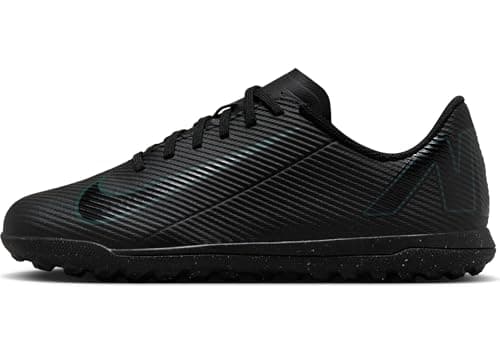
Not a cushioning claim but the real answer at this age: on hard artificial turf a turf outsole spreads load across the whole foot instead of a handful of stud points, which beats any amount of sockliner.
Tap any row to jump to the full write-up. The price in each button is the one Amazon reported on the date stamped under it — tap through for today’s number, which is the only one that can be relied on.
#
Product
Best for
Surface
Fit notes
Price
1
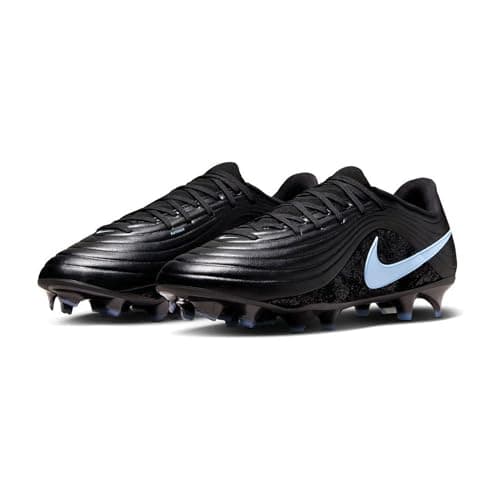
Nike Jr. Tiempo Maestro Academy MGThe comfort-first Nike junior cleat, and the sensible pick for a defender, a keeper, or a kid who plays in discomfort and has stopped mentioning it.
U9–U10, U11–U12, U13+ travel & club
MG (multi-ground)
The most generous Nike junior last — closer to the adidas Copa than to the Mercurial.
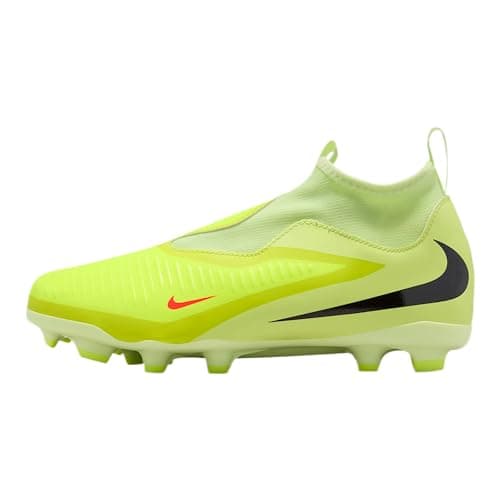
Nike Jr. Phantom 6 High Academy FG/MGThe junior cleat to pick if your kid wants a collar, on the clear understanding that it is a fit feature and a proper brace is a different product.
U9–U10, U11–U12, U13+ travel & club
FG/MG
Average-to-wide forefoot like the rest of the Phantom line, true to length.
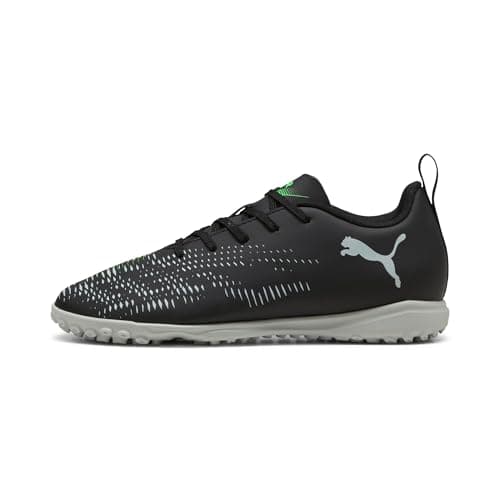
PUMA Future 8 Play TurfThe most comfortable junior turf shoe here, with the least protection — a fine trade for training, less so for a competitive match.
Nike Jr. Mercurial Vapor 16 Club TurfThe right second pair once a kid is training on artificial turf every week, and a bad only-pair if games are on grass.
U7–U8 rec, U9–U10, U11–U12, U13+ travel & club
TF (turf)
Same narrow Mercurial last as the firm-ground Club.
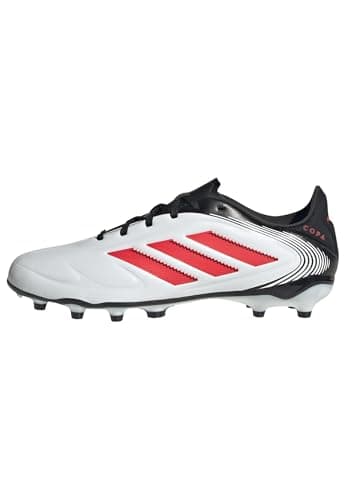
Product photos come from each item’s current Amazon listing.
Where the comfort in a cleat actually comes from
The sockliner. The removable insole. Entry-tier cleats often use a thin foam sheet; better ones use a molded liner. This is the only genuinely cushioning component in a cleat, and it is also the one you can replace.
The upper. A soft or leather-feel upper flexes with the foot instead of pressing on it. Most of what a kid describes as a comfortable cleat is actually this.
The plate. Stiffness varies more than you would expect — a polyurethane sole at the budget end can be more forgiving underfoot than a stiff performance plate costing three times as much.
The outsole pattern. Not cushioning, but the largest single factor in how a cleat feels on hard ground: many short nubs spread load, a few long studs concentrate it.
The insole swap, which is usually the right answer
If a cleat fits but feels hard, replacing the sockliner does more for the same money than moving up a tier. Podiatry guidance on doing it in a cleat specifically is consistent on two points.
Take the factory sockliner out first. Layering a new insole on top of the old one is the most common mistake — it forces the foot up out of the heel cup and reduces ground feel.
Use a low-volume insole. A thick orthotic will lift the heel out of the cleat's heel cup, which creates a new problem while solving the old one. Slim, cleat-specific profiles exist for this reason.
That is a change worth making on a cleat you already own before you buy a different one.
When 'my feet hurt' is not about cushioning at all
Three common causes, none of them solved by a softer cleat.
What the kid says
Likely cause
What actually fixes it
Feet ache after turf training
Firm-ground studs on hard turf
A turf outsole — see the turf picks
Pain at the back of the heel
Possible Sever's disease
See a doctor; cushioning helps, it does not treat it
Sore across the top of the foot
Lacing pressure or high volume
Skip a lace hole over the widest point
Blister on the heel
Too long, or heel lift
Correct length — not a softer insole
Scroll the table sideways on a narrow screen.
Heel pain in a young player in particular is worth naming properly. It is commonly Sever's disease, a growth-plate irritation rather than a footwear problem, and while cushioning-first footwear reduces the load, it does not treat it. Cleats for Sever's disease and heel pain covers that in full, and a doctor covers the rest.
Cheap cleats are not automatically harder
A useful thing to know before spending. Budget cleats often use a polyurethane sole, which is softer underfoot than the stiff performance plate on a cleat costing three times more. What budget cleats genuinely skimp on is the sockliner — and that is a ten-dollar fix.
So the cheapest route to a comfortable cleat is frequently an entry-tier shoe that fits well plus a decent replacement insole, not a mid-tier shoe. The budget picks set out what each price step actually buys.
1. Nike
Nike Jr. Tiempo Maestro Academy MG
The comfort-first Nike junior cleat, and the sensible pick for a defender, a keeper, or a kid who plays in discomfort and has stopped mentioning it.
Best for
A U9+ defender, keeper or any player who wants comfort over speed
Levels
U9–U10 · U11–U12 · U13+ travel & club
Type / surface
MG (multi-ground)
How it fits
The most generous Nike junior last — closer to the adidas Copa than to the Mercurial. True to length, and a reasonable first try for a foot the Mercurial has pinched.
What we like
The roomiest and most forgiving Nike junior line, which makes it the Nike answer for a broad or high-volume foot
Softer, leather-feel upper is more comfortable through the long stretches of standing and jogging that make up a youth session
Multi-ground plate means one pair covers grass games and turf training
Where it falls short
Heavier than the Mercurial at the same tier, which a genuinely fast player will feel
The softer upper creases and scuffs early, so it looks worn well before it is worn out
Manufacturer’s published specs
Tiempo is Nike's touch-and-comfort silo, positioned by Nike for players who prioritize a soft, precise touch and all-day comfort (Nike)
Academy tier of the current Tiempo Maestro junior family
Multi-ground plate; junior sizing
These are the manufacturer’s own claims, not measurements we took.
The junior cleat to pick if your kid wants a collar, on the clear understanding that it is a fit feature and a proper brace is a different product.
Best for
A U10+ player who wants a collar and a reliable striking surface
Levels
U9–U10 · U11–U12 · U13+ travel & club
Type / surface
FG/MG
How it fits
Average-to-wide forefoot like the rest of the Phantom line, true to length. The collar is snug — a high instep will notice it going on, which eases after a session or two.
What we like
The closest thing to a supportive collar available in a junior soccer cleat, and it is Nike's own claim rather than a retailer's
The Phantom touch zone genuinely helps a kid learning to strike cleanly rather than toe-poke
FG/MG plate covers a schedule split between grass games and turf training
Where it falls short
A knitted collar is not a brace — independent coverage of these collars is clear they are built for fit and feel, not structural ankle stability
Harder to pull on than a low-cut cleat, and a younger kid will need help the first few times
Costs more than the low-cut Phantom for a feature whose real benefit is comfort
Manufacturer’s published specs
High-cut Dynamic Fit collar that Nike describes as providing ankle support and keeping growing feet secure through quick turns (Nike)
NikeSkin touch zone positioned for clean strikes, with an expanded engineered-mesh touch area (Nike)
Not in the way a running shoe is cushioned. A cleat needs a stiff plate to transfer force through the studs, which is the opposite of what cushioning does. What varies between models is the sockliner, the softness of the upper and the stiffness of the plate — and the Nike Tiempo and adidas Copa lines are the most forgiving junior options.
How do I make soccer cleats more comfortable?+
Replace the sockliner with a low-volume insole, taking the factory one out first rather than layering on top of it — layering lifts the foot out of the heel cup. Check the length and lacing while you are there. If the discomfort follows turf training, the real fix is a turf outsole rather than anything inside the shoe.
Do expensive soccer cleats have more cushioning?+
Often less. Higher tiers are built for ball feel, which means thinner uppers and stiffer, lighter plates. Budget cleats frequently use a softer polyurethane sole that is more forgiving underfoot. Where cheap cleats do lose out is the sockliner, and that is inexpensive to replace.
My child says their feet hurt after playing on turf. What should I buy?+
A turf shoe rather than a more cushioned cleat. Firm-ground studs do not sink into hard artificial turf, so the child's weight goes through a few small points repeatedly. A turf outsole spreads that load across the whole foot, which is the single biggest comfort change available on that surface.
Can an insole fix heel pain in a young soccer player?+
It can reduce the load, but heel pain in a growing child is often Sever's disease — an irritation of the heel growth plate — and that needs a doctor rather than a shopping decision. Cushioning-first footwear and a low-volume insole are supportive measures, not a treatment. Nothing here is medical advice.
Sources
Michigan Foot Doctors — insoles for soccer cleats (Dr. Tom Biernacki, DPM) — A board-certified podiatrist's guidance on insoles in cleats: high arches need cushioned support against the lateral roll that causes sprains in supinators, thick orthotics lift the heel out of the cleat's heel cup, and the factory sockliner must come out first.
Nike — Mercurial, Phantom and Tiempo compared by playing style — Nike's own statement of which silo suits which position: Mercurial 'built for speed; best for forwards and wide midfielders', Phantom 'built for precision; best for central midfielders and playmakers', Tiempo 'built for comfort and control'. The source for every Nike position claim on this site.
Nike — kids' soccer cleats and shoes — Verified that each Nike model named on this page is currently sold, and the source for Nike's own published upper, plate and surface descriptions.
adidas — kids' soccer — Verified current availability of the adidas models named here, plus adidas's published material and construction claims.
Vizari Sports — youth cleats and indoor shoes — Verified the Vizari models named here are currently sold, including the toddler size range and the indoor line, plus Vizari's published material claims.