Heads up: we earn a commission if you buy through our links, at no extra cost to you. It never changes which product we recommend — here’s how that works.
The short answer
For a beginner the best cleat is the cheapest firm-ground cleat from a real brand that fits, and for most families that is the adidas Goletto VIII FG — entry tier, wider through the forefoot than the Nike equivalent, and sold in junior sizing. A first pair is outgrown long before it wears out, so the money belongs in shin guards and a ball instead.
This page exists because the search is usually asked in the wrong direction. A parent types it expecting a list of beginner-friendly features, and the real finding is that the beginner cleat market is almost entirely solved: at junior sizes the entry tier from any of the big brands is a competent shoe, and the expensive tiers are worse for a beginner, not better.
What actually matters in a first pair
Four things, in the order they matter. Nothing else on the listing page is a beginner concern.
Width. This is the whole decision. A beginner has no technique to blame a bad session on, so a cleat that pinches just becomes "I don't like soccer". Entry-tier adidas and Vizari models run wider than entry-tier Nike.
Firm ground (FG) studs. Molded plastic studs on natural grass is the default and covers almost every rec league. Under Armour's own buying guide for parents puts cleat size at the child's normal shoe size, which is the other half of getting this right.
Easy to fasten. A six-year-old who cannot tie laces needs either a strap model or a parent at the sideline every half. This matters more than any material claim.
Price. A beginner's foot changes size inside a season. The pair that costs the least is the pair you can replace without resentment.
Start here
Pick by your kid’s level
The right answer changes with the level, not just the shoe size. Find your kid’s bracket and start there.
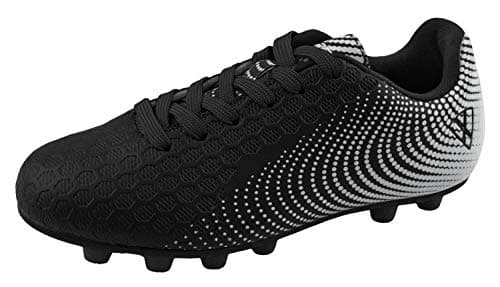
The cheapest route into a real soccer cleat, and Vizari runs the same model from toddler sizing up through big kid — so the next size is not also a new brand and a new fit to learn.
The default beginner answer: the cheapest cleat from a major brand, wider through the forefoot than most Nike junior models, and stocked in enough sizes that you can actually get the one you need.
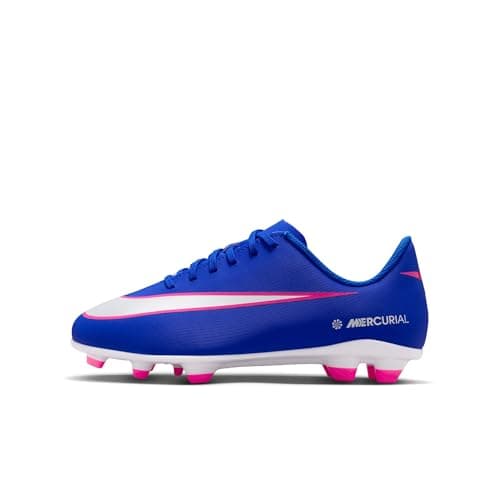
For a beginner starting later, when the schedule already mixes grass games with turf training. The Club tier is the entry step into the Mercurial line and the multi-ground plate means one pair covers both surfaces.
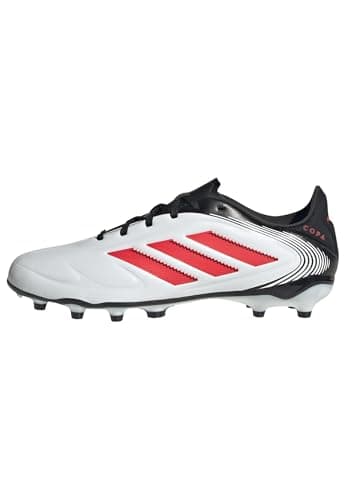
A kid starting at this age is usually bigger and self-conscious about gear. The Copa is the roomiest mainstream junior last and looks like a serious cleat, which is worth more here than at six.
Tap any row to jump to the full write-up. The price in each button is the one Amazon reported on the date stamped under it — tap through for today’s number, which is the only one that can be relied on.
#
Product
Best for
Surface
Fit notes
Price
1
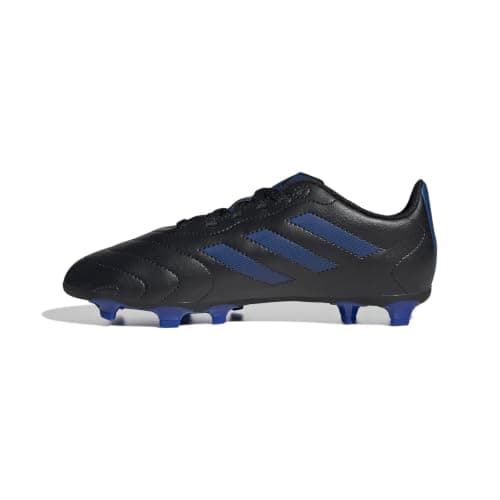
adidas Goletto VIII Firm GroundThe sensible answer when the honest requirement is a cleat that survives one rec season and costs as little as possible.
U6, U7–U8 rec, U9–U10
FG
Runs slightly generous in width and true in length.
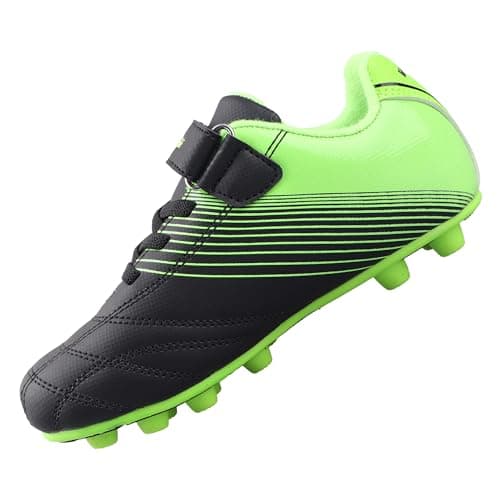
Vizari Stealth Firm GroundThe honest choice for a first-season player: enough cleat to play in, not enough money to regret if they switch to basketball.
U6, U7–U8 rec
FG
True to standard US kids' sizing and reasonably generous in width.
Product photos come from each item’s current Amazon listing.
Beginner cleats by starting age
The useful split is not skill but age, because age decides foot size, fastening ability and how long the pair has to last.
Lifespan here is about growth, not durability. Every cleat in this table outlasts the foot that is wearing it.
Starting at
Buy
Fastening
Expect it to last
3-5 (U6)
Vizari Stealth FG
Laces, tied by a parent
One season, maybe two
6-8 (U7-U8)
adidas Goletto VIII FG
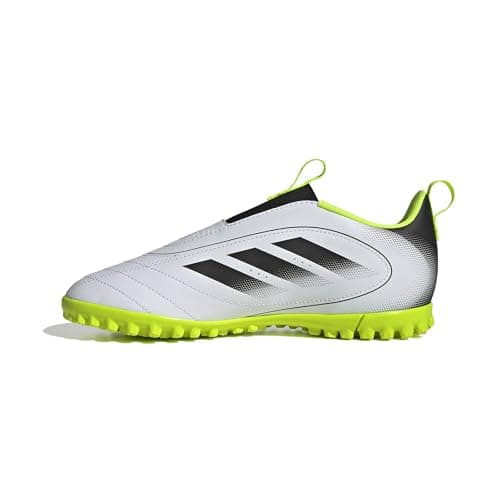
Laces, or the laceless turf version
One season
9-10 (U9-U10)
Nike Vapor 16 Club MG
Laces
One season
11-12 (U11-U12)
adidas Copa Pure.3 FG
Laces
One season, possibly less
Scroll the table sideways on a narrow screen.
Do beginners need cleats at all?
Not always, and it is worth checking before you buy. Law 4 makes footwear compulsory but does not specify studs — nothing in the Laws of the Game requires cleats. Plenty of U6 programs run entirely in sneakers, and a first-season four-year-old on a dry field is not disadvantaged by them.
Where cleats earn their place is a wet or long-grass field, which is most of a spring season in most of the country. If your league has a first practice before you have to commit, send them in sneakers and see. The U6 first kicks kit list has the whole starting checklist in order of priority.
The four beginner mistakes
Sizing up a full size to buy two seasons. It produces heel lift every stride and a blister by half time. Under Armour's guide suggests about half an inch of space at the toe — that, and no more. The fit guide has the thumb's-width check.
Buying laceless because it sounds easier. No laces means no adjustment, so a laceless cleat fits one width and nothing else. A hook-and-loop strap gives you the easy fastening without that trade — see are laceless soccer cleats good for kids.
Buying turf shoes for a grass league. A turf sole on wet grass slides. Confirm the surface first with firm ground vs turf vs AG.
Forgetting the shin guards. They are compulsory and a lot of first-timers arrive without them. The cleat and shin guard sets solve both in one purchase.
One more that is not a mistake so much as a missed saving: buy the cleats and the guards in the same order and try them on together. Guards change how a cleat fits at the ankle, and so do match socks.
1. adidas
adidas Goletto VIII Firm Ground
The sensible answer when the honest requirement is a cleat that survives one rec season and costs as little as possible.
Best for
The budget rec cleat, U6 through U10
Levels
U6 — first kicks · U7–U8 rec · U9–U10
Type / surface
FG
How it fits
Runs slightly generous in width and true in length. A good choice for a wider foot at the budget end.
What we like
Consistently one of the cheapest cleats from a major brand, which matters when a foot grows two sizes a year
Wider and more forgiving through the forefoot than most Nike junior models
Simple construction with less to fail than a performance cleat
Where it falls short
Thin sockliner — a player doing three sessions a week will want more underfoot cushioning
Firm-ground studs only, so it is not the right pair for a turf-heavy schedule
Manufacturer’s published specs
adidas's entry-level junior firm-ground cleat
Synthetic upper
Molded firm-ground studs
Sold in kids' sizing
These are the manufacturer’s own claims, not measurements we took.
The honest choice for a first-season player: enough cleat to play in, not enough money to regret if they switch to basketball.
Best for
A first pair for a U6–U8 who may not stick with the sport
Levels
U6 — first kicks · U7–U8 rec
Type / surface
FG
How it fits
True to standard US kids' sizing and reasonably generous in width. Check the toddler sizes especially — they run closer to sneaker sizing than cleat sizing.
What we like
One of the few brands that makes a genuine toddler-through-big-kid run in one model
Priced below the major brands' entry cleats, which is the right call for a first season
Simple hook-free construction with nothing fiddly for small hands
Where it falls short
Materials are visibly cheaper than a Goletto or Ultra Play and will not survive a second season of heavy use
Limited colorways compared with the big brands, which matters more to an eight-year-old than to you
Manufacturer’s published specs
Lightweight synthetic upper with a molded rubber firm-ground sole (Vizari)
Padded collar and supportive footbed
Sold in toddler, little kid and big kid sizing
These are the manufacturer’s own claims, not measurements we took.
The safest default cleat for a rec player between U7 and U12, as long as the foot is average width or narrower.
Best for
The default first real cleat, U7 through U12
Levels
U7–U8 rec · U9–U10 · U11–U12
Type / surface
MG (multi-ground)
How it fits
Runs true to length but narrow. Order the regular size with a thumb's width at the toe and do not go up a full size to buy time — the heel will slip and blister.
What we like
Multi-ground plate means one pair covers a rec season split between grass and turf fields
The Club tier is the cheapest step into the Mercurial line, so the shoe looks like what the older kids wear without the Academy or Pro price
Wide size run from little kid up through big kid, so siblings can stay in one model
Where it falls short
Narrow through the midfoot like most of the Mercurial line — a genuinely wide foot will feel it
Synthetic upper does not stretch and mold the way leather does, so it will not grow with the foot at all
Manufacturer’s published specs
Synthetic leather upper with textured detailing for grip on the ball (Nike)
Molded studs on a plastic plate, rated by Nike for natural grass and artificial grass
Low-top collar
Sold in little kids' and big kids' sizing
These are the manufacturer’s own claims, not measurements we took.
The honest answer is later than most parents think. The entry tier stays correct for as long as the child plays once or twice a week on grass, which for a lot of rec players is the whole of their youth soccer. The step up to a mid tier is worth making when the schedule adds a midweek training session and the pair is being worn four or five times a week rather than two.
At that point the questions change from beginner questions to position and surface questions, and this site answers those by level — gear by level is the place to pick up.
Common questions
What soccer cleats should a beginner buy?+
The cheapest firm-ground cleat from a real brand that fits the foot's width. For most beginners that is the adidas Goletto VIII FG, which is adidas's entry tier and runs wider through the forefoot than the equivalent Nike models. Vizari is cheaper again and sells one model across toddler through big kid sizing, which is useful for a young starter.
Do beginners need expensive soccer cleats?+
No, and the expensive tiers are actively worse for a beginner. Pro-tier junior cleats use thinner uppers with less protection, because they are built for a player who wants less material between foot and ball. A beginner gets nothing from that and loses the protection, on a foot that will be a different size by spring.
What size soccer cleats should a beginner get?+
Their normal shoe size, fitted with the socks they will actually play in, leaving about half an inch at the toe — that is Under Armour's own guidance in its buying guide for parents. Do not size up a full size to get a second season out of them: the heel lifts every stride and the blisters start before the cleats are broken in.
Do you need cleats to start playing soccer?+
Not strictly. Law 4 makes footwear compulsory but does not specify studs, and many U6 programs run in sneakers. Cleats start to matter on wet or long grass, where a flat sole slides. If your league has a practice before the first game, send them in sneakers and decide after.
Are laceless cleats good for a beginner?+
Usually not. Laceless means the fit cannot be adjusted at all, so the shoe suits one generous average width and a slim foot slides inside it. If the appeal is a child who cannot tie laces, a hook-and-loop strap model gives you the easy fastening and keeps the adjustment.
What else does a beginner need besides cleats?+
Shin guards, which are compulsory under Law 4 and must be covered by the socks, over-the-calf match socks to cover them, and a ball in the right size for the age group. That is the whole list for a first rec season; everything else can wait until you know the child is going to keep playing.
Sources
Under Armour — how to buy soccer cleats for kids — A manufacturer's own buying guide, and the source for the statement that kids' soccer cleats are unisex and sized to normal shoe size, plus its guidance on leaving about half an inch at the toe and fitting with match socks on.
Nike — kids' soccer cleats and shoes — Verified that each Nike model named on this page is currently sold, and the source for Nike's own published upper, plate and surface descriptions.
adidas — kids' soccer — Verified current availability of the adidas models named here, plus adidas's published material and construction claims.
Vizari Sports — youth cleats and indoor shoes — Verified the Vizari models named here are currently sold, including the toddler size range and the indoor line, plus Vizari's published material claims.
Coaching American Soccer — Law 4, The Players' Equipment — The Law 4 requirements quoted on this site: footwear is compulsory but cleats are not specified; shinguards must be of suitable material, appropriate size and covered by the socks, with the player responsible for suitability; a player must not use equipment that is dangerous; and the referee-level guidance that worn, pointed or exposed-shaft studs and shoes with sharp metal or pointed spikes are not permitted.
Nike — kids' soccer cleats and shoes — Verified that each Nike model named on this page is currently sold, and the source for Nike's own published upper, plate and surface descriptions.
adidas — kids' soccer — Verified current availability of the adidas models named here, plus adidas's published material and construction claims.
Vizari Sports — youth cleats and indoor shoes — Verified the Vizari models named here are currently sold, including the toddler size range and the indoor line, plus Vizari's published material claims.