Heads up: we earn a commission if you buy through our links, at no extra cost to you. It never changes which product we recommend — here’s how that works.
The short answer
Cleats are sized by foot length and shin guards by the player's height, which is why a boxed set that fits the feet often misses the legs. Buy them as a pair rather than a bundle: an entry-tier cleat plus a guard matched to height costs about the same and fits both ends.
If your kid has just signed up for their first season, the coach's list is short and two items on it have to be bought together: cleats and shin guards. It is entirely reasonable to want one purchase rather than two, and the search results are full of sets.
Here is the problem with them. A cleat is sized by foot length in US kids' sizing. A shin guard is sized by the child's height — a guard should run from just under the knee to just above the ankle bone, and the size charts are built on height bands, not shoe sizes. Those two measurements do not track each other. A tall eight-year-old with small feet and a short ten-year-old with big feet both exist, and a bundle picks one and guesses the other.
So this page does the useful version: pairs that go together well for a given age, sized separately, bought together. The total is generally no more than a bundle, and both items fit.
Start here
Pick by your kid’s level
The right answer changes with the level, not just the shoe size. Find your kid’s bracket and start there.
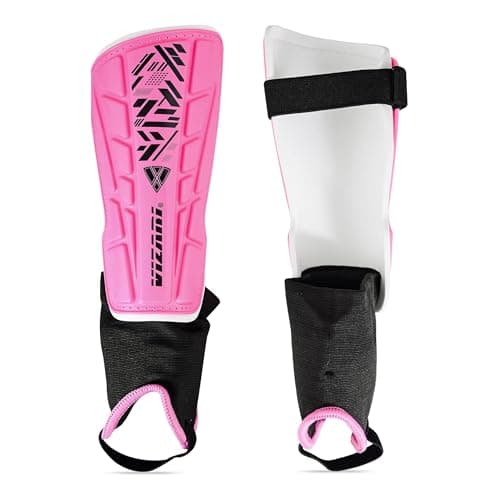
A genuine toddler-through-big-kid size run at below major-brand pricing, which is the right call for a first season. Pair it with the Vizari Malaga guards below for the cheapest complete setup that is not junk.
The best cheap cleat from a major brand and it runs wide, which forgives a growth spurt. Pair with slip-in guards, which is what most kids this age end up preferring.
A multi-ground plate covers a season split between grass and turf, which is where most U10 schedules land. Pair with a strapped guard once the play gets more physical.
Tap any row to jump to the full write-up. The price in each button is the one Amazon reported on the date stamped under it — tap through for today’s number, which is the only one that can be relied on.
#
Product
Best for
Surface
Fit notes
Price
1
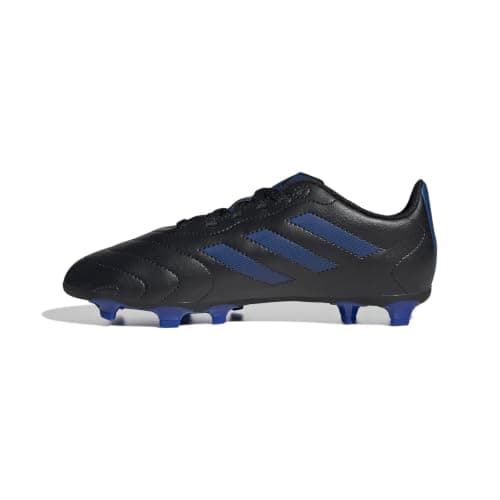
adidas Goletto VIII Firm GroundThe sensible answer when the honest requirement is a cleat that survives one rec season and costs as little as possible.
U6, U7–U8 rec, U9–U10
FG
Runs slightly generous in width and true in length.
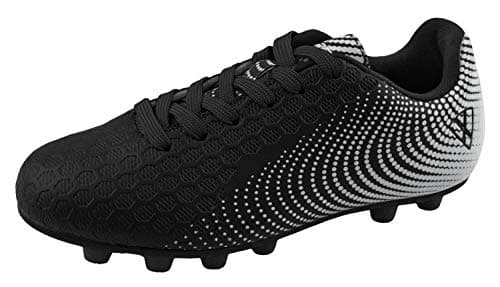
Vizari Stealth Firm GroundThe honest choice for a first-season player: enough cleat to play in, not enough money to regret if they switch to basketball.
U6, U7–U8 rec
FG
True to standard US kids' sizing and reasonably generous in width.
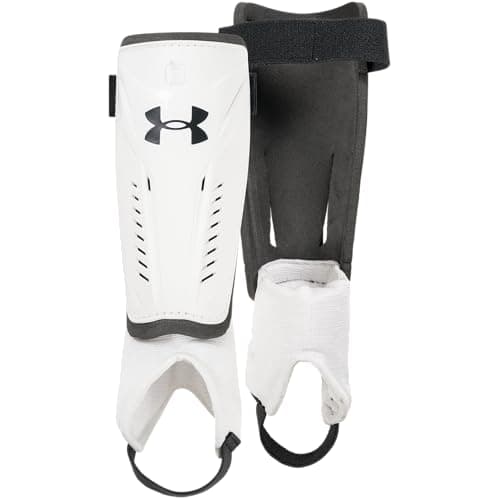
Under Armour Challenge Youth Shin GuardsThe right guard when protection is the priority — a young defender, a nervous beginner, or a kid who has already taken a bad knock.
Product photos come from each item’s current Amazon listing.
Three pairings that work
Pairings rather than boxed sets. Size the cleat by foot length and the guard by the child's height.
Age
Cleat
Shin guard
Why the pair
U6 first season
Vizari Stealth FG
Vizari Malaga youth
Cheapest complete setup that is still real gear, and toddler sizing in both
U7–U8 rec
adidas Goletto VIII FG
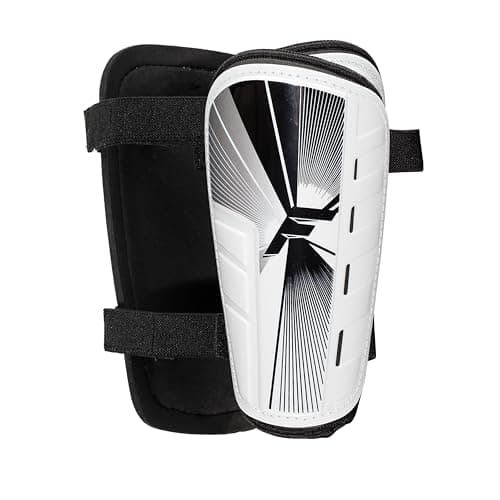
Franklin youth guards
Wide-running cleat plus a cheap spare-able guard for the age things get lost
U9–U10
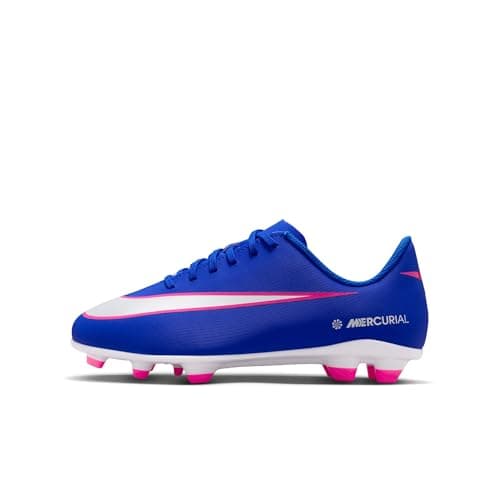
Nike Vapor 16 Club MG
Under Armour Challenge Youth
Multi-ground plate for a mixed schedule, and the guard with ankle discs as contact increases
Scroll the table sideways on a narrow screen.
How to size each half
The cleats
Measure the foot rather than reading across from a sneaker size. Stand the child on a sheet of paper, mark heel and longest toe, measure the line. Then leave about a thumb's width between the longest toe and the end of the cleat — not two, however tempting.
Size by the child's height, then check the fit on the leg: the guard should sit about two finger-widths below the knee and end just above the ankle bone. Too long and it digs in when they crouch; too short and the part of the shin that actually gets kicked is uncovered.
The youth shin guard size chart has the height bands, and if your child is between two sizes it explains which way to go.
Slip-in or strapped for a first pair?
The decision that causes the most friction in a first season, and it is worth deciding deliberately rather than by what was on the shelf.
Strapped or ankle-wrap guards protect more and stay put. They are the right first pair for a nervous beginner, a defender, or any kid who has already taken a bad knock. They are also bulkier and warmer, which is the complaint you will hear.
Slip-in guards are what most kids migrate to, because they are lighter and look like what the older players wear. They need a sleeve or a grip sock to stay in place, and that is the part families skip and then wonder why the guards end up around the ankles.
Two items beyond the pair on this page, and both are cheap enough to add now rather than discover on Saturday morning.
Soccer socks long enough to cover the guards. Regular athletic socks will not, and a guard that is not held in by a sock does not stay where it should. See the sock picks.
A ball in the right size for the age group. Size 3 to about U8, size 4 from U9. AYSO's own table is the authority and how to choose a soccer ball walks through the rest.
If you want the complete first-season list rather than these four items, the level pages set out what each age group actually needs and what it does not.
Why not just buy a bundle anyway?
You can, and for a very young child in the middle of the size bands it will often be fine. Two things to check before you do.
First, whether the guard size is chosen for you or by you — many bundles pick a guard to go with the cleat size, which is the mismatch this page is about. Second, what the guard actually is: bundled guards are usually the thinnest option in the range, and the saving comes out of the one item on the list whose job is protection.
If the bundle lets you pick both sizes independently and the guard is a model you would have bought anyway, it is a fine way to buy. If it does not, pair them yourself.
1. adidas
adidas Goletto VIII Firm Ground
The sensible answer when the honest requirement is a cleat that survives one rec season and costs as little as possible.
Best for
The budget rec cleat, U6 through U10
Levels
U6 — first kicks · U7–U8 rec · U9–U10
Type / surface
FG
How it fits
Runs slightly generous in width and true in length. A good choice for a wider foot at the budget end.
What we like
Consistently one of the cheapest cleats from a major brand, which matters when a foot grows two sizes a year
Wider and more forgiving through the forefoot than most Nike junior models
Simple construction with less to fail than a performance cleat
Where it falls short
Thin sockliner — a player doing three sessions a week will want more underfoot cushioning
Firm-ground studs only, so it is not the right pair for a turf-heavy schedule
Manufacturer’s published specs
adidas's entry-level junior firm-ground cleat
Synthetic upper
Molded firm-ground studs
Sold in kids' sizing
These are the manufacturer’s own claims, not measurements we took.
The safest default cleat for a rec player between U7 and U12, as long as the foot is average width or narrower.
Best for
The default first real cleat, U7 through U12
Levels
U7–U8 rec · U9–U10 · U11–U12
Type / surface
MG (multi-ground)
How it fits
Runs true to length but narrow. Order the regular size with a thumb's width at the toe and do not go up a full size to buy time — the heel will slip and blister.
What we like
Multi-ground plate means one pair covers a rec season split between grass and turf fields
The Club tier is the cheapest step into the Mercurial line, so the shoe looks like what the older kids wear without the Academy or Pro price
Wide size run from little kid up through big kid, so siblings can stay in one model
Where it falls short
Narrow through the midfoot like most of the Mercurial line — a genuinely wide foot will feel it
Synthetic upper does not stretch and mold the way leather does, so it will not grow with the foot at all
Manufacturer’s published specs
Synthetic leather upper with textured detailing for grip on the ball (Nike)
Molded studs on a plastic plate, rated by Nike for natural grass and artificial grass
Low-top collar
Sold in little kids' and big kids' sizing
These are the manufacturer’s own claims, not measurements we took.
The honest choice for a first-season player: enough cleat to play in, not enough money to regret if they switch to basketball.
Best for
A first pair for a U6–U8 who may not stick with the sport
Levels
U6 — first kicks · U7–U8 rec
Type / surface
FG
How it fits
True to standard US kids' sizing and reasonably generous in width. Check the toddler sizes especially — they run closer to sneaker sizing than cleat sizing.
What we like
One of the few brands that makes a genuine toddler-through-big-kid run in one model
Priced below the major brands' entry cleats, which is the right call for a first season
Simple hook-free construction with nothing fiddly for small hands
Where it falls short
Materials are visibly cheaper than a Goletto or Ultra Play and will not survive a second season of heavy use
Limited colorways compared with the big brands, which matters more to an eight-year-old than to you
Manufacturer’s published specs
Lightweight synthetic upper with a molded rubber firm-ground sole (Vizari)
Padded collar and supportive footbed
Sold in toddler, little kid and big kid sizing
These are the manufacturer’s own claims, not measurements we took.
Retailer bundles and third-party kits exist, but genuine boxed sets from the major brands are rare — and the ones that exist have a sizing problem. Cleats are sized by foot length and shin guards by the child's height, so a set can only fit both ends by coincidence. Pairing them yourself costs about the same and fits.
What size shin guards does my child need?+
Size by height, not by shoe size or age. The guard should sit about two finger-widths below the knee and end just above the ankle bone. If your child falls between two height bands, the shorter guard that stays put beats the longer one that digs in when they crouch.
What do I need to buy for my child's first soccer season?+
Four things: cleats sized by foot length, shin guards sized by height, soccer socks long enough to cover the guards, and a ball in the right size for the age group — size 3 to about U8, size 4 from U9. Most leagues supply the jersey, so confirm before buying one.
Should a beginner get slip-in or strapped shin guards?+
Strapped or ankle-wrap guards for a first pair. They protect more and stay put without a sleeve, which matters for a kid who is still learning where the ball is going to be. Most players migrate to slip-ins later for the lighter feel, at which point a grip sock or sleeve becomes necessary.
How much should a first cleat and shin guard setup cost?+
Less than most parents expect. An entry-tier cleat from a major brand plus a youth guard from a soccer brand covers a first rec season, and both items will be outgrown before they wear out — which is the argument for the entry tier rather than a compromise on it.
Sources
adidas — kids' soccer — Verified current availability of the adidas models named here, plus adidas's published material and construction claims.
Nike — kids' soccer cleats and shoes — Verified that each Nike model named on this page is currently sold, and the source for Nike's own published upper, plate and surface descriptions.
Vizari Sports — youth cleats and indoor shoes — Verified the Vizari models named here are currently sold, including the toddler size range and the indoor line, plus Vizari's published material claims.
AYSO — Size of Ball and Field by Age Division — Official ball sizes, circumference and weight ranges, and field dimensions by age division. Used for every ball-size and field-size figure on this site.