Cleats
Are expensive soccer cleats worth it?
For a growing player the answer is no above a certain point — and the point is lower than you would guess.
By Ryder M. · Published October 4, 2026
The short answer
For a youth player, the first step up is worth it and the last one is not. Moving from a no-name cleat to a major brand's entry tier buys real durability. Moving from the mid tier to Pro buys a lighter, thinner shoe that protects the foot less and will be outgrown in a season. Spend the difference on a second pair for the other surface instead.
Every junior line is sold as a ladder. Nike's Mercurial runs Club, then Academy, then Pro; adidas's Predator runs Club, then League, then higher. The price roughly doubles at each step and the marketing language gets more confident. What actually changes is narrower than the pricing implies.
What each step genuinely buys
| Step | What changes | Worth it for a youth player? |
|---|---|---|
| No-name to entry tier | Upper and plate durability; a size run that fits properly | Yes — this is the step that matters |
| Entry to mid tier | Better upper, better plate, more underfoot cushioning | Only if they play three or more times a week |
| Mid to Pro tier | Lighter weight, thinner upper, stiffer plate | Rarely — see below |
The entry step is real. A cheap unbranded cleat tends to fail in the same two places — the sole separating at the toe, and a size run that does not match any standard — and both ruin a season. The brands' entry tiers fix that, which is why the budget picks start there rather than lower.
Why Pro tier is the wrong buy for a kid
This is the part that gets left out of the sales conversation, and it is not a judgment call. It follows from how the shoes are built.
- The upper gets thinner as the price rises. That is the point — a thin upper transmits more feel. It also means the most expensive cleat in a line offers the least protection against a stray kick on the top of the foot.
- The plate gets stiffer. Stiffness helps an adult sprinter transfer force. On a lighter player it mostly means a less forgiving shoe.
- Pro tiers are often firm-ground only. If midweek training is on artificial turf, a firm-ground-only Pro cleat is the wrong plate for most of the week.
- The fit is deliberately snug. Performance lasts are built tight, which is the opposite of what a foot that grows two sizes a year wants.
Put together: at the top of a junior line you pay the most for a shoe that fits for the shortest time and shields the foot least. Where the money stops buying anything walks the same ladder from the other direction.
The same line at three prices
Nike
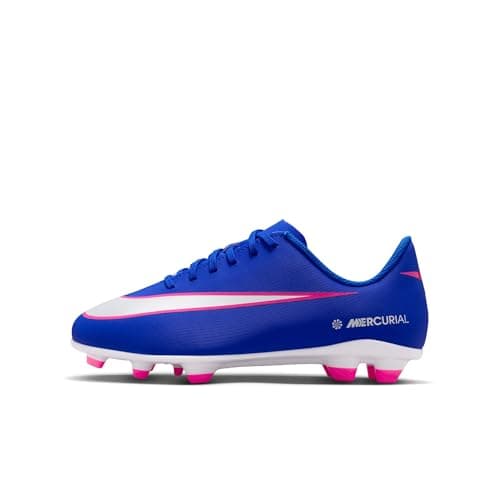
Nike Jr. Mercurial Vapor 16 Club MG
The safest default cleat for a rec player between U7 and U12, as long as the foot is average width or narrower.
$60.88View on Amazon#ad — we may earn a commission · price as of October 16, 2026
Nike
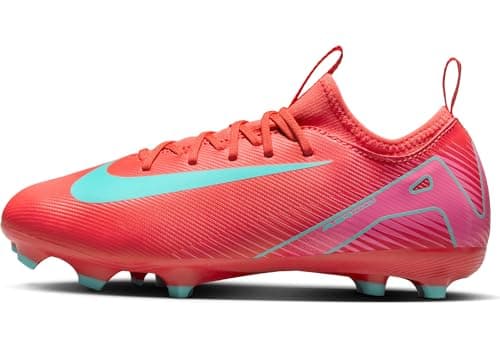
Nike Jr. Mercurial Vapor 16 Academy FG/MG
Worth the step up only when the volume of play justifies it — two or three sessions a week, not one Saturday game.
$84.99View on Amazon#ad — we may earn a commission · price as of October 16, 2026
Nike
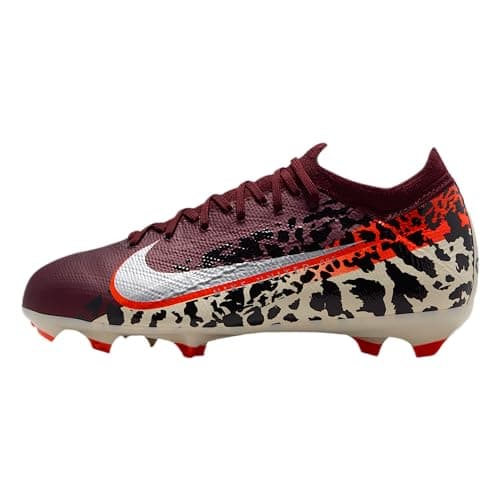
Nike United Jr. Mercurial Vapor 16 Pro FG
Only makes sense for a fast, committed player whose games are genuinely on grass; a turf-heavy schedule wastes it.
$94.98View on Amazon#ad — we may earn a commission · price as of October 16, 2026
Product photos come from each item’s current Amazon listing.
The upgrades that are actually worth the money
Three, in order, and none of them is a tier.
- The right plate for the surface. This changes how a kid plays and feels more than brand or price tier does. Firm ground vs turf vs AG is the page that settles it.
- The right width. A Pro cleat that is too narrow is a worse cleat than an entry model that fits. Start at how a kid's cleats should fit.
- A second pair, if the week is split between grass and turf. Two entry-tier pairs beat one expensive pair for a kid training on turf and playing on grass, and neither pair stays damp.
What about resale and hand-me-downs?
A common argument for spending more is that a better cleat passes down to a sibling. It is weaker than it sounds. Cleats wear from the inside: the sockliner compresses, the heel counter softens, and the studs round off. A pair that has done a full season on a heavier player is not a fresh pair for a lighter one, whatever it cost new.
What does pass down well is the stuff nobody thinks about — bags, pumps, cones, the rebounder in the garden. When to replace a pair covers how to tell whether a hand-me-down has anything left.
So what should you spend?
Buy a major brand's entry or mid tier, in the right width, on the right plate for the surface they play on most. Replace it when the fit goes rather than when a new colorway lands. If there is money left, spend it on the second surface, a ball that holds air, or shin guards that fit — all of which get used more than a lighter upper does.
We do not print prices on this site, so the ladder above is described in steps rather than dollars. Check the current price on the retailer's own listing before deciding where your step is.
There is one age where the answer genuinely shifts, and it is the age the top tiers first become buyable: best soccer cleats for 13 and 14 year olds works through when Pro tier is defensible and when it is the wrong shoe.
Common questions
Are expensive soccer cleats worth it for kids?
Up to a point. Moving from an unbranded cleat to a major brand's entry tier buys genuine durability and a size run you can trust, and that step is worth it. Moving to the Pro tier of a junior line buys a lighter, thinner, stiffer shoe that protects the foot less and is often firm-ground only — for a growing player that is the wrong trade.
Do more expensive soccer cleats make you play better?
Not at youth level in any way that outweighs fit and surface. The two things that genuinely change how a young player performs are whether the plate matches the surface and whether the cleat fits the foot. A Pro-tier cleat in the wrong width is worse than an entry-tier cleat in the right one.
Why are cheap soccer cleats a bad idea?
Unbranded cleats tend to fail in two specific ways: the sole separates at the toe partway through a season, and the size run does not match any standard so the fit is a guess. A major brand's entry tier fixes both for a modest step up in price, which is why the budget recommendations on this site start there rather than lower.
Do expensive soccer cleats protect your feet more?
Less, in fact. Uppers get thinner as you move up a line, because a thin upper transmits more feel on the ball. That means the most expensive cleat in a range offers the least material over the top of the foot. Real protection comes from shin guards, not from the cleat.
How much should you spend on youth soccer cleats?
Enough for a major brand's entry or mid tier in the correct width and on the correct plate for the surface they play on most. Anything beyond that is better spent on a second pair for the other surface, a ball with a butyl bladder, or shin guards that fit — all of which get more use than a lighter upper.
Is it worth buying Pro tier cleats for a 12 year old?
Only if several things are true at once: they are genuinely fast, they play several times a week, their games are on natural grass rather than turf, and their feet have slowed down growing. If any of those is false, the mid tier is the better buy and the difference goes further elsewhere.
Sources
- Nike — Mercurial, Phantom and Tiempo compared by playing style — Nike's own statement of which silo suits which position: Mercurial 'built for speed; best for forwards and wide midfielders', Phantom 'built for precision; best for central midfielders and playmakers', Tiempo 'built for comfort and control'. The source for every Nike position claim on this site.
- Unisport — adidas Predator vs F50 vs Copa — Position mapping for the adidas silos — Predator for number 8s and 10s, F50 for wingers, attacking fullbacks and forwards, Copa for center-backs, defensive midfielders and classic number 9s — plus the width ranking (F50 narrowest, Predator middle, Copa most accommodating).
- Nike — kids' soccer cleats and shoes — Verified that each Nike model named on this page is currently sold, and the source for Nike's own published upper, plate and surface descriptions.
- adidas — kids' soccer — Verified current availability of the adidas models named here, plus adidas's published material and construction claims.
- Nike — kids' soccer cleats and shoes — Verified that each Nike model named on this page is currently sold, and the source for Nike's own published upper, plate and surface descriptions.
- adidas — kids' soccer — Verified current availability of the adidas models named here, plus adidas's published material and construction claims.
- Vizari Sports — youth cleats and indoor shoes — Verified the Vizari models named here are currently sold, including the toddler size range and the indoor line, plus Vizari's published material claims.
Read next
- Best soccer cleats under $150Every junior tier that fits under $150, what each step up buys, and why most families should spend far less than the cap.
- Best budget youth soccer cleatsCheap cleats that are actually worth buying, and exactly what each step up in price buys you.
- Firm ground vs turf vs artificial grass cleatsThe FG, AG, TF and MG decision table, whether one pair can cover a mixed schedule, and the cost of guessing wrong.
- How should kids' soccer cleats fit?The thumb's-width rule and four hands-on fit checks — because asking a kid whether shoes fit does not work.
- When to replace kids' soccer cleatsThe four signs a pair is finished, how often replacement actually happens, and what to check every two months.
- Best soccer cleats for 11 and 12 year oldsWhere position starts affecting cleat choice, plus the honest case for the Academy and Pro tiers at 11–12.
- Nike Mercurial vs Tiempo vs Phantom for youth playersNike's three youth lines compared on width, weight and what each is actually built for.
- Rec vs travel soccer: what gear actually changesWhat the jump from one session a week to four actually breaks — and what genuinely needs upgrading.