Heads up: we earn a commission if you buy through our links, at no extra cost to you. It never changes which product we recommend — here’s how that works.
The short answer
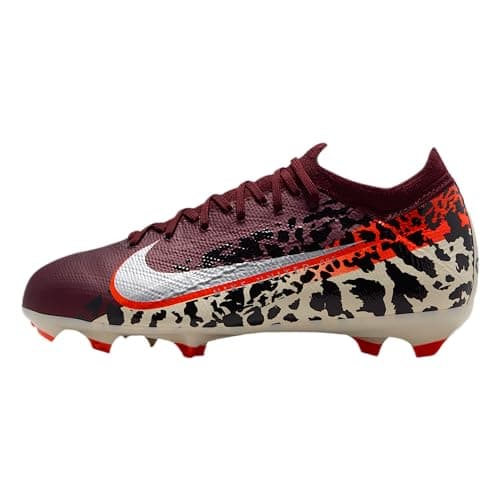
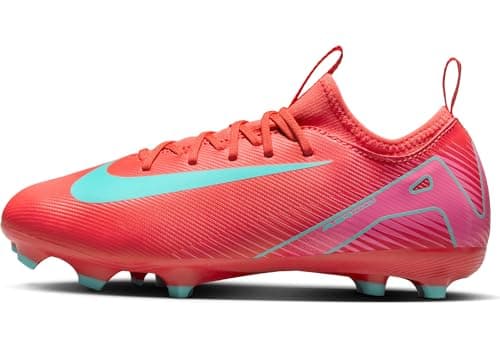
At 13 and 14 most players size out of the junior range, so buy by surface first, width second, position third. For a player still in big-kid sizing the Nike Jr. Mercurial Vapor 16 Academy FG/MG covers the widest range of fields; once they are in senior sizing, pick the line that matches how they play rather than the tier. Pro and Elite tiers are firm-ground specialists and only earn their price on real grass.
Thirteen and fourteen go on one page because it is the same purchase, and because what separates two players at this age is not their birthday. It is whether the foot has outgrown the junior range yet. One fourteen-year-old is in a 6Y. Another is in an adult 9. They are shopping in two different places.
What changes at 13: you leave the kids' range
Around 6Y or 7Y, most brands' junior ranges end and adult sizing takes over. A 7Y is roughly an adult men's 7. That one fact drives everything else on this page, because the adult range is not the junior range with bigger numbers on the box.
Three things appear the moment a player crosses over. The first is the top of the tier ladder: the junior range mostly stops at the Academy or League tier, while the adult range runs up through Pro and Elite, which is where the stiff plates and very thin uppers live. The second is the men's and women's last split, which does not exist at junior sizing at all — kids' cleats are unisex and sized to normal shoe size. The third is that the shoe is now built for a foot that has nearly stopped growing, so it is made stiffer and lighter, with less of the forgiveness a junior cleat has.
Two thirteen-year-olds, two different purchases. The crossover happens around 6Y or 7Y and has nothing to do with the birthday.
Still in junior sizing
In senior sizing
Typical size
Up to about 6Y-7Y
Adult 7 and up
Tiers available
Club, Academy, League
Club through Pro and Elite
Last options
Unisex only
Men's and women's lasts
Construction
More forgiving, more cushioned
Stiffer, lighter, less forgiving
What to buy
The Academy or mid tier of the right line
The right line first, then the cheapest tier of it that fits
Replaced because
It was outgrown
It wore out
Scroll the table sideways on a narrow screen.
The last row is the one that changes how a family budgets. Up to about twelve, a cleat gets replaced because the foot grew. From about fourteen, it gets replaced because it wore out — which means for the first time, how well it is built affects how long you own it. The youth cleat size chart has the full conversions and shows where the changeover lands.
Start here
Pick by your kid’s level
The right answer changes with the level, not just the shoe size. Find your kid’s bracket and start there.
For the thirteen-year-old still in big-kid sizing, which is a lot of them. The FG/MG plate handles both a grass game and the artificial-grass field the club trains on, so it does not need a second pair behind it.
For a fourteen-year-old playing three or four times a week who is not a winger. Nike positions the Tiempo around comfort and control rather than speed, and comfort is what survives a teenager's training load.
Surface. What are the games on, and what is training on? This rules out more models than anything else, and it is the only item on this list that can get a player hurt.
Width. A senior cleat is less forgiving than a junior one, so a wide foot in a narrow line is a worse experience at 14 than it was at 10.
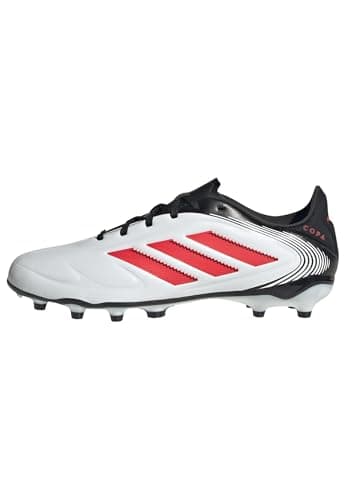
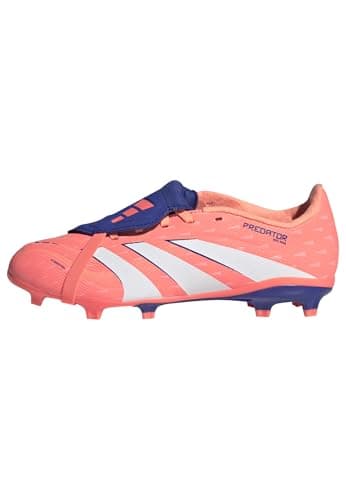
Line. Mercurial or F50 for speed, Phantom or Predator for striking, Tiempo or Copa for comfort and width. The brands publish this themselves.
Tier. Only now, and based on how often they play rather than on how good they are.
Everything else. Collar, laceless, colorway. Preferences, not decisions.
Parents reliably work this list backwards, starting from the model their kid asked for and checking whether it will do. It usually will not, and the reason is nearly always surface.
Quick picks
Tap any row to jump to the full write-up. The price in each button is the one Amazon reported on the date stamped under it — tap through for today’s number, which is the only one that can be relied on.
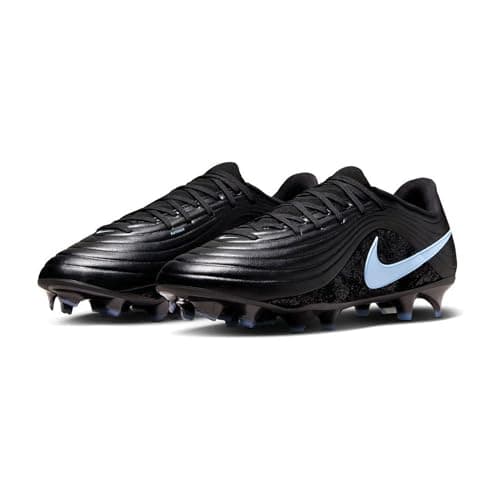
Nike Jr. Tiempo Maestro Academy MGThe comfort-first Nike junior cleat, and the sensible pick for a defender, a keeper, or a kid who plays in discomfort and has stopped mentioning it.
U9–U10, U11–U12, U13+ travel & club
MG (multi-ground)
The most generous Nike junior last — closer to the adidas Copa than to the Mercurial.
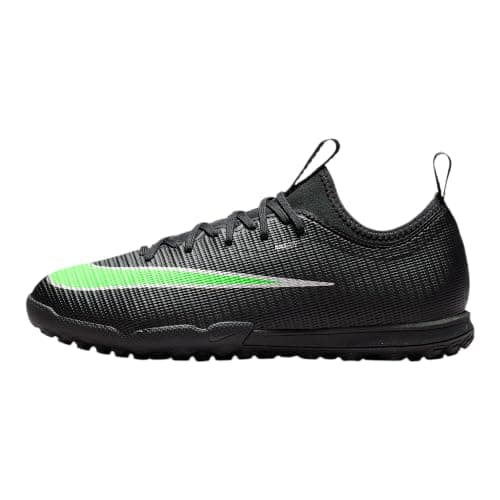
Nike Jr. Mercurial Vapor 17 Academy AGThe pick when the home pitch is genuinely long-pile artificial grass rather than short training turf, and the foot is average width or slimmer.
Product photos come from each item’s current Amazon listing.
Surface, which is not a preference
At 13 and 14 the player is on a full-size field, running faster, stopping harder and turning under more load than at any earlier age. A firm-ground plate on an artificial-grass carpet does not release the foot properly, and a turf sole on wet natural grass does not hold at all. Both of those are injury conversations rather than performance ones.
FG/MG or MG if the schedule is mixed, which it is for most US club players. The Vapor 16 Academy and the Tiempo Maestro Academy both use this plate.
AG if the club plays and trains on full-size artificial grass: shorter, more numerous studs, and the right answer on a modern carpet. The Vapor 17 Academy AG is the one here.
FG only if the games are genuinely on natural grass. This is where the Pro and Elite tiers live, and it is why they are a narrower purchase than they look.
TF for turf training and winter sessions, as a second pair rather than a first — see the youth turf shoe picks.
This is the one place where a teenager's own opinion is worth listening to, because the lines genuinely differ and the brands say so themselves rather than leaving it to reviewers.
Nike positions the Mercurial as built for speed and best for forwards and wide midfielders, the Phantom as built for precision and best for central midfielders and playmakers, and the Tiempo as built for comfort and control. adidas splits it Predator for central midfielders, F50 for wingers, attacking fullbacks and forwards, and Copa for center-backs, holding midfielders and classic number nines. On width, the F50 is the narrowest of the adidas lines, Predator sits in the middle, and Copa is the most accommodating.
A winger or striker who runs past people: Mercurial or F50. Light, narrow, built for straight-line speed.
A number eight or ten who strikes the ball a lot: Predator or Phantom. The textured strike zone is a real feature, not a sticker.
A center-back, holding midfielder or keeper: Tiempo or Copa. Softer, wider, better cushioned, and the lines that survive a teenager who plays every day.
A player who has not settled into a position: Tiempo, Copa or Phantom. Do not buy a specialist shoe for a player still finding out what they are.
The comfort-first Nike junior cleat, and the sensible pick for a defender, a keeper, or a kid who plays in discomfort and has stopped mentioning it.
Best for
A U9+ defender, keeper or any player who wants comfort over speed
Levels
U9–U10 · U11–U12 · U13+ travel & club
Type / surface
MG (multi-ground)
How it fits
The most generous Nike junior last — closer to the adidas Copa than to the Mercurial. True to length, and a reasonable first try for a foot the Mercurial has pinched.
What we like
The roomiest and most forgiving Nike junior line, which makes it the Nike answer for a broad or high-volume foot
Softer, leather-feel upper is more comfortable through the long stretches of standing and jogging that make up a youth session
Multi-ground plate means one pair covers grass games and turf training
Where it falls short
Heavier than the Mercurial at the same tier, which a genuinely fast player will feel
The softer upper creases and scuffs early, so it looks worn well before it is worn out
Manufacturer’s published specs
Tiempo is Nike's touch-and-comfort silo, positioned by Nike for players who prioritize a soft, precise touch and all-day comfort (Nike)
Academy tier of the current Tiempo Maestro junior family
Multi-ground plate; junior sizing
These are the manufacturer’s own claims, not measurements we took.
For a small number of players, yes. For most, no — and the reason is not that they are not good enough. It is that the top tiers are firm-ground specialists built thin, and both of those properties are liabilities on the schedule a typical US club player actually has.
A Pro-tier cleat buys a lighter plate, a thinner upper and a more direct feel on the ball. What it gives up is cushioning, durability and surface range. A fourteen-year-old training twice a week on artificial grass and playing Saturdays on a mixed field will chew through a thin upper in a season and spend most of their hours in it on a surface it was not built for.
The honest test is three questions. Are the games on natural grass? Do they play at least three or four times a week? Are they fast enough that a few grams of plate weight is the thing holding them back? Two yeses and a maybe is the case for the mid tier. Three clear yeses is the case for Pro. Anything less and the Academy or League tier is the better shoe for this player, not merely the cheaper one.
A junior cleat is forgiving because it has to fit a foot shape that changes every few months. A senior cleat is not, and a wide-footed fourteen-year-old in a Mercurial or an F50 will have a bad season in a shoe that is, on paper, the best one on this page.
Measure rather than guess, and measure with match socks on and both feet standing. Under Armour's own buying guide puts the target at about half an inch at the toe, which is the figure worth holding to even when it feels generous. If the forefoot has to spread to fit, it is the wrong line regardless of the length. The wide-foot picks and the narrow-foot picks are sorted on exactly that.
One point specific to this age: the crossover into adult sizing is the first place a women's-specific last becomes a real option rather than a marketing label, because the adult ranges genuinely split. For a tall fourteen-year-old who has sized out of junior cleats, it is worth trying both.
What not to buy at 13 or 14
A size up to grow into. The oldest mistake and the one that causes the most injuries. A loose cleat slides on the foot under exactly the loads this age generates.
Soft-ground cleats with metal studs, unless the league specifically allows them and the field genuinely needs them — most youth leagues do not. See are metal cleats allowed in youth soccer.
A firm-ground Pro cleat for a player who trains on turf. It is the wrong shoe for most of the hours they will wear it.
Last season's Elite tier because it is discounted. The discount is real and so is the thin upper. A cheap Elite is still an Elite.
Laceless as a first senior cleat. It is a genuine option at this age and a real fit risk — are laceless cleats good for kids covers both sides.
Budget, honestly
The entry tier of a real soccer brand is a fine cleat for a thirteen-year-old who plays once or twice a week, and nothing about being thirteen changes that. What changes with volume is cushioning and plate stiffness, and those are the two things an entry-tier cleat genuinely gives up. If they play three or more times a week, the mid tier earns the money and the top tier usually does not.
If budget is the constraint rather than the question, the best budget youth cleats page is the shortlist. The one thing not to economize on at this age is surface: a correct plate in a cheap cleat beats an expensive cleat on the wrong plate, every time.
And whatever you buy, break it in before a game rather than during one. A senior cleat is stiffer than the junior pair it replaced, and a teenager who plays their first match in a brand-new stiff shoe will tell you about it for a week. How to break in soccer cleats takes about twenty minutes of effort and saves the blisters.
If you are rebuilding the whole bag for a player moving up, the other items that change at this age are the ones that touch skin all game: the youth soccer shorts picks cover the under layer a teenager suddenly needs, and a keeper moving into senior sizing should read goalie glove cuts explained before replacing gloves on a bigger hand.
Common questions
What size soccer cleats does a 13 or 14 year old wear?+
It varies enormously, which is the point. Around 6Y or 7Y most brands' junior ranges end and adult sizing takes over, and a 7Y is roughly an adult men's 7 — so one fourteen-year-old is shopping in the kids' range and another in the adult range. Measure both feet standing with match socks on and leave about half an inch at the toe.
What are the best soccer cleats for a 14 year old?+
Decide by surface first, then width, then line. For a player still in big-kid sizing, the Nike Jr. Mercurial Vapor 16 Academy FG/MG covers the widest range of fields without needing a second pair behind it. For a player in senior sizing who trains three or four times a week, a comfort line like the Tiempo or Copa lasts better than a speed line. The best cleat at this age is the one matched to the field, not the most expensive one.
When do kids move from youth to adult soccer cleats?+
At the size, not the age — around 6Y or 7Y, where most brands' junior ranges stop. The change matters because the adult range is built differently: stiffer, lighter, less forgiving, with Pro and Elite tiers available for the first time, and with men's and women's lasts that do not exist in junior sizing.
Are expensive soccer cleats worth it for a 14 year old?+
Usually not, and not for the reason parents expect. The top tiers are firm-ground specialists with thin uppers, which makes them a narrow purchase: a player who trains on artificial grass and plays on mixed fields spends most of their hours on a surface the shoe was not built for. The case for spending more is strongest when the games are on natural grass, the player trains three or more times a week, and their shoe size has been stable for a year.
Should a 13 year old get firm ground or artificial grass cleats?+
Match the plate to where they actually play. FG/MG or MG for a mixed schedule, which covers most US club players. AG if the club plays and trains on full-size artificial grass, because AG plates use shorter, more numerous studs and are the correct answer on a modern carpet. FG only if the games are genuinely on natural grass.
How often will a 14 year old need new cleats?+
Once a season for most, but for a different reason than at younger ages. Up to about twelve, cleats get replaced because the foot grew; from about fourteen they get replaced because they wore out. That is the first point at which build quality affects how long you own the shoe, which is why a stable shoe size is a real argument for spending a little more.
Sources
Nike — kids' soccer cleats and shoes — Verified that each Nike model named on this page is currently sold, and the source for Nike's own published upper, plate and surface descriptions.
adidas — kids' soccer — Verified current availability of the adidas models named here, plus adidas's published material and construction claims.
Nike — Mercurial, Phantom and Tiempo compared by playing style — Nike's own statement of which silo suits which position: Mercurial 'built for speed; best for forwards and wide midfielders', Phantom 'built for precision; best for central midfielders and playmakers', Tiempo 'built for comfort and control'. The source for every Nike position claim on this site.
Unisport — adidas Predator vs F50 vs Copa — Position mapping for the adidas silos — Predator for number 8s and 10s, F50 for wingers, attacking fullbacks and forwards, Copa for center-backs, defensive midfielders and classic number 9s — plus the width ranking (F50 narrowest, Predator middle, Copa most accommodating).
Under Armour — how to buy soccer cleats for kids — A manufacturer's own buying guide, and the source for the statement that kids' soccer cleats are unisex and sized to normal shoe size, plus its guidance on leaving about half an inch at the toe and fitting with match socks on.