Heads up: we earn a commission if you buy through our links, at no extra cost to you. It never changes which product we recommend — here’s how that works.
The short answer
AG is not turf. AG cleats have real studs — more of them than firm ground, shorter and often hollow — and are built for long-pile artificial grass on full-size pitches. Short, hard, dense artificial turf needs TF instead. Junior AG and FG/AG models do exist, but they are a small part of what is stocked.
Before anything else, go and look at the field. This whole page turns on one observation, and most families answer it by assumption.
If you can run your fingers down into the pile and it is roughly grass length, with rubber crumb between the blades — that is long-pile artificial grass, and it is what AG plates are for. If it is short, dense and hard underfoot, more like a carpet than a lawn, that is turf, and it needs a TF outsole.
Both get called 'turf' in conversation and on team emails, which is exactly why the wrong shoe gets bought. Most youth training facilities in the US use the shorter, harder kind; full-size artificial pitches at bigger clubs use the long-pile kind.
Start here
Pick by your kid’s level
The right answer changes with the level, not just the shoe size. Find your kid’s bracket and start there.
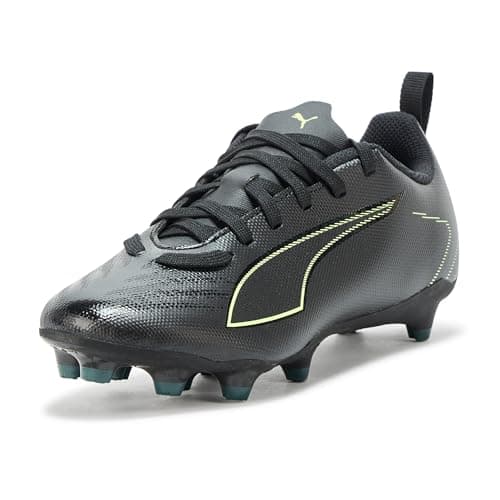
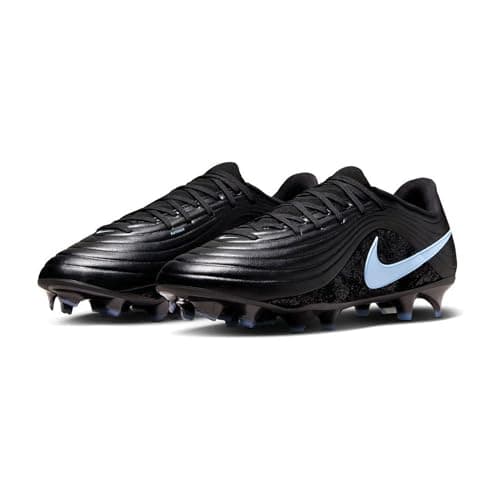
PUMA Kids' Ultra Play Firm Ground/Artificial Ground
An FG/AG plate at the entry end, which is the sensible default for a young player on a mixed schedule — a genuine dual-surface design rather than a firm-ground plate with artificial-grass marketing.
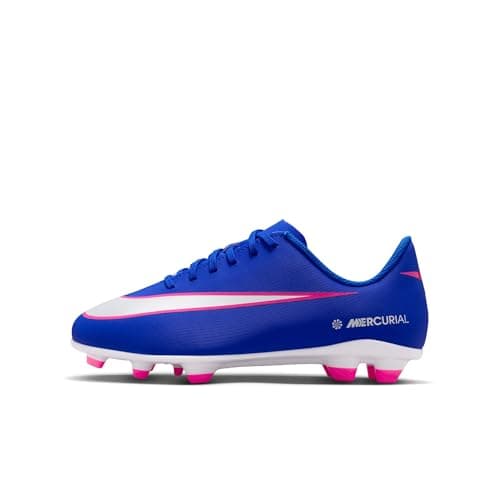
One of the few junior cleats sold with a dedicated AG plate rather than only FG, MG and TF. If the club's home pitch is genuinely long-pile artificial grass, this is the pick.
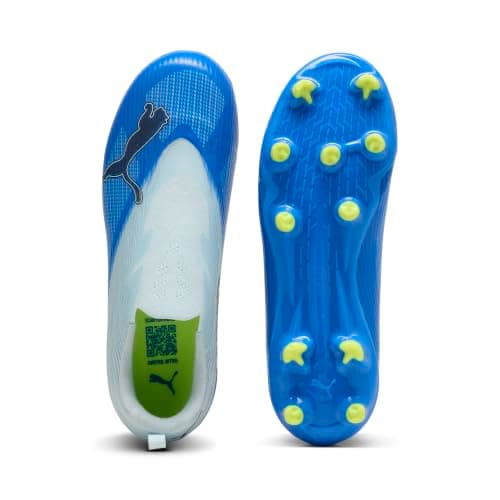
A junior FG/AG plate with a laceless upper for an older player on both grass and artificial grass. Average-to-wide fit only — there is no adjustment at all.
Tap any row to jump to the full write-up. The price in each button is the one Amazon reported on the date stamped under it — tap through for today’s number, which is the only one that can be relied on.
#
Product
Best for
Surface
Fit notes
Price
1
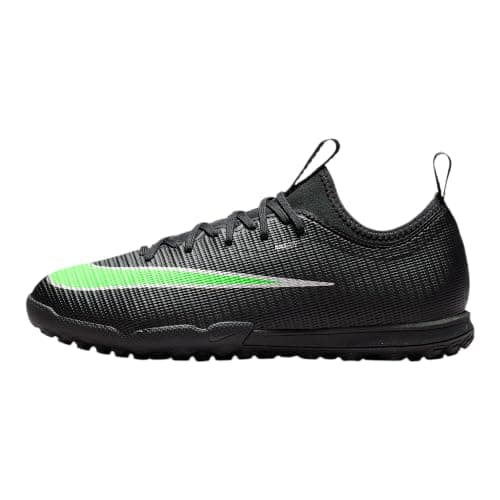
Nike Jr. Mercurial Vapor 17 Academy AGThe pick when the home pitch is genuinely long-pile artificial grass rather than short training turf, and the foot is average width or slimmer.
PUMA Ultra 7 Match LL FG/AG JuniorA good dual-surface option for an older player with an average-to-wide foot, and the wrong purchase for a narrow one.
U11–U12, U13+ travel & club
FG/AG
Fits a generous average width with no way to snug it down, and runs slightly short like the rest of the PUMA junior range.
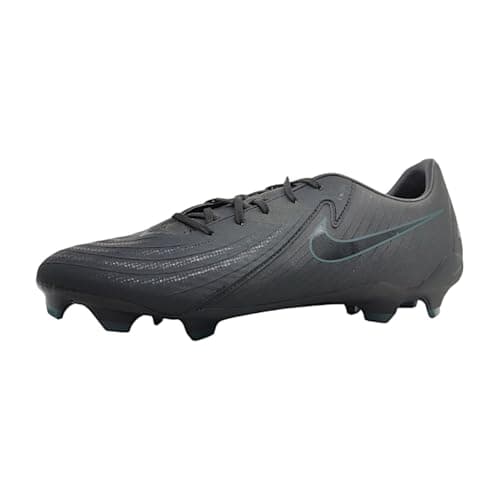
Nike Jr. Phantom GX II Academy FG/MGThe better Nike choice for a midfielder or defender who needs a reliable striking surface more than a few grams saved.
U9–U10, U11–U12, U13+ travel & club
FG/MG
Slightly more forefoot volume than a Mercurial at the same size.
Nike Jr. Tiempo Maestro Academy MGThe comfort-first Nike junior cleat, and the sensible pick for a defender, a keeper, or a kid who plays in discomfort and has stopped mentioning it.
U9–U10, U11–U12, U13+ travel & club
MG (multi-ground)
The most generous Nike junior last — closer to the adidas Copa than to the Mercurial.
Product photos come from each item’s current Amazon listing.
Telling artificial grass from artificial turf
Artificial grass (3G)
Artificial turf
Pile
Long — roughly grass length
Short and dense
Underfoot
Springy, with rubber crumb
Hard, carpet-like
Where you see it
Full-size club pitches
Training facilities, small-sided fields
Right outsole
AG or FG/AG
TF
What goes wrong otherwise
TF nubs cannot get purchase
AG studs sit on top and concentrate load
Scroll the table sideways on a narrow screen.
If you cannot tell, ask the coach what the surface is and, better, go and stand on it. That one question decides this page, and it is cheaper than a second pair of cleats. The full surface breakdown covers all four plate types side by side.
What an AG plate actually does differently
More studs, shorter. Load is spread over more points than a firm-ground plate manages, which matters on a surface that does not give as much as soft grass.
Often hollow studs. Designed to reduce the pressure that builds under each individual stud on a harder base.
Still real studs, not nubs. That is the distinction from a turf outsole, and it is why an AG shoe on short hard turf is still the wrong tool.
Worth knowing for a different reason too: firm-ground studs abrade fast on hard artificial surfaces. They are made to sink into ground that gives, and ground that does not simply grinds them down. That is one of the four signs a pair is finished — see when to replace kids' soccer cleats.
Do youth AG cleats actually exist?
Some, and fewer than you would guess. This is the part of the page worth checking before you start shopping, because a lot of AG advice online is written about adult ranges and quietly assumes the junior sizes exist.
When we checked on 29 September 2026, Nike listed a junior Mercurial Vapor Academy with an AG plate alongside the MG, TF and indoor versions, and a specialist retailer's artificial-ground collection carried two junior PUMA FG/AG models among a much larger adult selection. That is a real but thin set of options.
Which leads to the practical recommendation for most families: unless the club's home pitch is definitely long-pile artificial grass, a multi-ground or FG/AG plate is the better buy. It is adequate on both natural and artificial grass, which is the correct trade when you are buying one pair.
FG/AG, MG and AG: which label to buy
Home pitch is definitely long-pile 3G, most weeks. Buy AG. This is the case the plate was designed for and the only one where it is clearly better than the alternatives.
Split between natural grass and artificial grass. Buy FG/AG or MG. A deliberate compromise that is adequate on both, and the right call for most youth players.
Mostly short, hard artificial turf. Buy TF, not AG. Different surface, different shoe — the turf shoe picks are the correct page.
Indoors on a court. Buy IN. Studs and colored rubber both mark a sports floor, and most facilities will turn a turf shoe away at the door.
One pair or two on artificial grass
Artificial grass is the friendliest of the four surfaces to a compromise plate, which is genuinely good news. A multi-ground or FG/AG cleat works well enough on 3G that a second pair is harder to justify than it is for a family whose training is on hard turf.
So if your kid plays and trains on artificial grass, one good FG/AG pair is usually the whole answer. If the schedule mixes 3G with hard indoor turf, that is when two pairs start to pay for themselves.
1. Nike
Nike Jr. Mercurial Vapor 17 Academy AG
The pick when the home pitch is genuinely long-pile artificial grass rather than short training turf, and the foot is average width or slimmer.
Best for
A U10+ player whose club plays on full-size artificial grass
Levels
U9–U10 · U11–U12 · U13+ travel & club
Type / surface
AG (artificial grass)
How it fits
Narrow Mercurial last, true to length. Order the measured size; an AG plate does nothing to rescue a cleat half a size too long.
What we like
A real artificial-grass plate in a junior size, which is genuinely hard to find — most AG stock is adult-only
Shorter and more numerous studs than a firm-ground plate, so the foot is not carrying its whole load through six long studs on a hard pitch
Same Mercurial last and upper as the MG and TF versions, so a kid moving between pairs is not relearning the fit
Where it falls short
Wrong plate for soft natural grass — the shorter studs will not bite on a wet Saturday field
Narrow Mercurial fit, so a wide foot should look at the Copa or Tiempo lines instead
Manufacturer’s published specs
One of the few junior cleats Nike lists with a dedicated AG plate rather than only FG, MG, TF and indoor (Nike)
Academy tier of the current Mercurial Vapor 17 family
Low-top, big kids' sizing
These are the manufacturer’s own claims, not measurements we took.
A good dual-surface option for an older player with an average-to-wide foot, and the wrong purchase for a narrow one.
Best for
A U11+ player on mixed grass and artificial grass who wants no laces
Levels
U11–U12 · U13+ travel & club
Type / surface
FG/AG
How it fits
Fits a generous average width with no way to snug it down, and runs slightly short like the rest of the PUMA junior range. Not the pick for a slim foot.
What we like
A dual-surface plate and a clean striking surface in one junior shoe, which is an unusual combination at this price
Lighter than most junior cleats carrying a comparable plate
No laces to come undone mid-match, and no lace pressure across the instep
Where it falls short
Laceless means no adjustment at all, so a narrow foot slides inside it and a growth spurt cannot be accommodated
PUMA junior sizing is the least consistent of the big three — a model to try on rather than guess
Manufacturer’s published specs
Laceless construction — the LL in the model name (PUMA)
FG/AG outsole PUMA rates for firm natural grass and artificial grass
Lightweight synthetic upper, junior sizing
These are the manufacturer’s own claims, not measurements we took.
The safest default cleat for a rec player between U7 and U12, as long as the foot is average width or narrower.
Best for
The default first real cleat, U7 through U12
Levels
U7–U8 rec · U9–U10 · U11–U12
Type / surface
MG (multi-ground)
How it fits
Runs true to length but narrow. Order the regular size with a thumb's width at the toe and do not go up a full size to buy time — the heel will slip and blister.
What we like
Multi-ground plate means one pair covers a rec season split between grass and turf fields
The Club tier is the cheapest step into the Mercurial line, so the shoe looks like what the older kids wear without the Academy or Pro price
Wide size run from little kid up through big kid, so siblings can stay in one model
Where it falls short
Narrow through the midfoot like most of the Mercurial line — a genuinely wide foot will feel it
Synthetic upper does not stretch and mold the way leather does, so it will not grow with the foot at all
Manufacturer’s published specs
Synthetic leather upper with textured detailing for grip on the ball (Nike)
Molded studs on a plastic plate, rated by Nike for natural grass and artificial grass
Low-top collar
Sold in little kids' and big kids' sizing
These are the manufacturer’s own claims, not measurements we took.
The comfort-first Nike junior cleat, and the sensible pick for a defender, a keeper, or a kid who plays in discomfort and has stopped mentioning it.
Best for
A U9+ defender, keeper or any player who wants comfort over speed
Levels
U9–U10 · U11–U12 · U13+ travel & club
Type / surface
MG (multi-ground)
How it fits
The most generous Nike junior last — closer to the adidas Copa than to the Mercurial. True to length, and a reasonable first try for a foot the Mercurial has pinched.
What we like
The roomiest and most forgiving Nike junior line, which makes it the Nike answer for a broad or high-volume foot
Softer, leather-feel upper is more comfortable through the long stretches of standing and jogging that make up a youth session
Multi-ground plate means one pair covers grass games and turf training
Where it falls short
Heavier than the Mercurial at the same tier, which a genuinely fast player will feel
The softer upper creases and scuffs early, so it looks worn well before it is worn out
Manufacturer’s published specs
Tiempo is Nike's touch-and-comfort silo, positioned by Nike for players who prioritize a soft, precise touch and all-day comfort (Nike)
Academy tier of the current Tiempo Maestro junior family
Multi-ground plate; junior sizing
These are the manufacturer’s own claims, not measurements we took.
An AG or FG/AG plate. AG cleats have more studs than firm ground, shorter and often hollow, designed for long-pile third-generation artificial grass. For a youth player splitting time between natural grass and artificial grass, an FG/AG or multi-ground plate is usually the better single purchase.
Is artificial grass the same as turf for cleats?+
No, and it is the most common gear mistake in youth soccer. Long-pile artificial grass with rubber crumb needs AG studs; short, dense, hard artificial turf needs a TF outsole with many short nubs. Both get called turf in conversation, so look at the surface rather than going by what the email said.
Are there youth soccer cleats with AG plates?+
Some, but far fewer than in adult sizing. When we checked in September 2026, Nike listed a junior Mercurial Vapor Academy in an AG plate, and a specialist retailer's artificial-ground collection carried two junior PUMA FG/AG models among a much larger adult range. If you cannot find one, FG/AG or multi-ground is the sensible fallback.
Can you wear firm ground cleats on artificial grass?+
You can, and plenty of kids do all season, but the long studs do not sink into a 3G surface the way they do into soft grass — they sit closer to the top, concentrate load and wear down faster. For an occasional session it is fine; for a whole season on artificial grass, an FG/AG plate is the better buy.
Do I need two pairs if my child plays on artificial grass?+
Usually not. Artificial grass is the most forgiving of the four surfaces to a compromise plate, so one good FG/AG or multi-ground pair covers a schedule that mixes 3G and natural grass. Two pairs start to pay off when the schedule includes hard artificial turf or an indoor court, which need genuinely different outsoles.
Sources
Nike — kids' Mercurial Vapor 17 Academy AG — Confirms Nike currently lists a junior Mercurial Vapor 17 Academy in an AG (artificial grass) plate alongside the MG, TF and IC versions, and the current price of each junior tier.
Soccer Wearhouse — artificial ground (AG) soccer cleats — Verified that junior FG/AG models are genuinely stocked rather than adult-only, including the PUMA Ultra 7 Match LL FG/AG Junior and Ultra Nitro 7 LL FG/AG Junior, and the prices they are currently listed at.
Nike — kids' soccer cleats and shoes — Verified that each Nike model named on this page is currently sold, and the source for Nike's own published upper, plate and surface descriptions.