Goalkeeper
How to choose goalie gloves
Five decisions, in order. Only the first two matter much for a kid.
By Ryder M. · Published October 17, 2026
The short answer
- Size first. Measure across the palm in inches and add about one to get the glove size.
- Then how often they play. A rotating rec keeper needs a basic glove; a designated keeper needs grip latex and a youth-specific fit.
- Then finger protection — worth it from about U10, and the one feature that addresses the common keeper injury.
- Then cut, which changes how snug the glove feels: negative is tightest, roll finger and flat the loosest.
- Latex grade last, and only if the first four are settled. Better latex wears out faster, not slower.
Goalkeeper gloves are the most jargon-heavy item in youth soccer. A single listing can carry a cut name, a latex grade, a finger-protection brand name and a closure type, none of which is explained, and the price range at a youth size spans a factor of five. The decisions are not actually complicated — they are just undocumented.
Here they are in the order that matters, which is roughly the opposite of the order the marketing puts them in.
1. Size — the only one you can get badly wrong
Measure across the palm at the widest point, in inches, and add about one. That is the glove size. A keeper glove should have roughly a fingertip's gap at the end: too tight and the keeper cannot make a fist, too loose and the latex folds instead of gripping.
Brands are not consistent within that. adidas's youth gloves run slightly large, so a kid between two sizes should consider the smaller. Nike's junior sizing is close to true. Reusch builds a genuinely youth-specific last rather than a shrunken adult glove, which is the single biggest fit difference in the category. Youth goalie glove size chart has the full conversion by age and hand measurement.
2. How often does the kid actually play in goal?
This is the question that decides the budget, and it is worth answering honestly before looking at a single product.
| How much goal time | What to buy | Why |
|---|---|---|
| One rotation a game, rec | Basic latex, no finger support | A softer, more natural feel is what a part-time keeper prefers |
| Half a season in goal | Mid-tier, finger support optional | The palm wears before the kid outgrows it |
| Designated keeper, every week | Grip latex and a youth-specific fit | Fit and grip are the whole job at this point |
| Designated keeper with a finger injury | Finger protection, non-negotiable | Spines are the most substantial protection available |
The counterintuitive part is that the better latex wears faster. A glove manufacturer's own latex guide is clear that durability ratings assume the care routine is followed, and that entry-level latex is positioned for kids and recreational players to be used and abused while technique develops. Soft grippy latex is soft, and soft wears.
A glove for each of those rows
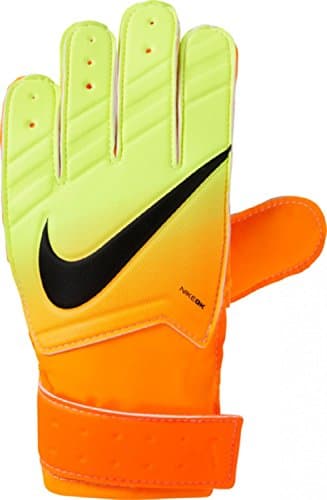
Nike
Nike Jr. Match Goalkeeper Gloves
The sensible glove for a rotating rec keeper, and not enough glove for a kid who plays the position properly.
$20.00View on Amazon#ad — we may earn a commission · price as of October 17, 2026
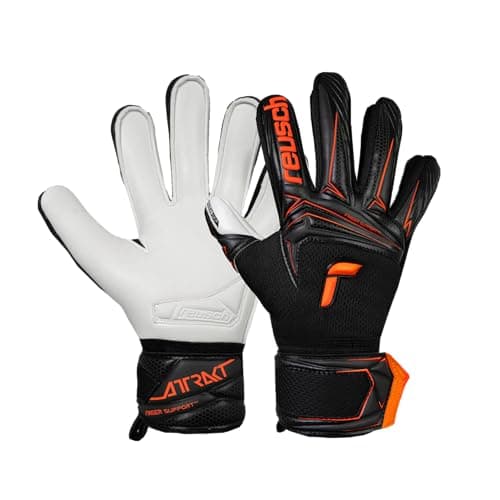
Reusch
Reusch Attrakt Advance Finger Support Junior
The best-fitting youth keeper glove here, and the right pick for a kid who genuinely plays in goal every week.
$54.99View on Amazon#ad — we may earn a commission · price as of October 17, 2026
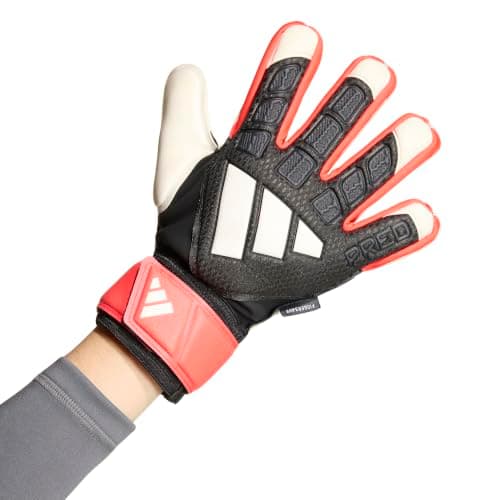
adidas
adidas Youth Predator Match Fingersave Goalkeeper Gloves
The right choice specifically when finger injuries are the concern — and a slightly stiff glove is the price of that.
$38.60$45.00−14%View on Amazon#ad — we may earn a commission · price as of October 17, 2026
Product photos come from each item’s current Amazon listing.
3. Finger protection
This is the one protective feature that addresses the actual common injury at this age: a hyperextended or jammed finger from a ball striking the fingertips. Two implementations exist.
- Spines — adidas's Fingersave is the familiar version, reinforcing each finger. It is the most substantial protection available and it noticeably stiffens the glove, which some keepers dislike because it changes how a catch feels.
- Integrated support — Reusch's Finger Support, which the brand states stabilizes all fingers and the thumb without sacrificing mobility. Less intrusive, and the one to try first for a keeper who has rejected spines.
Our position: worth it from about U10 for a keeper who plays the position regularly, and not worth it for a rec player taking a turn in goal, who is better served by the softer feel of an unprotected glove. If a finger has already been jammed once, buy it regardless of age. Finger protection vs no finger protection weighs it up properly.
4. Cut
Cut describes how the palm is joined to the backhand, and all it really changes is how snug the glove feels. A glove manufacturer's own cut guide puts it clearly:
- Flat palm — external stitched gussets, one piece of latex, known for great latex coverage on the ball. A looser fit.
- Roll finger — backhand joined straight to the palm with no gussets, so the latex rolls around the fingers. A fairly spacious fit with a lot of latex on the ball.
- Negative — built like a flat cut but with the stitching inside, which gives a much tighter and snug fit, more true to the hand.
- Hybrids — a negative lower section with a roll-finger or flat upper, which is most of the modern market.
For a youth keeper the practical reading is: negative if the hand is slim and the kid wants to feel the ball, roll finger or flat if the hand is broad or the kid dislikes tight gloves. There is one durability consequence worth knowing — negative-cut gloves show wear on the fingers and thumbs faster than looser cuts, because of the tighter fit and internal stitching. Goalie glove cuts explained has the full breakdown.
5. Latex grade, and the two things you can ignore
Latex grade is where most of the price lives and where the least youth-relevant difference is. Grip latex is genuinely better in the hand and genuinely wears faster, and a youth keeper's technique is the limiting factor long before the palm compound is. Buy it for a weekly keeper; skip it otherwise.
Two things can be safely ignored at youth level. Closure type — full wrap, half wrap, bandage — makes almost no difference to performance, though adidas's half-wrap strap is easier for a kid to fasten one-handed, which is a real if small advantage. And backhand technology names, which are marketing until a keeper is punching the ball regularly.
Care is also the difference between a glove lasting a season and a month. Wash immediately after use in warm water at no more than 30C, squeeze rather than twist the water out, dry naturally away from direct heat or light, and store them cool with the palms not touching — palms left in contact stick together and tear when peeled apart. How to wash goalie gloves and how long do goalie gloves last cover the routine and the expected life.
And the surface, which matters more than the glove: gloves are predominantly designed for natural grass unless a specialist artificial-surface latex is specified, and using them on 3G or astro turf places a higher level of stress on the latex so it wears much quicker. If your club trains on turf, that is a reason to buy cheaper and more often — best goalie gloves for turf covers the specialist option.
Finally, the rest of the kit. Gloves are the item everyone buys first and the one that matters least if the basics are missing: a keeper also needs a long-sleeve shirt, something on the knees if the surface is hard, and shin guards, which are compulsory for a keeper exactly as they are for anybody else. Do goalkeepers wear shin guards covers that, and why do goalies wear gloves answers the question a seven-year-old will ask.
Common questions
How do I know what size goalie gloves to get?
Measure across the palm at its widest point in inches and add about one — that is the glove size. The target is roughly a fingertip's gap at the end of the glove: too tight and the keeper cannot make a fist, too loose and the latex folds rather than grips. adidas youth gloves run slightly large, so take the smaller size if between two.
Do youth goalkeepers need finger protection?
From about U10, for a keeper who plays the position regularly — it is the one protective feature that addresses the common injury at this age, a jammed or hyperextended finger. For a rec player taking one rotation in goal, the softer feel of an unprotected glove is the better buy. If a finger has already been jammed, buy protection regardless of age.
Which goalkeeper glove cut is best for a kid?
Negative if the hand is slim and the kid likes to feel the ball, since the stitching is inside and the fit is tighter and truer to the hand. Roll finger or flat if the hand is broad or the kid dislikes tight gloves — both give a more spacious fit with a lot of latex contact. One trade-off: negative cuts wear at the fingers and thumbs faster than looser cuts.
Is expensive goalkeeper latex worth it for a youth keeper?
Only for a keeper playing weekly. Grip latex is genuinely better in the hand and genuinely wears faster — a maker's own latex guide positions entry-level compounds for kids and recreational players to be used and abused while technique develops. For most youth keepers, two cheaper pairs across a season beat one expensive pair.
Should you wash new goalkeeper gloves before using them?
Yes. A glove maker's own care guide says to pre-wash a new pair and let them dry naturally, which removes manufacturing preservatives from the latex and activates it. In use, dampen the palms occasionally — latex is not designed to be dry. A well-prepared cheap glove grips better than an expensive dry one.
Does playing on turf affect which gloves to buy?
Yes, and mostly it affects how often you buy them. Gloves are predominantly designed for natural grass unless a specialist artificial-surface latex is specified, and using them on 3G or astro turf puts higher stress on the latex so it wears much quicker. On a turf-heavy schedule, buying cheaper and more often is the sensible approach.
Does the wrist closure matter?
Barely, at youth level. Full wrap, half wrap and bandage closures all hold a glove on. The one real difference is practical rather than technical: adidas's half-wrap strap is easier for a kid to fasten one-handed than a full wrap, which matters when a nine-year-old is getting ready on their own.
Sources
- One Glove — goalkeeper glove cut guide — A glove manufacturer's own cut guide and the source for the cut definitions quoted on this site: flat palm has external stitched gussets between fingers and palm with one piece of latex attached to the back and is 'known for great latex coverage on the ball'; roll finger connects the backhand directly to the palm with no gussets so the latex rolls around the fingers, giving 'a fairly spacious fit that provides a lot of latex coverage on the ball'; negative is built like a flat cut but with the stitching and gussets inside the glove, which 'provides a much tighter and snug fit with control on the ball that is more true to your hand'. Also the source for the snugness ranking — flat and roll finger at the loose end, negative at the snug end — and for hybrids combining a negative lower section with a roll-finger or flat upper.
- The One Glove Co — goalkeeper glove latex guide — A manufacturer's latex guide, cited for two points: that its durability ratings explicitly assume the care routine is followed and that 'durability depends on how well you care for them and what surface you play on', and that entry-level latex is positioned for kids and recreational players to 'be used and abused' while technique develops rather than as a compromise.
- The One Glove Co — goalkeeper glove care guide — A glove manufacturer's own care guide and the source for the glove-care facts quoted on this site: pre-wash a new pair before first use and let them dry naturally, to remove manufacturing preservatives from the latex and activate it; dampen the palms occasionally in use because 'latex is not designed to be dry'; wash immediately after use in warm water at a maximum of 30C, squeeze rather than twist the water out, and dry naturally away from direct heat or light, since heat and UV dry the latex out and make it brittle; wrap in a towel and press rather than scrub; allow about 24 hours to dry, then store cool and out of direct sunlight with the palms not touching, because palms left in contact stick together and tear when peeled apart; never store them unwashed. Also the source for the wear facts: latex wear is normal and 'can even start from the very first save'; latex degradation depends on the surface and the volume of saves; gloves are predominantly designed for natural surfaces unless a specialist 3G/astro latex is specified, and 'if you are using a goalkeeper glove on an artificial surface such as 3G or astro turf you will be placing a higher level of stress on the latex, therefore it will wear much quicker'; negative-cut gloves show wear on the fingers and thumbs quicker than looser cuts because of the tighter fit and internal stitching, while roll finger and classic-fit cuts fare better; and using the palms to push up off the ground in training adds avoidable wear.
- Reusch — Attrakt goalkeeper gloves — Reusch's own description of the Finger Support system, AirVent ventilation and its youth sizing range.
- Dick's Sporting Goods — youth goalkeeper gloves — Verified current availability of the youth goalkeeper gloves named here and the manufacturers' published finger-protection descriptions.
- IFAB Laws of the Game — Law 4, The Players' Equipment — The Law text quoted on this site: undershorts and tights must be the same color as the main color of the shorts or the lowest part of the shorts, and players of the same team must wear the same color; shinguards must be of suitable material and appropriate size, covered by the socks, with the player responsible for their suitability; non-dangerous protective equipment of soft, lightweight padded material is permitted; and a player must not use equipment or wear anything that is dangerous, which must be removed rather than taped or covered. Law 4.3 is also the source for the kit-color rules quoted here: the two teams must wear colors that distinguish them from each other and the match officials, and each goalkeeper must wear colors that are distinguishable from the other players and the match officials. Law 4.4 names gloves, headgear, facemasks and knee and arm protectors of soft, lightweight padded material as permitted non-dangerous protective equipment, and separately permits goalkeepers caps and tracksuit bottoms.
Read next
- Youth goalie glove size chartGlove sizes by age and palm measurement, plus the fist test that tells you whether the fit works.
- Goalie glove cuts explained: flat, roll finger and negativeWhat flat, roll finger, negative and hybrid cuts actually change about a glove, which cut each of our picks uses, and why a child's hand size matters more than the cut name.
- Goalie gloves with or without finger protectionThe injury finger spines prevent, the feel they cost, and a decision table for which kids need them.
- Best youth goalie gloves with finger protectionFinger-protection picks for a regular keeper, what the spines do, and how to size gloves properly.
- Best budget youth goalie glovesCheap glove picks for a rotating rec keeper, and exactly what the budget tier gives up.
- How to wash goalie glovesThe washing and drying routine that extends latex grip, and the one mistake that cracks a palm.
- How long do goalie gloves last?Why keeper gloves wear out, what surface and cut do to lifespan, the four signs a pair is finished, and how to stretch the next one.
- Do goalkeepers wear shin guards?Why there is no keeper exemption in the Laws, what a keeper actually needs from a guard, and which style fits a position that spends its time on the ground.