Heads up: we earn a commission if you buy through our links, at no extra cost to you. It never changes which product we recommend — here’s how that works.
The short answer
For warmth, the Under Armour ColdGear Mock Long Sleeve — the brushed interior is what makes a thin layer warm, and the mock neck covers the gap a keeper jersey leaves. For chafe and the no-liner problem, the UA HeatGear kids' short. For freezing weather, the ColdGear leggings under the shorts. If the problem is turf burn rather than cold, you want a padded outer pant instead, not a base layer — the Storelli ExoShield GK 3/4 is that. Check your league's kit-color rule before buying anything.
A goalkeeper has two problems no field player has. The first is standing still: a keeper in October spends most of a game motionless in a shaded six-yard box while everybody else generates their own heat. The second is contact with the ground, repeatedly, on whatever surface the club trains on.
Those need different garments, and conflating them is the usual mistake. A base layer is for warmth and friction. Impact and abrasion protection is an outer padded layer, and Storelli's own specification for the ExoShield GK pant says it outright: no base layer required. Buying a thermal top to solve turf burn does not work, and buying padded pants to solve cold is an expensive way to do it.
What to look for in a keeper base layer
A brushed interior. This is the whole mechanism of a warm thin layer. Under Armour's ColdGear construction is dual-layer: brushed inside for warmth, fast-drying smooth outside. Without it you have a tight shirt, not a warm one.
Ventilation panels. A keeper is not always still — they sprint, dive and then stand again. Stretch-mesh at the back and underarms is the detail that stops a base layer becoming a sweat trap the moment the pace picks up, and a wet layer is colder than no layer.
A tight fit, genuinely. A loose base layer does not work: the air gap it is supposed to trap moves around instead. Under Armour describes the ColdGear fit as snug without squeeze, and that is the target.
A mock or high neck. The gap at a round-neck jersey collar is where kids actually feel cold, and it is also the first place a keeper gets a grass burn going down on their side.
Flatlock seams, on anything that sits in a crease. This is the point of a compression short: Under Armour's kids' HeatGear short uses ergonomic flatlock seams specifically to reduce chafing, which is what a long tournament day produces.
The right color. See the warning below — this is the one that gets a keeper sent to the sideline.
Start here
Pick by your kid’s level
The right answer changes with the level, not just the shoe size. Find your kid’s bracket and start there.
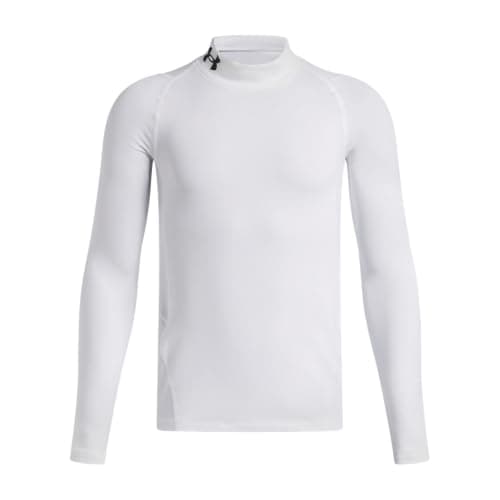
Under Armour Boys' ColdGear Armour Mock Long Sleeve
The single most useful cold-weather purchase for a keeper, because it makes the kit they already own usable in October. Brushed interior for warmth, mesh at the back and underarms so it is not a sweat trap, and a mock neck that covers the collar gap.
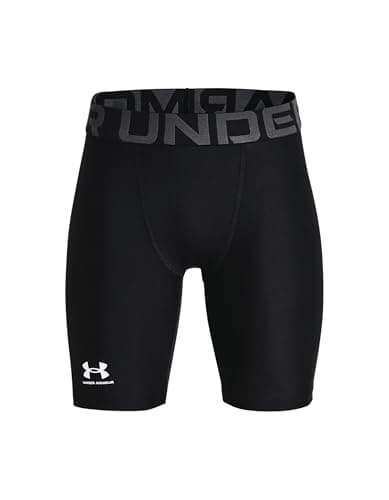
The cheapest thing on this page to get right, and the fix for the problem every pair of soccer shorts creates — no liner. Flatlock seams are what stop it chafing across a tournament weekend. Buy it in the kit color.
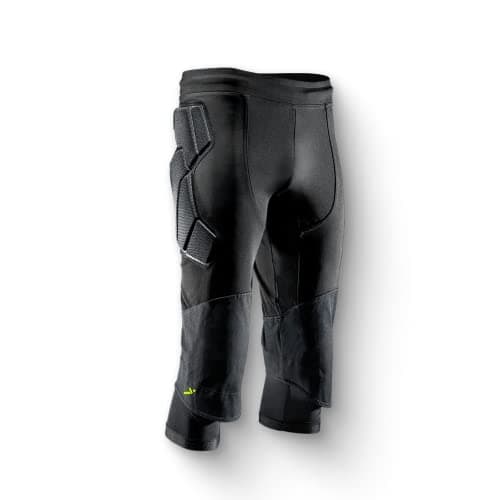
Not a base layer and included deliberately: if the real problem is turf burn rather than cold, this is the answer. The mid-calf cut clears the shin guards, which is the practical failure of full-length keeper pants on a youth player.
Tap any row to jump to the full write-up. The price in each button is the one Amazon reported on the date stamped under it — tap through for today’s number, which is the only one that can be relied on.
Product photos come from each item’s current Amazon listing.
Base layer or padded outer layer?
The padded rows belong to a different page: our youth goalkeeper pants roundup covers the outer layer in full, including the Reusch Alex as the cheaper first option.
Problem
What you want
Example
Why not the other thing
Cold hands, cold arms, cold neck
Base layer top
UA ColdGear mock long sleeve
Padded pants do nothing for the top half
Chafing, no liner in the shorts
Compression short
UA HeatGear kids' short
A padded pant is hot and overkill
Bare legs below about 40F
Base layer leggings
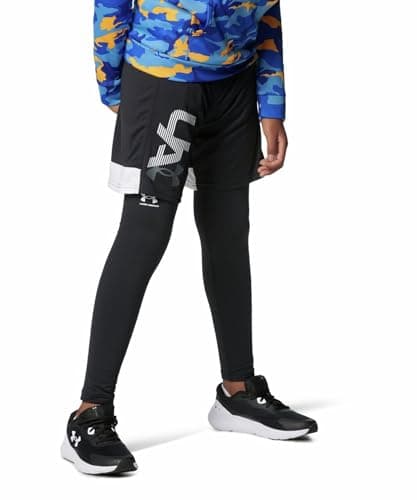
UA ColdGear leggings
Check the kit-color rule first
Turf burn on hips and knees
Padded outer pant
Storelli ExoShield GK 3/4
No base layer prevents abrasion
Impact on hips and knees
Padded outer pant
Storelli ExoShield GK
Storelli states no base layer needed under it
Scroll the table sideways on a narrow screen.
If the row you recognize is one of the padded ones, best youth goalkeeper pants is the right page — it covers the full-length Storelli ExoShield, the three-quarter version and the Reusch Alex, which is the sensible first pair for a kid who has just volunteered to go in goal.
1. Under Armour
Under Armour Boys' ColdGear Armour Mock Long Sleeve
The single most useful cold-weather purchase: it makes the kit a kid already owns usable in October.
Best for
The layer that goes under the jersey, U9 and up
Levels
U9–U10 · U11–U12 · U13+ travel & club
Type / surface
Base layer top
How it fits
Cut tight. Under Armour says true to size and to size up for more room. A loose base layer does not work, so go by current chest size rather than buying a season ahead.
What we like
The brushed inside is what makes a thin layer warm, so it fits under a jersey instead of replacing one
Mesh at the back and underarms is the detail that stops a base layer becoming a sweat trap once a kid starts running
A mock neck covers the gap a round-neck jersey leaves, which is where kids actually feel cold
Where it falls short
Under Armour describes the fit as tight — snug with no squeeze — and some kids will not tolerate that at all
Costs more than a supermarket thermal top that is most of the way as warm standing still
The quiet fix for chafing and for the no-liner problem, and the cheapest item on this page to get right.
Best for
The layer that goes under the match shorts, U9 and up
Levels
U9–U10 · U11–U12 · U13+ travel & club
Type / surface
Compression base layer short
How it fits
Compression fit, sized in kids' bands. Snug is the point — a loose compression short rolls up the thigh and chafes exactly where it is meant to prevent it.
What we like
Solves the problem every short on this page creates, which is that none of them have a liner
Flatlock seams are the detail that stops a compression short chafing on a long tournament day
Thin enough to wear under a match short without the kid noticing it is there, which is the only way it gets worn twice
Where it falls short
Under Armour sells it as a base layer, not a standalone short, and a child who wears it alone to a game is out of uniform
Most leagues require undershorts to match the main color of the shorts, so the color you buy is not a free choice
Manufacturer’s published specs
Ultra-soft HeatGear fabric (Under Armour)
Mesh panels for targeted ventilation
4-way stretch construction
Ergonomic flatlock seams to reduce chafing
Elastic waistband; 90% polyester / 10% elastane
These are the manufacturer’s own claims, not measurements we took.
They exist, and the honest answer for a youth keeper is that they are rarely the right first purchase. Storelli's own youth range includes padded leggings alongside the pants — the BodyShield Impact, the NoBurn and NoBurn GK, the CoolCore GK — so the category is real. The problem is that a padded base layer is both warm and protective, which sounds efficient and in practice means a keeper who is too hot in September and under-protected in January.
The simpler build is a thin warmth layer plus, if abrasion is a real problem, a padded outer pant over the top. That way each piece can come off independently, which is how kit actually gets used by an eleven-year-old.
The one genuine padded base layer worth considering is the upper body, and specifically the elbows — a keeper landing on an elbow on turf is the most common complaint after hips and knees. Almost nothing in the youth keeper jersey category is padded above the elbow, which best youth goalkeeper jerseys goes into, and a long-sleeve base layer under an unpadded jersey does not change that.
Sizing, which matters more here than elsewhere
A base layer that does not fit does not work, which is different from a jersey that does not fit. Two specifics worth having:
Buy the current size, not next season's. Under Armour says the ColdGear top is true to size and to size up for more room — which is exactly what you do not want. Go by current chest size.
Check the inseam on leggings. Under Armour publishes it, which is rare and useful: the youth-medium inseam is 25 inches, changing by about an inch and a half per size. These run long on a short-legged ten-year-old.
The three-quarter padded pant has to clear the shin guards. A mid-calf cut on an adult sits lower on a child, so the thing to check is whether it clears the top of the guard or bunches on it.
And the cold-hands problem, since it comes up in the same conversation: a field player can wear a thin liner glove, and a keeper cannot — they need actual goalkeeper gloves. How to choose goalie gloves covers that decision, and best youth soccer cold weather gear covers the field-player version of this whole page.
Common questions
What base layer should a youth goalkeeper wear?+
A tight long-sleeve top with a brushed interior and mesh ventilation — the Under Armour ColdGear mock long sleeve is the standard answer, and the mock neck covers the collar gap where keepers actually feel cold. Add a compression short for chafe, and leggings only below about 40F. If the problem is turf burn rather than cold, you want a padded outer pant instead.
Do goalkeepers need padded base layers?+
Rarely as a first purchase. Padded leggings exist in Storelli's youth range and they combine warmth with protection, which in practice means too hot in September and not enough in January. A thin warmth layer plus, if abrasion is genuinely a problem, a padded outer pant over the top is the more usable build, because each piece can come off on its own.
What color base layer can a goalkeeper wear?+
Law 4 requires undershorts and tights to be the same color as the main color of the shorts, or the lowest part of the shorts, and every player on a team wearing them must match. A keeper's leggings and compression shorts count as undershorts, so check the club kit before ordering. Black under black is usually safe; mixing navy and black is where disputes start.
Is a base layer the same as goalkeeper pants?+
No, and it is the most common mix-up in this category. A base layer is a thin warmth and friction layer worn next to the skin. Goalkeeper pants are a padded outer layer for impact and abrasion — Storelli's own specification for the ExoShield GK pant states that no base layer is required under it. Buying one to do the other's job does not work.
What size base layer should I buy for a growing keeper?+
The current size. A loose base layer does not trap air and does not reduce friction, so the usual trick of buying a season ahead defeats the point — Under Armour notes the ColdGear top is true to size and that sizing up gives more room, which is not what you want here. On leggings, check the published inseam: youth medium is 25 inches, changing about an inch and a half per size.
Can a goalkeeper wear liner gloves in cold weather?+
No — a keeper needs goalkeeper gloves, not liners. A thin liner glove is a field player's answer to cold hands and is explicitly sold as a layer rather than a warm glove. Keeper gloves are a different product with a latex palm for grip, and they should be dampened in use rather than worn dry, which rules out anything underneath.
Sources
Under Armour — ColdGear Boys' Mock Long Sleeve (1366373) — Under Armour's published specification: dual-layer ColdGear fabric with a brushed interior and fast-drying exterior, stretch-mesh back and underarm ventilation panels, four-way stretch, odor control, a mock neck, a dropped shaped hem, 87% polyester / 13% elastane, and a tight fit described as snug without squeeze.
Under Armour — ColdGear Boys' Leggings (1366374) — Under Armour's published specification: a brushed interior for warmth without bulk, a fast-drying smooth exterior, a stretch-mesh gusset for ventilation, 87% polyester / 13% elastane, and a youth-medium inseam of 25 inches changing by about 1.5 inches per size.
Sport Chek — Under Armour Kids' HeatGear Shorts (spec sheet) — The retailer spec sheet for Under Armour's kids' HeatGear short, and the source for its published construction: ultra-soft HeatGear fabric, mesh panels for targeted ventilation, 4-way stretch, ergonomic flatlock seams to reduce chafing, an elastic waistband, and a 90% polyester / 10% elastane body. Under Armour positions it as a base layer rather than a standalone short.
Storelli — youth goalkeeper pants and leggings — The current youth range and stock check: the BodyShield Impact, NoBurn, NoBurn GK and CoolCore GK leggings, and the ExoShield GK and ExoShield GK 3/4 pants, with the padding description Storelli gives each one.
Storelli — ExoShield GK Pants — Storelli's published specification: 7 mm slow-rebound ImpactShield foam at hips and thighs, 5 mm Poron XRD pads at the knees, abrasion overlays on the slide zones, mesh ventilation panels, no base layer required, and youth sizes YS through YXL.
Reusch USA — Alex Goalkeeper Pant — Reusch's published specification: 100% polyester, padded hips and knees, a strap at the foot, and a size run of YXS, YS, YM and YL before the adult sizes.
IFAB Laws of the Game — Law 4, The Players' Equipment — The Law text quoted on this site: undershorts and tights must be the same color as the main color of the shorts or the lowest part of the shorts, and players of the same team must wear the same color; shinguards must be of suitable material and appropriate size, covered by the socks, with the player responsible for their suitability; non-dangerous protective equipment of soft, lightweight padded material is permitted; and a player must not use equipment or wear anything that is dangerous, which must be removed rather than taped or covered. Law 4.3 is also the source for the kit-color rules quoted here: the two teams must wear colors that distinguish them from each other and the match officials, and each goalkeeper must wear colors that are distinguishable from the other players and the match officials. Law 4.4 names gloves, headgear, facemasks and knee and arm protectors of soft, lightweight padded material as permitted non-dangerous protective equipment, and separately permits goalkeepers caps and tracksuit bottoms.