Heads up: we earn a commission if you buy through our links, at no extra cost to you. It never changes which product we recommend — here’s how that works.
The short answer
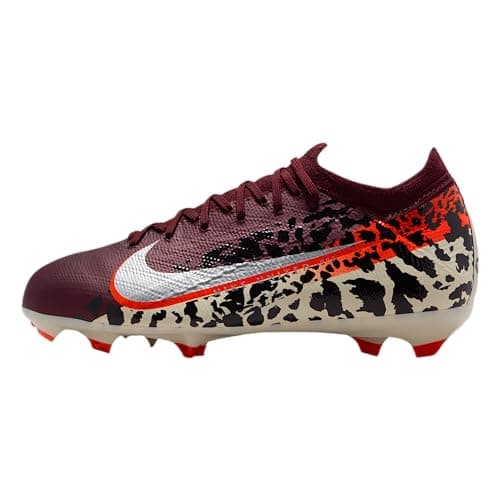
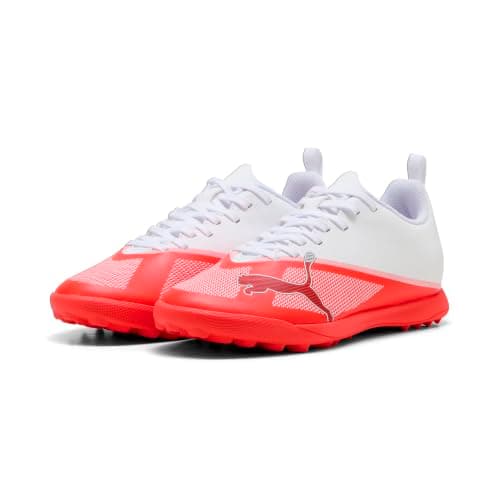
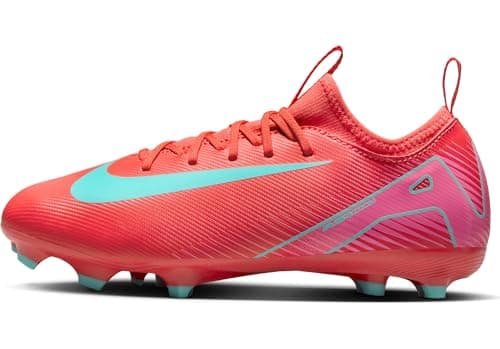
If pace is your player's game, the Nike Jr. Mercurial Vapor 16 Academy FG/MG is the pair to buy — Mercurial is Nike's own speed silo, described by Nike as built for speed and best for forwards and wide midfielders, and the Academy tier is the point where the upper and plate stop being entry-level. The budget pick is the PUMA Ultra 7 Play TT, the cheapest way into a speed silo if the fields are turf. Prices come from the live Amazon listing with the date stamped under each button.
A speed boot is not marketing. There really are three families built around acceleration — Nike's Mercurial, adidas's F50 and PUMA's Ultra — and each brand says so in its own words. Nike positions Mercurial for speed and for forwards and wide midfielders. A specialist retailer's adidas guide puts F50 with wingers, attacking fullbacks and forwards. PUMA's Ultra is described as built for players who put speed and acceleration first, with a lightweight construction and a streamlined shape.
What all three have in common is the part nobody puts on the box: they are the narrowest shapes each brand makes. That is the trade, and it is the reason a third of this page is about who should not buy one.
How we sorted these
It has to be a speed silo by the maker's own positioning. We did not call a cleat fast because it looked fast. Every pick is from Mercurial, F50 or Ultra.
No weight rankings. No manufacturer publishes a weight for a junior size, so a gram figure on a youth page is invented. We rank by stated design intent and construction instead, and say so.
Fit gets equal billing. The published cross-brand fit guidance ranks F50 as the narrowest adidas shape, and the Mercurial line is narrow through the midfoot by design. A narrow boot on a broad foot is slower, not faster.
Surface coverage. The picks span FG, FG/MG and turf, because a fast kid on a turf field still needs the right outsole.
Quick picks
Tap any row to jump to the full write-up. The price in each button is the one Amazon reported on the date stamped under it — tap through for today’s number, which is the only one that can be relied on.
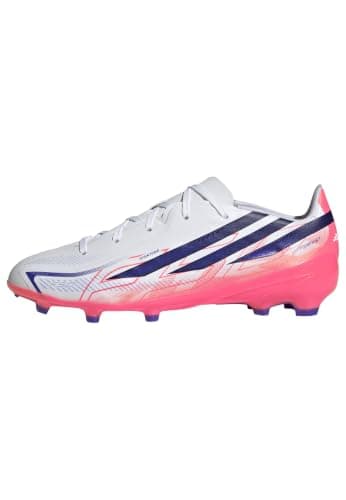
adidas F50 Hyperfast League Kids FGThe right speed cleat for a slim-footed winger or striker playing on grass, and the wrong shoe for almost everyone else.
U9–U10, U11–U12, U13+ travel & club
FG (firm ground)
Narrow through the forefoot and midfoot, true to length.
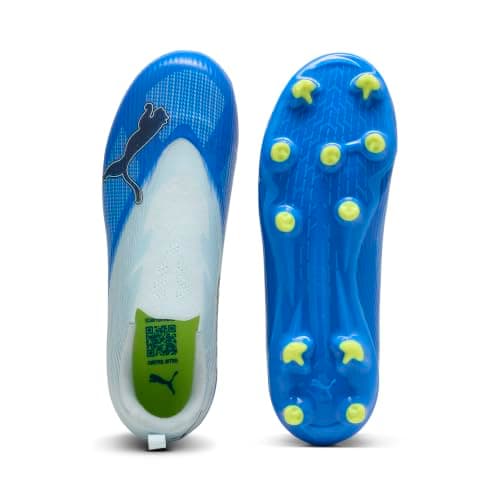
PUMA Ultra 7 Match LL FG/AG JuniorA good dual-surface option for an older player with an average-to-wide foot, and the wrong purchase for a narrow one.
U11–U12, U13+ travel & club
FG/AG
Fits a generous average width with no way to snug it down, and runs slightly short like the rest of the PUMA junior range.
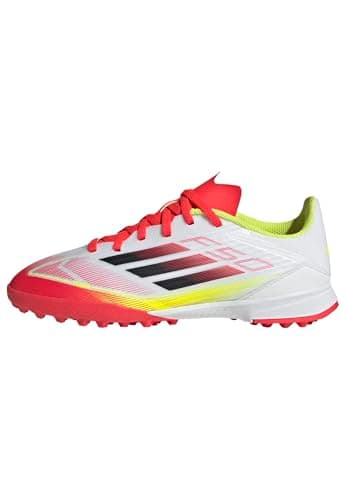
At this age a speed silo is a preference rather than an advantage, so the entry Ultra on a turf outsole is the sensible way to give a kid the look without the narrow mid-tier fit.
A good dual-surface option for an older player with an average-to-wide foot, and the wrong purchase for a narrow one.
Best for
A U11+ player on mixed grass and artificial grass who wants no laces
Levels
U11–U12 · U13+ travel & club
Type / surface
FG/AG
How it fits
Fits a generous average width with no way to snug it down, and runs slightly short like the rest of the PUMA junior range. Not the pick for a slim foot.
What we like
A dual-surface plate and a clean striking surface in one junior shoe, which is an unusual combination at this price
Lighter than most junior cleats carrying a comparable plate
No laces to come undone mid-match, and no lace pressure across the instep
Where it falls short
Laceless means no adjustment at all, so a narrow foot slides inside it and a growth spurt cannot be accommodated
PUMA junior sizing is the least consistent of the big three — a model to try on rather than guess
Manufacturer’s published specs
Laceless construction — the LL in the model name (PUMA)
FG/AG outsole PUMA rates for firm natural grass and artificial grass
Lightweight synthetic upper, junior sizing
These are the manufacturer’s own claims, not measurements we took.
What a speed boot actually does, and what it does not
Three real things change in a speed silo. The upper is thinner, so there is less material between foot and ball and less mass to swing. The plate is usually stiffer and the stud pattern is biased toward forward propulsion rather than lateral bite. And the shape is tapered, so the foot sits closer to the plate with less volume around it.
Here is what does not change: a cleat does not make a child faster. Acceleration at youth level comes from strength, coordination and how often they play. The gain from a lighter shoe is small, real and easily canceled by a shoe that does not fit, which happens constantly when a parent buys a narrow silo for a broad foot because the colorway looked fast.
The costs are worth knowing too. A thinner upper protects less and wears through sooner, which matters on abrasive artificial turf. A stiffer plate is less forgiving on hard ground. And the narrow last is the single biggest source of blisters we see families describe.
Positioning is each brand's own published description or a specialist retailer's published guide. No weights are quoted because no maker publishes one for a junior size.
Brand
Speed silo
Brand's own positioning
Fit note
Nike
Mercurial
Built for speed; best for forwards and wide midfielders
Narrow through the midfoot by design
adidas
F50
Wingers, attacking fullbacks and forwards
The narrowest of the three adidas shapes
PUMA
Ultra
Speed and acceleration first, lightweight and streamlined
PUMA junior tends to run short — size carefully
Any brand
Entry tier of a speed silo
Same shape, heavier upper
The sane first step for U7 to U10
Scroll the table sideways on a narrow screen.
Who should not buy a speed boot
A genuinely wide foot. Start from best soccer cleats for wide feet instead. A Copa or a King shape will be faster on that foot than a Mercurial.
A kid who complains about hard ground. A stiff speed plate is the worst combination with a baked field — best soccer cleats with cushion is the counter-page.
The uncomfortable finding: at youth level the shoe is a rounding error next to how often a kid plays.
What to spend on one
The entry tier of a speed silo gives you the shape and the look with a heavier upper, which for most players under about U10 is the right purchase. The mid tier is where the upper thins and the plate sharpens, and it is a defensible buy for a player training three or four times a week. The junior top tier is for a player who has stopped growing a size a season.
What are the best soccer cleats for speed for kids?+
The Nike Jr. Mercurial Vapor 16 Academy FG/MG is our pick. Mercurial is Nike's own speed silo, which Nike describes as built for speed and best for forwards and wide midfielders, and the Academy tier is where the upper and plate stop being entry-level without reaching top-tier prices. The adidas F50 and PUMA Ultra are the equivalent shapes at their brands, and all three run narrow, so fit decides the purchase more than the badge does.
Do lighter soccer cleats actually make you faster?+
Slightly, and much less than the marketing implies. A thinner upper reduces the mass you swing and puts less material between foot and ball, which is real. But acceleration at youth level comes from strength, coordination and playing volume, and any gain from a lighter shoe is canceled immediately by a shoe that does not fit. No maker publishes a weight for a junior size, so treat any gram figure on a youth page with suspicion.
Are speed cleats bad for wide feet?+
Usually, yes. The three speed silos are the narrowest shapes their brands make: published cross-brand fit guidance ranks adidas F50 as the narrowest of the adidas shapes, and the Mercurial line is narrow through the midfoot by design. A wide foot in a tapered last produces blisters and a kid who plants hesitantly, which is slower in every practical sense. A Copa-style or King-style shape is the better buy on that foot.
Which position needs speed cleats?+
Wide players and forwards, broadly. Nike puts Mercurial with forwards and wide midfielders; adidas F50 is positioned for wingers, attacking fullbacks and forwards. Central midfielders are usually better served by a control silo and center-backs by a comfort and touch silo. At U10 and below the position changes every few weeks anyway, so buy for fit and let the silo wait.
How much should you spend on youth speed cleats?+
The entry tier of the silo for anyone under about U10, the mid tier for a player training three or four times a week, and the junior top tier only once a player has stopped growing a size a season. The entry tier shares the shape and the badge with a heavier upper, which is the right trade on a foot that will be a different size by spring.
Do speed cleats wear out faster?+
They can. A thinner upper has less material to lose and artificial turf is abrasive, so a mid or top-tier speed boot used on turf twice a week will show wear at the toe and the forefoot crease sooner than a thicker entry-tier shoe. If the pair has to survive two seasons of turf, a sturdier silo is the better buy.
Sources
Nike — Mercurial, Phantom and Tiempo compared by playing style — Nike's own statement of which silo suits which position: Mercurial 'built for speed; best for forwards and wide midfielders', Phantom 'built for precision; best for central midfielders and playmakers', Tiempo 'built for comfort and control'. The source for every Nike position claim on this site.
Unisport — adidas Predator vs F50 vs Copa — Position mapping for the adidas silos — Predator for number 8s and 10s, F50 for wingers, attacking fullbacks and forwards, Copa for center-backs, defensive midfielders and classic number 9s — plus the width ranking (F50 narrowest, Predator middle, Copa most accommodating).
Unisport — your guide to PUMA boots — The source for PUMA's three silos as the retailer describes them: Future "designed for creative playmakers who rely on agility and freedom of movement" with "an adaptive fit that wraps comfortably around the foot"; Ultra built for players who put speed and acceleration first, with a "lightweight construction and a streamlined shape"; King "well suited for players who value a soft, comfortable touch and long-lasting durability over lightweight speed". The guide itself publishes no width or volume figures for any silo.
Nike — kids' soccer cleats and shoes — Verified that each Nike model named on this page is currently sold, and the source for Nike's own published upper, plate and surface descriptions.
adidas — kids' soccer — Verified current availability of the adidas models named here, plus adidas's published material and construction claims.