Heads up: we earn a commission if you buy through our links, at no extra cost to you. It never changes which product we recommend — here’s how that works.
The short answer
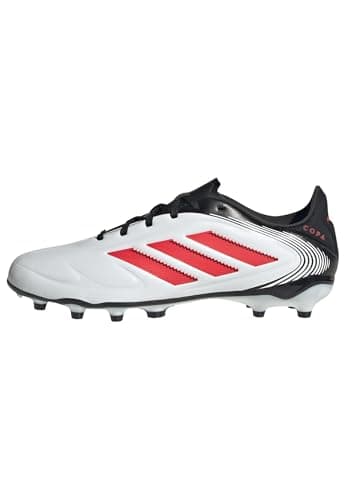
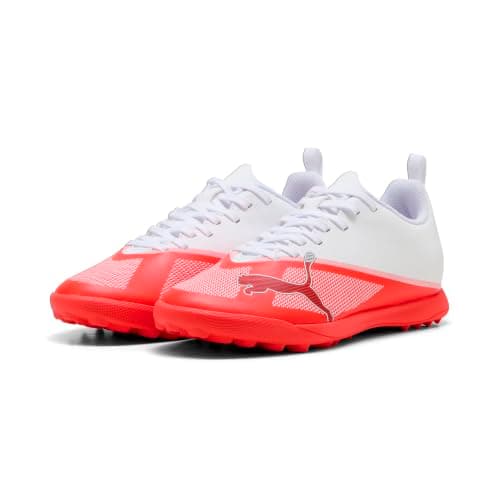
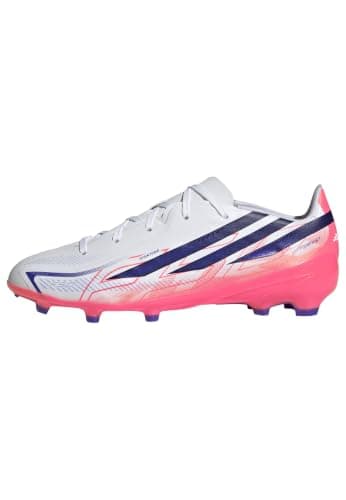
The closest junior alternative to the Nike Mercurial is the adidas F50 Hyperfast League FG — it is adidas's own speed silo, positioned for wingers, attacking fullbacks and forwards, and it usually costs less than the equivalent Mercurial tier. The budget alternative is the PUMA Ultra 7 Play TT, which gets a child into a speed shape on a turf outsole for a fraction of the money. If the problem is width rather than price, skip to the adidas Copa Pure 3 FG, the most accommodating shape here. Prices are read live from Amazon, with the date under each button.
First, what the Mercurial actually is, because the alternatives only make sense against it. Nike's own guidance describes Mercurial as built for speed and best for forwards and wide midfielders — it is the speed silo, and it is a good one. The line is thin-uppered, light and tapered, and in junior sizing it is one of the most widely stocked mid-tier cleats in the US.
Two reasons families look for something else, and neither is a criticism of the shoe. The first is fit: the Mercurial line runs narrow through the midfoot by design, which is exactly what a speed last is for and exactly wrong on a broad young foot. The second is price: the mid and top junior tiers sit at the upper end of what most rec families want to spend on a shoe that will be outgrown by spring.
What a replacement has to match
Speed positioning from the maker. Not a shoe that looks fast — a shoe its own brand sells as a speed silo. That means adidas F50 or PUMA Ultra.
A thin, light upper. The mechanism behind the Mercurial is less material between foot and ball and less mass to swing.
A plate that suits the field. A speed shape is useless on the wrong outsole, so the list spans FG, FG/AG and turf.
Either a wider shape or a lower price. Those are the two reasons anybody is on this page, so every pick below is here for one of them, and we say which.
Quick picks
Tap any row to jump to the full write-up. The price in each button is the one Amazon reported on the date stamped under it — tap through for today’s number, which is the only one that can be relied on.
#
Product
Best for
Surface
Fit notes
Price
1
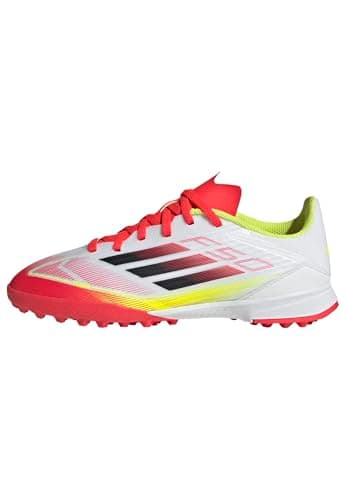
adidas F50 Hyperfast League Kids FGThe right speed cleat for a slim-footed winger or striker playing on grass, and the wrong shoe for almost everyone else.
U9–U10, U11–U12, U13+ travel & club
FG (firm ground)
Narrow through the forefoot and midfoot, true to length.
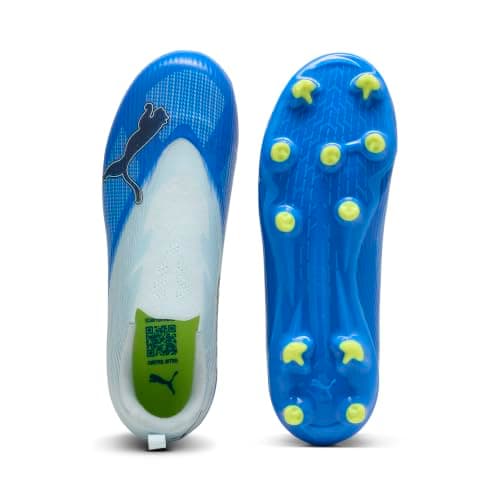
PUMA Ultra 7 Match LL FG/AG JuniorA good dual-surface option for an older player with an average-to-wide foot, and the wrong purchase for a narrow one.
U11–U12, U13+ travel & club
FG/AG
Fits a generous average width with no way to snug it down, and runs slightly short like the rest of the PUMA junior range.
A good dual-surface option for an older player with an average-to-wide foot, and the wrong purchase for a narrow one.
Best for
A U11+ player on mixed grass and artificial grass who wants no laces
Levels
U11–U12 · U13+ travel & club
Type / surface
FG/AG
How it fits
Fits a generous average width with no way to snug it down, and runs slightly short like the rest of the PUMA junior range. Not the pick for a slim foot.
What we like
A dual-surface plate and a clean striking surface in one junior shoe, which is an unusual combination at this price
Lighter than most junior cleats carrying a comparable plate
No laces to come undone mid-match, and no lace pressure across the instep
Where it falls short
Laceless means no adjustment at all, so a narrow foot slides inside it and a growth spurt cannot be accommodated
PUMA junior sizing is the least consistent of the big three — a model to try on rather than guess
Manufacturer’s published specs
Laceless construction — the LL in the model name (PUMA)
FG/AG outsole PUMA rates for firm natural grass and artificial grass
Lightweight synthetic upper, junior sizing
These are the manufacturer’s own claims, not measurements we took.
All three brands publish what their speed line is for, and the differences are real but smaller than the marketing suggests. Nike: Mercurial is built for speed and best for forwards and wide midfielders. A specialist adidas guide: F50 suits wingers, attacking fullbacks and forwards, and is the narrowest of the three adidas shapes. A PUMA guide: Ultra is built for players who put speed and acceleration first, with a lightweight construction and a streamlined shape.
So on intent they are interchangeable. On fit they are not, and the published fit guidance is the most useful thing a parent can read here: width is a property of the model rather than of the badge. If a Mercurial pinched, the fix is not automatically a different brand's speed boot — it may be a different silo entirely. Nike vs adidas vs PUMA youth cleat fit goes through that properly, and best soccer cleats for speed is the straight roundup if you have no objection to the Mercurial itself.
The reason most people land on this page: the shoe was right and the last was wrong. Width is a model property, not a brand property.
When the honest answer is to leave the speed category
If the Mercurial was bought because a child wanted the boots they saw on TV and it blistered them, the fix is probably not another tapered last. Two specific cases:
A broad foot. Go to best soccer cleats for wide feet and buy from there. A Copa-style shape on a wide foot will outperform any speed silo in every practical way, including how fast the kid actually moves.
A budget under $50.Best soccer cleats under $50 is the whole band, and the entry tier of any silo belongs in it.
Common questions
What is a good alternative to the Nike Mercurial for kids?+
The adidas F50 Hyperfast League FG is the closest like-for-like swap: it is adidas's own speed silo, positioned for wingers, attacking fullbacks and forwards, and the junior league tier usually costs less than the equivalent Mercurial tier. The PUMA Ultra range is the third option in the same category. If width is the reason you are looking, the better answer is to leave the speed category and buy an adidas Copa shape instead.
Why do Mercurials feel narrow?+
Because they are designed that way. A speed last is tapered to hold the foot close to the plate with minimal volume around it, which is what makes the shoe feel direct — and the Mercurial line runs narrow through the midfoot as a result. That is a feature on an average or narrow foot and a problem on a broad one. Published cross-brand fit guidance treats width as a property of the model, so the fix is a different shape rather than a different badge.
What is the adidas equivalent of the Nike Mercurial?+
The F50. A specialist adidas guide positions F50 for wingers, attacking fullbacks and forwards, which is close to how Nike positions Mercurial for forwards and wide midfielders, and the same guide ranks F50 as the narrowest of the three adidas shapes — so it is an equivalent in fit as well as in intent. The PUMA equivalent is the Ultra, described as speed-and-acceleration-first with a lightweight, streamlined shape.
Is there a cheaper cleat like the Mercurial?+
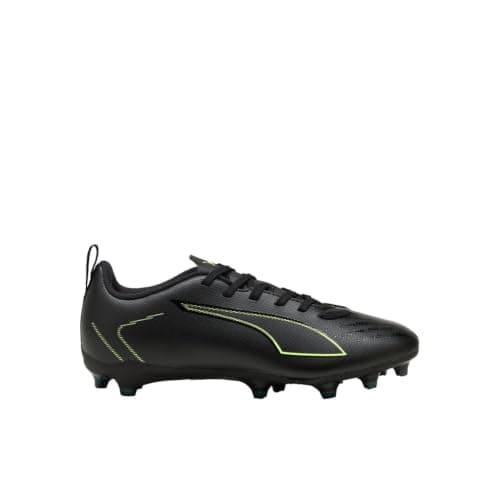
Yes, and the cheapest route is the entry tier of a speed silo rather than a different brand's mid tier. The PUMA Ultra 7 Play TT is our budget pick here: it shares the Ultra shape and badge on a turf outsole for a fraction of a mid-tier price. The entry tier of any speed silo gives you the shape with a heavier upper, which for a player under about U10 is the right trade anyway.
Should a wide-footed kid ever buy a Mercurial?+
Generally no, and the sensible test is whether you can try the pair on. A broad foot in a tapered last blisters and plants hesitantly, which costs more speed than the shoe adds. Start from a wide-fit page instead and treat the badge as the last variable. If the child specifically wants the Mercurial look, the entry tier is more forgiving than the mid tier because the upper is thicker and gives a little.
Are PUMA Ultras as good as Mercurials?+
They are the same category of shoe and both brands describe them in similar terms. PUMA positions Ultra on speed and acceleration with a lightweight, streamlined build; Nike positions Mercurial as built for speed. Neither is obviously better and we publish no scores. The practical differences are fit and stock: PUMA junior tends to run short, so size carefully, and Nike junior is more widely stocked in US stores.
Sources
Nike — Mercurial, Phantom and Tiempo compared by playing style — Nike's own statement of which silo suits which position: Mercurial 'built for speed; best for forwards and wide midfielders', Phantom 'built for precision; best for central midfielders and playmakers', Tiempo 'built for comfort and control'. The source for every Nike position claim on this site.
Unisport — adidas Predator vs F50 vs Copa — Position mapping for the adidas silos — Predator for number 8s and 10s, F50 for wingers, attacking fullbacks and forwards, Copa for center-backs, defensive midfielders and classic number 9s — plus the width ranking (F50 narrowest, Predator middle, Copa most accommodating).
Unisport — your guide to PUMA boots — The source for PUMA's three silos as the retailer describes them: Future "designed for creative playmakers who rely on agility and freedom of movement" with "an adaptive fit that wraps comfortably around the foot"; Ultra built for players who put speed and acceleration first, with a "lightweight construction and a streamlined shape"; King "well suited for players who value a soft, comfortable touch and long-lasting durability over lightweight speed". The guide itself publishes no width or volume figures for any silo.
Unisport — top 10 best football boots for wide feet in 2026 — A retailer fit guide written model by model rather than brand by brand, and the source for the cross-brand width claims on this site: the PUMA King 20 Ultimate ranked first because it is "seriously wide", with room in the heel, midfoot, forefoot and outsole; the Nike Phantom 6 Low Elite described as having good width in the forefoot and a particularly generous heel; the Nike Tiempo Legend Pro called one of Nike's widest-fitting options, with space through the forefoot, midfoot and heel; and the adidas Copa Pure 4 Elite included in a wide-feet ranking despite a relatively tapered midfoot, because its wider forefoot compensates. The guide makes no claim that any one brand is narrowest overall — it treats width as a property of the model rather than the badge, which is the point the cross-brand fit page is built on.
Nike — kids' soccer cleats and shoes — Verified that each Nike model named on this page is currently sold, and the source for Nike's own published upper, plate and surface descriptions.
adidas — kids' soccer — Verified current availability of the adidas models named here, plus adidas's published material and construction claims.