Heads up: we earn a commission if you buy through our links, at no extra cost to you. It never changes which product we recommend — here’s how that works.
The short answer
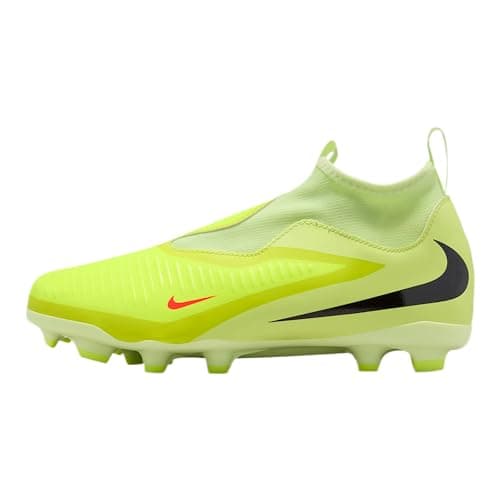
Best overall: the Nike Jr. Phantom GX2 Academy FG/MG — a plate rated for grass and artificial grass under Nike's precision silo, which is the shape most U10 to U13 players get on with.
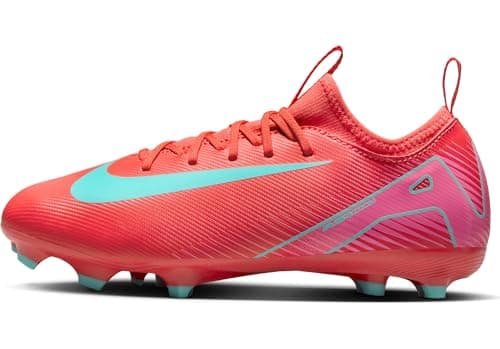
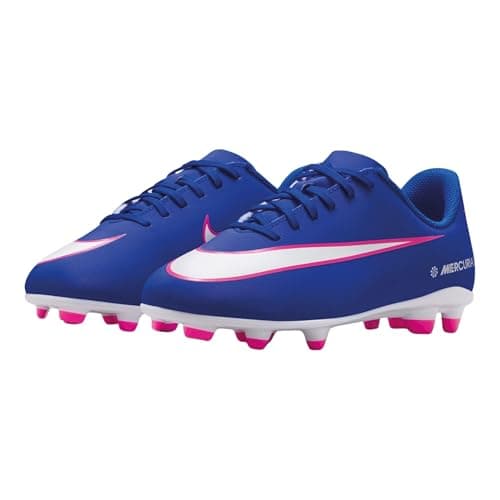
Best for a fast player: the Nike Jr. Mercurial Vapor 16 Academy FG/MG, Nike's speed silo on the same dual-rated plate.
Best budget pick: the Nike Jr. Mercurial Vapor 16 Club MG — the cheapest step onto an MG plate, and the right call for a rec season split across two surfaces.
The finding to know before you shop: in US junior sizing, MG is very largely a Nike label. adidas and PUMA split their junior ranges into FG and TF instead, so an MG search returns Nike and not much else.
Multi-ground is a compromise plate, and it is the right compromise for a specific and very common situation: a kid who trains midweek on artificial turf and plays Saturdays on grass, in a family that does not want to buy two pairs of shoes for a nine-year-old. If that is you, this is the page.
An MG outsole carries more studs than an FG one, shorter and spread more evenly across the sole. The logic is simple: a long stud needs soil to sink into, and a rubber-crumb field does not provide any, so an MG plate distributes the load over more and shallower contact points. It can bite grass, and it can sit on turf without concentrating all the pressure on four stud tips.
What you give up is worth stating plainly. On deep, soft grass an MG plate grips less than a true FG one, because none of its studs are long enough. On a dedicated turf field a TF outsole is more comfortable, because dozens of tiny nubs spread load better than a dozen short studs do. MG is second-best at both ends and the only plate that is acceptable at both.
The reason MG exists is the bottom row. If your week does not look like that row, buy the single-surface plate instead.
Surface
FG plate
MG plate
TF outsole
Soft, deep natural grass
Best
Acceptable
Poor
Firm, cut natural grass
Best
Good
Acceptable
Artificial grass with crumb
Poor
Good
Best
Old, thin, hard artificial turf
Poor
Acceptable
Best
Both grass and turf weekly
Compromised
The right buy
Compromised
Scroll the table sideways on a narrow screen.
How we sorted these
The plate has to be rated for both surfaces by the maker. We did not infer dual-surface suitability from the look of an outsole; every pick is sold as FG/MG or MG.
Silo, then tier. Once the plate is settled the only remaining variables are the shape of the shoe and how much upper you are paying for. Nike's own guidance is that Mercurial is built for speed and best for forwards and wide midfielders, Phantom is built for precision and best for central midfielders and playmakers, and Tiempo is built for comfort and control.
Level, not age. A U11 playing four times a week is a different purchase from a U11 playing once. The level block maps the picks the way the rest of this site does.
A named budget pick. The Club tier is the cheapest route onto an MG plate and we say so, rather than steering toward the Academy tier by default.
Quick picks
Tap any row to jump to the full write-up. The price in each button is the one Amazon reported on the date stamped under it — tap through for today’s number, which is the only one that can be relied on.
#
Product
Best for
Surface
Fit notes
Price
1
Nike Jr. Phantom GX II Academy FG/MGThe better Nike choice for a midfielder or defender who needs a reliable striking surface more than a few grams saved.
U9–U10, U11–U12, U13+ travel & club
FG/MG
Slightly more forefoot volume than a Mercurial at the same size.
Nike Jr. Mercurial Superfly 11 Academy MGBuy it because the kid wants the collared Mercurial and the multi-ground plate fits the schedule; do not buy it as ankle support.
U11–U12, U13+ travel & club
MG (multi-ground)
Narrow, true to length, with a snug collar opening.
Nike Jr. Tiempo Maestro Academy MGThe comfort-first Nike junior cleat, and the sensible pick for a defender, a keeper, or a kid who plays in discomfort and has stopped mentioning it.
U9–U10, U11–U12, U13+ travel & club
MG (multi-ground)
The most generous Nike junior last — closer to the adidas Copa than to the Mercurial.
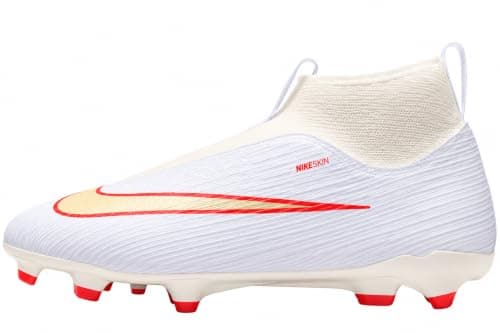
Nike Jr. Phantom 6 High Academy FG/MGThe junior cleat to pick if your kid wants a collar, on the clear understanding that it is a fit feature and a proper brace is a different product.
U9–U10, U11–U12, U13+ travel & club
FG/MG
Average-to-wide forefoot like the rest of the Phantom line, true to length.
The comfort-first Nike junior cleat, and the sensible pick for a defender, a keeper, or a kid who plays in discomfort and has stopped mentioning it.
Best for
A U9+ defender, keeper or any player who wants comfort over speed
Levels
U9–U10 · U11–U12 · U13+ travel & club
Type / surface
MG (multi-ground)
How it fits
The most generous Nike junior last — closer to the adidas Copa than to the Mercurial. True to length, and a reasonable first try for a foot the Mercurial has pinched.
What we like
The roomiest and most forgiving Nike junior line, which makes it the Nike answer for a broad or high-volume foot
Softer, leather-feel upper is more comfortable through the long stretches of standing and jogging that make up a youth session
Multi-ground plate means one pair covers grass games and turf training
Where it falls short
Heavier than the Mercurial at the same tier, which a genuinely fast player will feel
The softer upper creases and scuffs early, so it looks worn well before it is worn out
Manufacturer’s published specs
Tiempo is Nike's touch-and-comfort silo, positioned by Nike for players who prioritize a soft, precise touch and all-day comfort (Nike)
Academy tier of the current Tiempo Maestro junior family
Multi-ground plate; junior sizing
These are the manufacturer’s own claims, not measurements we took.
The junior cleat to pick if your kid wants a collar, on the clear understanding that it is a fit feature and a proper brace is a different product.
Best for
A U10+ player who wants a collar and a reliable striking surface
Levels
U9–U10 · U11–U12 · U13+ travel & club
Type / surface
FG/MG
How it fits
Average-to-wide forefoot like the rest of the Phantom line, true to length. The collar is snug — a high instep will notice it going on, which eases after a session or two.
What we like
The closest thing to a supportive collar available in a junior soccer cleat, and it is Nike's own claim rather than a retailer's
The Phantom touch zone genuinely helps a kid learning to strike cleanly rather than toe-poke
FG/MG plate covers a schedule split between grass games and turf training
Where it falls short
A knitted collar is not a brace — independent coverage of these collars is clear they are built for fit and feel, not structural ankle stability
Harder to pull on than a low-cut cleat, and a younger kid will need help the first few times
Costs more than the low-cut Phantom for a feature whose real benefit is comfort
Manufacturer’s published specs
High-cut Dynamic Fit collar that Nike describes as providing ankle support and keeping growing feet secure through quick turns (Nike)
NikeSkin touch zone positioned for clean strikes, with an expanded engineered-mesh touch area (Nike)
The safest default cleat for a rec player between U7 and U12, as long as the foot is average width or narrower.
Best for
The default first real cleat, U7 through U12
Levels
U7–U8 rec · U9–U10 · U11–U12
Type / surface
MG (multi-ground)
How it fits
Runs true to length but narrow. Order the regular size with a thumb's width at the toe and do not go up a full size to buy time — the heel will slip and blister.
What we like
Multi-ground plate means one pair covers a rec season split between grass and turf fields
The Club tier is the cheapest step into the Mercurial line, so the shoe looks like what the older kids wear without the Academy or Pro price
Wide size run from little kid up through big kid, so siblings can stay in one model
Where it falls short
Narrow through the midfoot like most of the Mercurial line — a genuinely wide foot will feel it
Synthetic upper does not stretch and mold the way leather does, so it will not grow with the foot at all
Manufacturer’s published specs
Synthetic leather upper with textured detailing for grip on the ball (Nike)
Molded studs on a plastic plate, rated by Nike for natural grass and artificial grass
Low-top collar
Sold in little kids' and big kids' sizing
These are the manufacturer’s own claims, not measurements we took.
Why this page is all one brand, and what to do about it
We would rather a roundup spanned three badges. This one cannot honestly, and the reason is a labeling convention rather than a quality judgment. In US junior ranges Nike markets a large share of its mid-tier models as FG/MG, while adidas and PUMA generally split their junior lines into a firm-ground version and a turf version and leave the middle alone.
So if you have decided on a multi-ground plate, you are mostly choosing between Nike silos — and the practical consequence is width. The Mercurial line runs narrow through the midfoot by design. If your player's foot is broad, the better plan is to drop the MG requirement and buy two single-surface pairs from a brand that fits them, or start from best soccer cleats for wide feet and work backwards.
An MG plate carries more studs, shorter. That is the whole design: enough bite for grass, enough spread for turf, best at neither.
What to spend
The Club tier is the entry point and is genuinely fine for one or two sessions a week. The Academy tier is the step that pays for a kid playing three or four times a week: a better upper, a lighter plate, and a shape that actually differs between silos. Above that, the junior top tier is a want rather than a need until a player stops growing a size a season.
Multi-ground. It is a plate carrying more studs than a firm-ground one, each shorter, so it can bite natural grass and still sit tolerably on artificial grass. It is designed for a player who uses both surfaces in the same week. It is not as good as FG on deep grass or as good as a turf outsole on crumb, and being second-best at both is the entire design brief.
Are multi-ground cleats good for kids?+
They are good for one specific kid: the one who trains on artificial turf midweek and plays grass at the weekend, in a family that does not want two pairs. For a rec player on grass only, firm ground is better. For a player on turf only, a turf outsole is better and more comfortable. Buy MG for the split week, not as a general upgrade.
Can you wear MG cleats on turf?+
Yes, and that is half of what the plate is for. On modern artificial grass with rubber crumb an MG plate performs well. On old, thin, hard carpet-style turf a dedicated turf outsole is the kinder option, because shorter and more numerous rubber studs spread the load better on a surface that gives nothing back. Some facilities post their own footwear rules, so check before a first session.
Why are most multi-ground junior cleats Nike?+
It is a labeling convention. Nike markets a large share of its junior mid-tier models as FG/MG, while adidas and PUMA generally split their junior ranges into separate firm-ground and turf versions. The practical effect is that an MG search in youth sizes returns mostly Nike, and because the Mercurial line runs narrow through the midfoot, a wide-footed player may be better served by two single-surface pairs from another brand.
Is MG or FG better for youth soccer?+
FG if the player is on natural grass most weeks, which describes the majority of US youth soccer. MG if the week genuinely splits between grass and artificial turf. The mistake to avoid is buying MG because it sounds more versatile: versatility costs grip at both ends, and grip on the field your player actually uses every week is worth more than coverage of a field they visit twice a year.
Do multi-ground cleats wear out faster?+
Not meaningfully, but they wear differently. Artificial turf is more abrasive than grass, so an MG plate used on turf every week will scuff its stud tips and its upper sooner than the same shoe used only on grass. At youth level this rarely decides anything, because the foot grows out of the pair first, but it is a reason to check the stud tips and the sole-to-upper bond at the end of a turf-heavy season.
Sources
Nike — kids' soccer cleats and shoes — Verified that each Nike model named on this page is currently sold, and the source for Nike's own published upper, plate and surface descriptions.
Nike — Mercurial, Phantom and Tiempo compared by playing style — Nike's own statement of which silo suits which position: Mercurial 'built for speed; best for forwards and wide midfielders', Phantom 'built for precision; best for central midfielders and playmakers', Tiempo 'built for comfort and control'. The source for every Nike position claim on this site.
Unisport — adidas Predator vs F50 vs Copa — Position mapping for the adidas silos — Predator for number 8s and 10s, F50 for wingers, attacking fullbacks and forwards, Copa for center-backs, defensive midfielders and classic number 9s — plus the width ranking (F50 narrowest, Predator middle, Copa most accommodating).