Heads up: we earn a commission if you buy through our links, at no extra cost to you. It never changes which product we recommend — here’s how that works.
The short answer
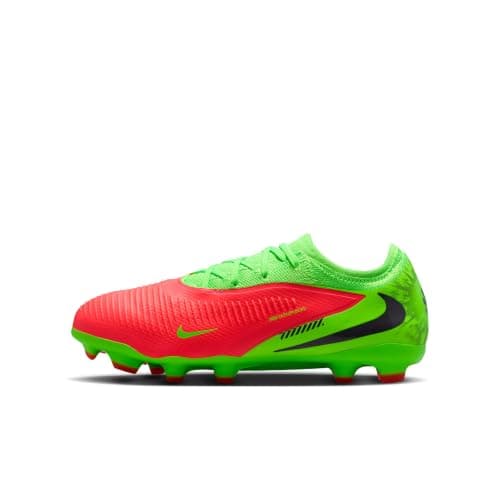
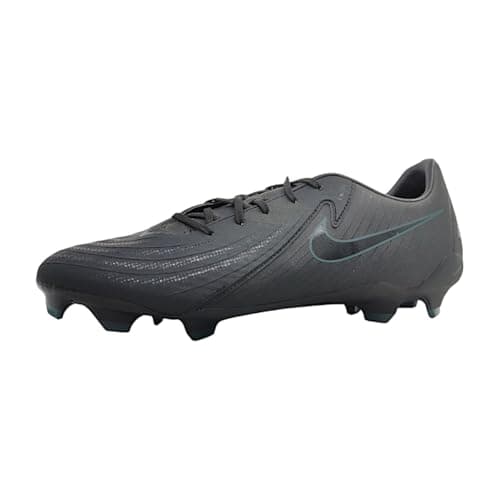
Best overall: the Nike Jr. Phantom GX2 Academy FG/MG — Phantom is Nike's precision silo, which Nike describes as built for precision and best for central midfielders and playmakers, on a plate that handles grass and artificial grass.
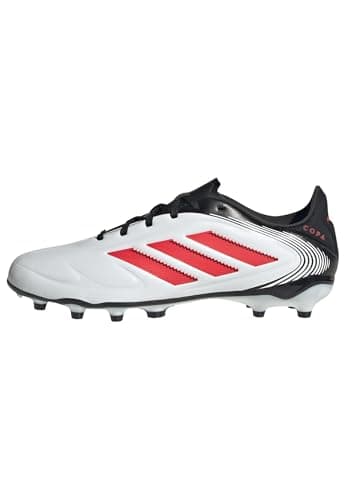
Best for touch and comfort: the adidas Kids Copa Pure 3 FG, from the line adidas itself positions around comfort, ball control and natural touch, and the most accommodating adidas shape on width.
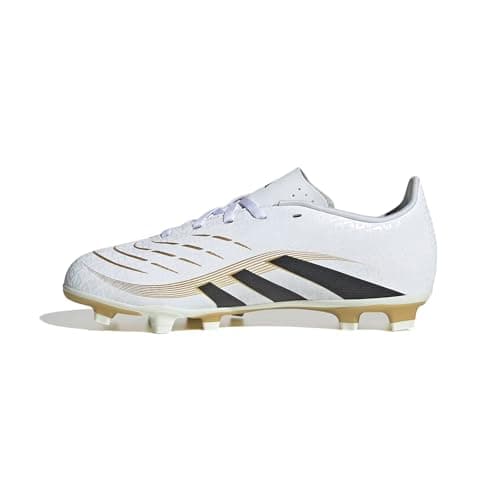
Budget pick: the adidas Predator Club FG — the cheapest step into a strike-and-control shape, and plenty of cleat for a rec season.
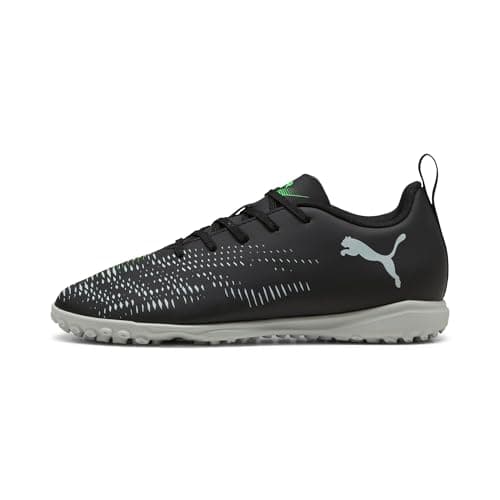
Best for a creative player on turf: the PUMA Future Play TT, from the silo a PUMA guide describes as designed for creative playmakers who rely on agility and freedom of movement.
What a control upper really changes: grip in the wet and feel on the first touch. It does not improve technique, and on a growing foot fit beats texture every time.
Control is the one cleat claim that has an honest mechanical basis. A textured or soft upper does change the first touch: there is more friction between shoe and ball in the wet, and less deadening material between the foot and the surface of the ball. Whether a nine-year-old can use that is a separate question, and this page takes it seriously rather than selling past it.
Each brand names its control silo plainly. Nike's own guidance puts Phantom with central midfielders and playmakers and describes Tiempo as built for comfort and control. A specialist adidas guide places Copa with center-backs, defensive midfielders and classic number nines, and adidas's own kids Copa Pure page is positioned on comfort, ball control and natural touch. A PUMA guide describes Future as designed for creative playmakers who rely on agility and freedom of movement, with an adaptive fit that wraps around the foot.
How we sorted these
Silo first, by the maker's own words. Every pick is from a line its brand positions on touch, control, precision or playmaking. No cleat is on this page because its upper looked textured in a photo.
Width second, and it is close to first. Copa is the most accommodating adidas shape; Phantom and Future are middling. A control boot that pinches is not a control boot.
Surface third. The picks cover FG, FG/MG and turf so you are not forced onto the wrong outsole to get the right upper.
A named budget pick. A rec player does not need a mid-tier control boot, so the cheapest shape that does the job is called out explicitly.
Quick picks
Tap any row to jump to the full write-up. The price in each button is the one Amazon reported on the date stamped under it — tap through for today’s number, which is the only one that can be relied on.
#
Product
Best for
Surface
Fit notes
Price
1
Nike Jr. Phantom GX II Academy FG/MGThe better Nike choice for a midfielder or defender who needs a reliable striking surface more than a few grams saved.
U9–U10, U11–U12, U13+ travel & club
FG/MG
Slightly more forefoot volume than a Mercurial at the same size.
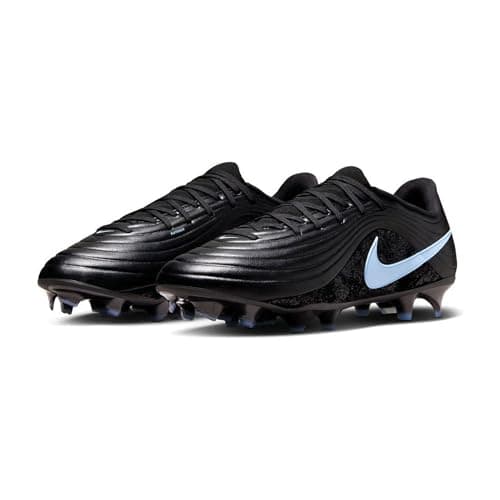
Nike Jr. Phantom 6 Low Pro MGOnly worth it for a committed older player playing several times a week; the Academy tier covers everybody else for far less.
PUMA Future 8 Play TurfThe most comfortable junior turf shoe here, with the least protection — a fine trade for training, less so for a competitive match.
Nike Jr. Tiempo Maestro Academy MGThe comfort-first Nike junior cleat, and the sensible pick for a defender, a keeper, or a kid who plays in discomfort and has stopped mentioning it.
U9–U10, U11–U12, U13+ travel & club
MG (multi-ground)
The most generous Nike junior last — closer to the adidas Copa than to the Mercurial.
The comfort-first Nike junior cleat, and the sensible pick for a defender, a keeper, or a kid who plays in discomfort and has stopped mentioning it.
Best for
A U9+ defender, keeper or any player who wants comfort over speed
Levels
U9–U10 · U11–U12 · U13+ travel & club
Type / surface
MG (multi-ground)
How it fits
The most generous Nike junior last — closer to the adidas Copa than to the Mercurial. True to length, and a reasonable first try for a foot the Mercurial has pinched.
What we like
The roomiest and most forgiving Nike junior line, which makes it the Nike answer for a broad or high-volume foot
Softer, leather-feel upper is more comfortable through the long stretches of standing and jogging that make up a youth session
Multi-ground plate means one pair covers grass games and turf training
Where it falls short
Heavier than the Mercurial at the same tier, which a genuinely fast player will feel
The softer upper creases and scuffs early, so it looks worn well before it is worn out
Manufacturer’s published specs
Tiempo is Nike's touch-and-comfort silo, positioned by Nike for players who prioritize a soft, precise touch and all-day comfort (Nike)
Academy tier of the current Tiempo Maestro junior family
Multi-ground plate; junior sizing
These are the manufacturer’s own claims, not measurements we took.
Three mechanisms, in descending order of how much they matter to a child.
First, friction. A textured or grippy upper holds the ball marginally longer on a wet first touch. On a soaking January pitch this is noticeable even to a ten-year-old. Best soccer cleats for rain and wet grass is the surface-specific version of the same point.
Second, softness. A supple upper conforms around the ball, which is what people mean by feel. This is the real difference between a leather-feel Copa or Tiempo shape and a thin speed upper, and it is why the comfort silos keep getting recommended to players who complain the ball bounces off their foot.
Third, closure. A laceless or clean-lace upper removes the lace knot from the strike surface. The gain is small, the trade is that a laceless shoe cannot be adjusted to the foot — are laceless soccer cleats good for kids is the full argument.
Positioning is each brand's own published description or a specialist retailer's published guide. The width column is the published cross-brand fit guidance, not a measurement we took.
Silo
Brand
Positioned for
Width
Phantom
Nike
Precision; central midfielders and playmakers
Middle of the Nike range
Tiempo
Nike
Comfort and control
One of Nike's more accommodating shapes
Copa / Copa Pure
adidas
Comfort, ball control and natural touch
Most accommodating adidas shape
Predator
adidas
Number 8s and 10s; strike and control elements
Middle of the adidas range
Future
PUMA
Creative playmakers who rely on agility and freedom of movement
Adaptive fit that wraps the foot
Scroll the table sideways on a narrow screen.
The honest limit
No cleat improves technique. A player with a clean first touch has it because they have taken thousands of touches, and the fastest route to that is a ball in a yard rather than a different shoe. If you are choosing between spending $40 more on a control boot and buying a size-appropriate ball plus a rebounder, buy the ball and the rebounder.
What a control boot does do is remove an excuse and make a wet first touch slightly more predictable. That is worth something to a player who already cares. It is worth nothing to a seven-year-old who needs a shoe that fits and a reason to come back next week.
A clean strike surface is partly a lacing question — and lacing is free. Our lacing page covers the patterns that change how the upper sits.
What to spend
Entry tier for U6 to U9: the shape is there, the upper is thicker, the price survives being outgrown. Mid tier from about U10 for a player training more than once a week, which is where the upper and the plate both change meaningfully. Junior top tier only for a settled foot and a serious schedule.
What are the best soccer cleats for ball control?+
For a junior player, the Nike Jr. Phantom GX2 Academy FG/MG is our pick: Phantom is Nike's precision silo, described by Nike as built for precision and best for central midfielders and playmakers, and the Academy tier sits at the point where the upper and plate stop being entry-level. The adidas Copa Pure is the touch-and-comfort alternative and is the most accommodating adidas shape, which matters more than texture on a growing foot.
Do control cleats actually improve your touch?+
They change it rather than improve it. A textured, soft upper adds friction on a wet first touch and conforms a little around the ball, which is a real and small effect. Technique comes from repetitions. If the choice is between a more expensive cleat and a ball plus somewhere to kick it, the ball wins every time at youth level.
Which cleats have the best touch for kids?+
The comfort and touch silos: adidas Copa and Copa Pure, Nike Tiempo, and PUMA Future. adidas positions its kids Copa Pure line on comfort, ball control and natural touch; Nike describes Tiempo as built for comfort and control; a PUMA guide describes Future as made for creative playmakers who rely on agility and freedom of movement. All three are more forgiving in width than the speed silos, which is a practical advantage on a child's foot.
Are laceless cleats better for ball control?+
Marginally, because there is no lace knot on the strike surface. The trade-off is bigger than the gain for most children: a laceless upper cannot be adjusted, so it has to fit as sold, which is a real risk on a wide or high-volume foot. If you want the clean surface without the risk, a lace cover or a straight-lace pattern gets most of the way there for free.
Is Phantom or Copa better for a youth player?+
Copa if the foot is broad or the player complains about pressure across the top, because it is the most accommodating adidas shape and the line is positioned on comfort and natural touch. Phantom if the foot is average and the player is a central midfielder or playmaker, which is exactly how Nike positions the silo. Both are sensible; the fit of the specific pair decides it.
What cleats do midfielders wear?+
Most often a control or precision silo — Nike Phantom, adidas Predator or PUMA Future — because the job involves receiving and distributing more than sprinting in a straight line. Nike puts Phantom with central midfielders and playmakers, and a specialist adidas guide puts Predator with number 8s and 10s. Our position-specific page for midfielders goes through it in more detail.
Sources
Nike — Mercurial, Phantom and Tiempo compared by playing style — Nike's own statement of which silo suits which position: Mercurial 'built for speed; best for forwards and wide midfielders', Phantom 'built for precision; best for central midfielders and playmakers', Tiempo 'built for comfort and control'. The source for every Nike position claim on this site.
Unisport — adidas Predator vs F50 vs Copa — Position mapping for the adidas silos — Predator for number 8s and 10s, F50 for wingers, attacking fullbacks and forwards, Copa for center-backs, defensive midfielders and classic number 9s — plus the width ranking (F50 narrowest, Predator middle, Copa most accommodating).
Unisport — your guide to PUMA boots — The source for PUMA's three silos as the retailer describes them: Future "designed for creative playmakers who rely on agility and freedom of movement" with "an adaptive fit that wraps comfortably around the foot"; Ultra built for players who put speed and acceleration first, with a "lightweight construction and a streamlined shape"; King "well suited for players who value a soft, comfortable touch and long-lasting durability over lightweight speed". The guide itself publishes no width or volume figures for any silo.
adidas — kids' Copa Pure — adidas's own positioning of the kids' Copa Pure line around comfort, ball control and natural touch.
Nike — kids' soccer cleats and shoes — Verified that each Nike model named on this page is currently sold, and the source for Nike's own published upper, plate and surface descriptions.