Heads up: we earn a commission if you buy through our links, at no extra cost to you. It never changes which product we recommend — here’s how that works.
The short answer
The adidas F50 Hyperfast League Kids FG is the lightest sensibly priced junior cleat here, and the pick for a quick player with a slim foot on natural grass. The PUMA Ultra 7 Match LL is the light dual-surface option, and the Nike Mercurial Vapor 16 Pro FG the lightest junior Mercurial if the budget stretches. The catch is consistent: light junior cleats are narrow and thin-uppered, so a broad foot or a heavy tackler is better served elsewhere.
Weight is the easiest thing to market and one of the harder things to verify, because manufacturers quote weights at different adult sizes and rarely publish a figure for a junior size at all. So this page does not rank by grams. It ranks by what the makers actually say their shoes are built for, and by what the construction tells you.
The honest framing: weight is real, and it is the thing a genuinely quick kid feels. It is also the attribute most often sold to a kid who is not quick, on a foot the shoe does not fit. Both halves matter.
What makes a junior cleat light
Three things, and each has a cost attached.
A thinner upper. Less material over the foot is the biggest single saving, and it is why a light cleat offers less protection against a stray kick. The Nike Mercurial Vapor 16 Pro's own trade-off is exactly this — a thin upper that gives less protection than the Club or Academy tiers.
A narrower last. Weight and lockdown go together: a slim, close-fitting shoe has less material in it. adidas's F50 line is the clearest case, the narrowest junior last adidas makes, and PUMA positions its Ultra silo around speed with a lightweight construction and a streamlined shape.
A thinner plate and sockliner. The saving underfoot is small, and it is where cushioning gets removed. A player who lands heavily on hard ground will notice that before they notice the weight.
Start here
Pick by your kid’s level
The right answer changes with the level, not just the shoe size. Find your kid’s bracket and start there.
The lightest adidas junior cleat at a sensible price, and weight is the one thing a genuinely quick kid actually feels. Narrow through the forefoot and midfoot, and firm ground only.
Lighter than most junior cleats carrying a comparable plate, and laceless, which removes the lace and tongue material entirely. Fits a generous average width with no way to snug it down.
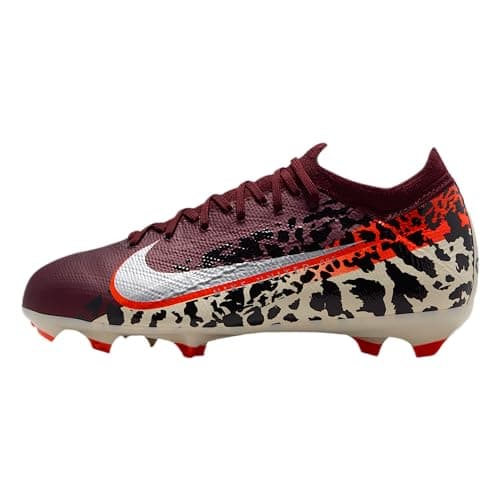
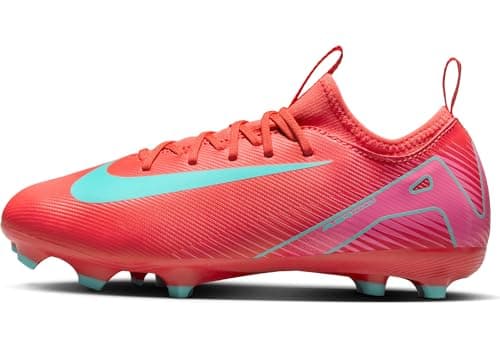
The lightest and most responsive junior Mercurial. It is also firm-ground only and the most expensive shoe here, which makes it a choice for a committed player on grass rather than a default.
Tap any row to jump to the full write-up. The price in each button is the one Amazon reported on the date stamped under it — tap through for today’s number, which is the only one that can be relied on.
#
Product
Best for
Surface
Fit notes
Price
1
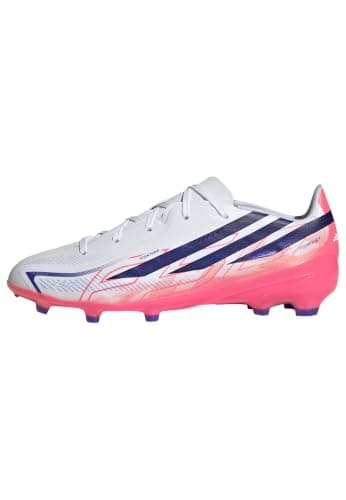
adidas F50 Hyperfast League Kids FGThe right speed cleat for a slim-footed winger or striker playing on grass, and the wrong shoe for almost everyone else.
U9–U10, U11–U12, U13+ travel & club
FG (firm ground)
Narrow through the forefoot and midfoot, true to length.
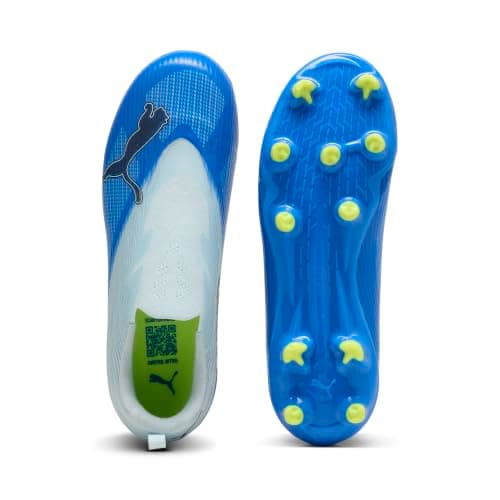
PUMA Ultra 7 Match LL FG/AG JuniorA good dual-surface option for an older player with an average-to-wide foot, and the wrong purchase for a narrow one.
U11–U12, U13+ travel & club
FG/AG
Fits a generous average width with no way to snug it down, and runs slightly short like the rest of the PUMA junior range.
Product photos come from each item’s current Amazon listing.
Who actually benefits
Position is a better guide than age here, and the manufacturers say so themselves. Nike positions the Mercurial as built for speed and best for forwards and wide midfielders. The adidas F50 is positioned for wingers, attacking fullbacks and forwards. PUMA's Ultra is for players who put speed and acceleration first.
Which means a light cleat is a winger's and a striker's shoe. A center back, a holding midfielder or a keeper gets very little from it and loses protection and comfort for the privilege — the silos built for those jobs are the Tiempo and the Copa, and they are deliberately not light. Best soccer cleats for wingers and best soccer cleats for strikers are the position pages; best soccer cleats for defenders is the other side of the argument.
1. adidas
adidas F50 Hyperfast League Kids FG
The right speed cleat for a slim-footed winger or striker playing on grass, and the wrong shoe for almost everyone else.
Best for
A fast U10+ player with a slim foot, on natural grass
Levels
U9–U10 · U11–U12 · U13+ travel & club
Type / surface
FG (firm ground)
How it fits
Narrow through the forefoot and midfoot, true to length. This is the adidas line for a slim foot and the one to avoid for a wide one.
What we like
The lightest adidas junior cleat at a sensible price, and weight is the one thing a genuinely quick kid actually feels
A locked-down narrow fit is what a sprinter wants, and besides the Mercurial it is the only mainstream junior line built that way
Where it falls short
The narrowest junior last adidas makes — a broad foot will be sore by half time
Firm-ground plate only, so it is the wrong single pair for a turf-heavy training schedule
Manufacturer’s published specs
League is the mid tier of the current junior F50 Hyperfast range
F50 is adidas's speed silo, positioned for wingers, attacking fullbacks and forwards
Firm-ground plate; kids' sizing
These are the manufacturer’s own claims, not measurements we took.
A good dual-surface option for an older player with an average-to-wide foot, and the wrong purchase for a narrow one.
Best for
A U11+ player on mixed grass and artificial grass who wants no laces
Levels
U11–U12 · U13+ travel & club
Type / surface
FG/AG
How it fits
Fits a generous average width with no way to snug it down, and runs slightly short like the rest of the PUMA junior range. Not the pick for a slim foot.
What we like
A dual-surface plate and a clean striking surface in one junior shoe, which is an unusual combination at this price
Lighter than most junior cleats carrying a comparable plate
No laces to come undone mid-match, and no lace pressure across the instep
Where it falls short
Laceless means no adjustment at all, so a narrow foot slides inside it and a growth spurt cannot be accommodated
PUMA junior sizing is the least consistent of the big three — a model to try on rather than guess
Manufacturer’s published specs
Laceless construction — the LL in the model name (PUMA)
FG/AG outsole PUMA rates for firm natural grass and artificial grass
Lightweight synthetic upper, junior sizing
These are the manufacturer’s own claims, not measurements we took.
Every shoe on this page is either narrow or unadjustable, and sometimes both. That is not a coincidence — it is what makes them light. A retailer fit guide written model by model rather than brand by brand makes the useful point that width is a property of the model, not of the badge: within a single brand the spread between a speed silo and a comfort silo is larger than the spread between brands.
So if your kid has a broad foot and wants the light shoe everybody else has, the answer is not a different brand's speed cleat. It is a comfort silo in the same brand: the Nike Tiempo line is the most generous junior last Nike makes, and the adidas Copa Pure is the roomiest adidas junior cleat. Best soccer cleats for wide feet is the roundup, and nike vs adidas vs puma youth cleat fit explains why within-brand spread beats between-brand spread.
Does a nine-year-old feel the difference?
Somewhat, and less than the marketing implies. The gap between a light junior cleat and an ordinary one is a few tens of grams on a shoe a child is wearing for an hour, and at U9 pace the limiting factor is not footwear. What a kid does feel is a thin, close-fitting shoe, which reads as fast whether or not it measures fast.
That is not nothing. A kid who likes their cleats plays better in them, and nobody should pretend otherwise. But it is a reason to buy a light cleat that fits properly, not a reason to accept a narrow one on a wide foot or a firm-ground plate for a turf schedule. If the shoe your kid wants is the wrong shape, the fix is a different model in the same look — are expensive soccer cleats worth it covers what the price tiers actually buy.
One structural note: light cleats are almost always firm-ground or single-surface. The PUMA Ultra 7 Match LL is the exception here with its FG/AG plate. If your kid trains on turf and plays on grass, read MG vs FG soccer cleats before buying on weight, because the plate decision outranks the weight one.
Common questions
What is the lightest youth soccer cleat?+
Among sensibly priced junior options, the adidas F50 Hyperfast League is the one built around low weight — it is adidas's speed silo on its narrowest junior last. The Nike Mercurial Vapor 16 Pro is lighter still and costs considerably more. Note that manufacturers rarely publish a weight for a junior size, so we do not rank these by grams and neither should anyone else.
Do lightweight cleats actually make kids faster?+
Marginally, and only for players fast enough for footwear to be the limit. The difference is tens of grams over an hour of play, which at youth pace is swamped by fit, surface and conditioning. What a light cleat reliably does is feel fast, and a kid who likes their cleats plays better in them — that is a real effect, just not a physical one.
What do you give up with a lightweight cleat?+
Three things: protection, because the upper is thinner and offers less against a stray kick; width, because the lockdown that makes a shoe light also makes it narrow; and cushioning, because the plate and sockliner are thinner. For a winger on grass those are fair trades. For a defender, a keeper or a wide foot they are not.
Are lightweight cleats bad for wide feet?+
Generally yes, and the fix is not a different brand. Width is a property of the model rather than the badge — the spread between a speed silo and a comfort silo inside one brand is bigger than the spread between brands. A broad-footed kid who wants a light look is better off in the Nike Tiempo or adidas Copa line, which are the roomiest junior lasts those brands make.
Which position should wear lightweight cleats?+
Wingers and strikers, by the manufacturers' own positioning: Nike builds the Mercurial for speed and names forwards and wide midfielders, adidas positions the F50 for wingers, attacking fullbacks and forwards, and PUMA's Ultra is for players who put acceleration first. Center backs, holding midfielders and keepers get more from a comfort silo.
Is a laceless cleat lighter?+
A little, because the laces, eyelets and tongue are all material removed — the PUMA Ultra 7 Match LL is both laceless and light. The trade-off is that a laceless cleat cannot be tightened, so it has to be cut generously and will not suit a slim foot. Our boys' and girls' laceless pages cover that decision properly.
Sources
Nike — kids' soccer cleats and shoes — Verified that each Nike model named on this page is currently sold, and the source for Nike's own published upper, plate and surface descriptions.
Nike — Mercurial, Phantom and Tiempo compared by playing style — Nike's own statement of which silo suits which position: Mercurial 'built for speed; best for forwards and wide midfielders', Phantom 'built for precision; best for central midfielders and playmakers', Tiempo 'built for comfort and control'. The source for every Nike position claim on this site.
adidas — kids' soccer — Verified current availability of the adidas models named here, plus adidas's published material and construction claims.
Unisport — adidas Predator vs F50 vs Copa — Position mapping for the adidas silos — Predator for number 8s and 10s, F50 for wingers, attacking fullbacks and forwards, Copa for center-backs, defensive midfielders and classic number 9s — plus the width ranking (F50 narrowest, Predator middle, Copa most accommodating).
Unisport — your guide to PUMA boots — The source for PUMA's three silos as the retailer describes them: Future "designed for creative playmakers who rely on agility and freedom of movement" with "an adaptive fit that wraps comfortably around the foot"; Ultra built for players who put speed and acceleration first, with a "lightweight construction and a streamlined shape"; King "well suited for players who value a soft, comfortable touch and long-lasting durability over lightweight speed". The guide itself publishes no width or volume figures for any silo.
Unisport — top 10 best football boots for wide feet in 2026 — A retailer fit guide written model by model rather than brand by brand, and the source for the cross-brand width claims on this site: the PUMA King 20 Ultimate ranked first because it is "seriously wide", with room in the heel, midfoot, forefoot and outsole; the Nike Phantom 6 Low Elite described as having good width in the forefoot and a particularly generous heel; the Nike Tiempo Legend Pro called one of Nike's widest-fitting options, with space through the forefoot, midfoot and heel; and the adidas Copa Pure 4 Elite included in a wide-feet ranking despite a relatively tapered midfoot, because its wider forefoot compensates. The guide makes no claim that any one brand is narrowest overall — it treats width as a property of the model rather than the badge, which is the point the cross-brand fit page is built on.
Soccer Wearhouse — artificial ground (AG) soccer cleats — Verified that junior FG/AG models are genuinely stocked rather than adult-only, including the PUMA Ultra 7 Match LL FG/AG Junior and Ultra Nitro 7 LL FG/AG Junior, and the prices they are currently listed at.