Heads up: we earn a commission if you buy through our links, at no extra cost to you. It never changes which product we recommend — here’s how that works.
The short answer
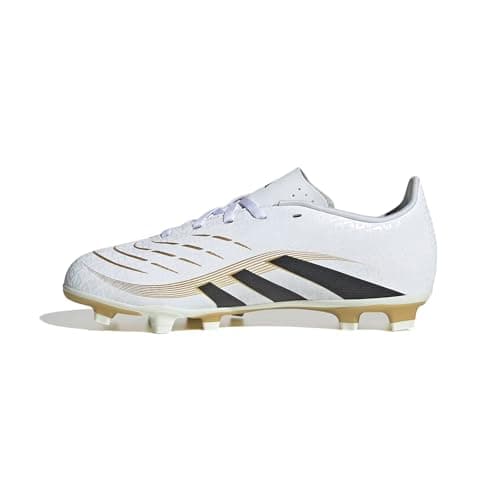
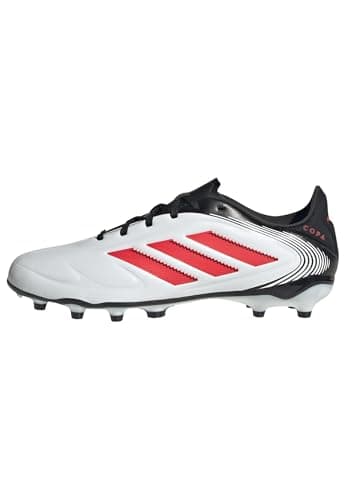
Best overall: the adidas Kids Copa Pure 3 FG — a soft, substantial upper from the line adidas positions on comfort and natural touch, which is the construction that survives a season of being kicked.
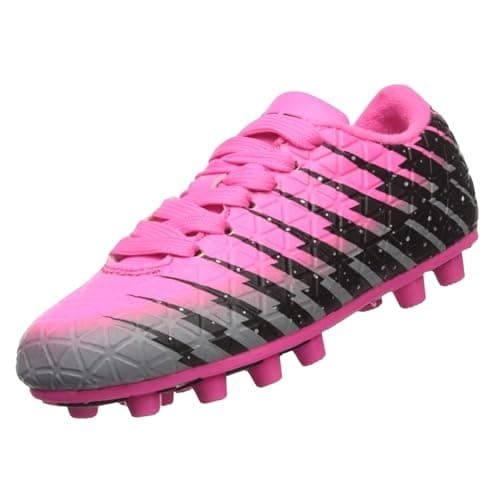
Budget pick: the Vizari Bolt FG, because at this price a second pair costs less than a repair and nothing about a youth season justifies more.
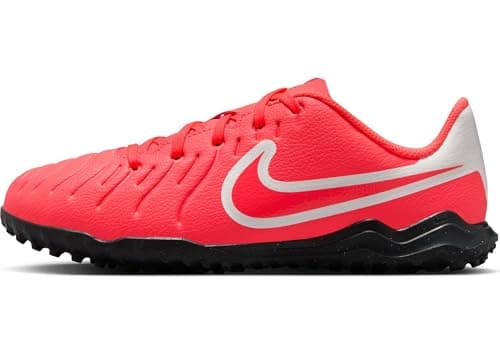
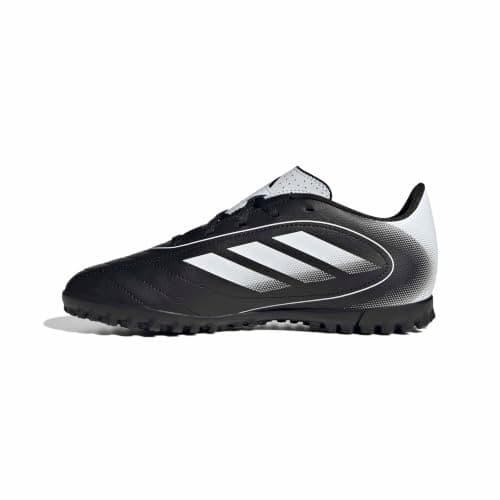
Best if the fields are turf: the Nike Jr. Legend 10 Club TF, since a turf outsole has no long studs to shear off and spreads wear across the whole sole.
The finding that matters: at U6 to U11 the foot ends the pair long before the shoe does. Durability is worth paying for only when a player has stopped growing a size a season.
What actually fails: the toe, the sole-to-upper bond at the forefoot crease, and the stud tips. Not the laces and not the colorway.
Durability is the one cleat attribute where the expensive answer is often wrong. Top-tier boots are built light, and light means thinner. A mid or top-tier speed upper on an abrasive turf field in October will look worse by March than an entry-tier synthetic that was never trying to save weight.
So this page ranks by construction rather than price, and it starts by naming the awkward truth: for most families the most durable purchase is an inexpensive, substantial pair plus the habit of drying them properly.
What actually fails on a youth cleat
Checked at the end of a season, these six account for nearly every cleat a family replaces early. Five of the six are construction or habit, not brand.
Failure
Where it shows
What prevents it
Toe abrasion
The outside edge of the big toe, from dragging and toe-poking
A thicker synthetic or leather-feel upper; a reinforced toe
Sole separation
The forefoot crease, where the plate bends every stride
A direct-injected or well-bonded sole; drying slowly, never on a radiator
Stud tip wear
Stud tips rounded flat, usually from turf or concrete walking
Keeping cleats off hard surfaces; a turf outsole for turf weeks
Heel collapse
The heel counter folds and the foot slides
Not sizing a full size up; proper lacing
Upper tear at the eyelets
The eyelet row, from over-tightening
Even lacing pressure and not cranking the laces
Smell and stiffening
Everywhere, from drying wet shoes fast
Air-drying away from heat; two pairs rotated if possible
Scroll the table sideways on a narrow screen.
How we sorted these
Upper substance over upper weight. A heavier, thicker upper lasts longer. We are explicitly not ranking by lightness here, which is the opposite of what our speed page does.
Sole construction. A direct-injected or firmly bonded sole is the single best predictor of a shoe surviving the forefoot crease, which is where cleats come apart.
Surface honesty. If a player is on turf most weeks, the durable answer is a turf outsole, not a tougher grass boot. Two picks here reflect that.
Cost per season, not sticker price. Where two shoes last the same time, the cheaper one is more durable in the only sense that matters to a family.
Quick picks
Tap any row to jump to the full write-up. The price in each button is the one Amazon reported on the date stamped under it — tap through for today’s number, which is the only one that can be relied on.
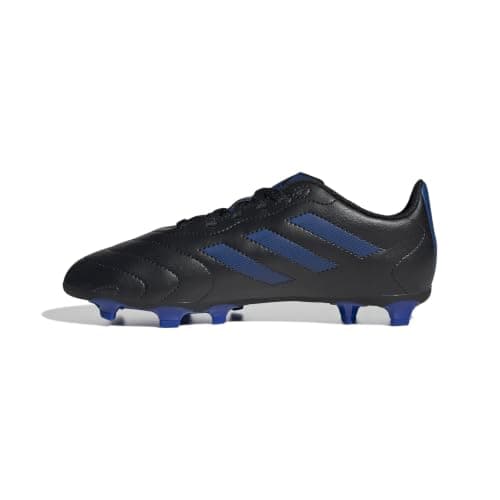
adidas Goletto VIII Firm GroundThe sensible answer when the honest requirement is a cleat that survives one rec season and costs as little as possible.
U6, U7–U8 rec, U9–U10
FG
Runs slightly generous in width and true in length.
Work it out before you buy, because it usually reverses the instinct. A $35 entry-tier pair that survives one season costs $35 a season. A $95 mid-tier pair that survives two costs about $48 a season — and only if the foot cooperates, which below U11 it generally does not.
That arithmetic flips at the point a player stops changing shoe size every few months, usually somewhere between U11 and U13. From there a better-built pair genuinely can be a cheaper pair. Are expensive soccer cleats worth it is the longer version of this argument, and when to replace kids soccer cleats is how to tell the pair is actually finished rather than merely dirty.
Five habits that outperform buying a tougher shoe
Dry them slowly, away from heat. A radiator or a hot car shrinks and stiffens an upper and weakens the sole bond. Newspaper inside, somewhere airy, is the whole method — how to clean soccer cleats has the rest.
Keep them off concrete. Walking to the car in cleats rounds the stud tips faster than any amount of playing. Flip-flops in the bag cost nothing.
Lace them evenly and do not crank them. Over-tightening is what tears the eyelet row and collapses the heel counter.
Do not size a full size up. It feels thrifty and it produces a sliding foot, a collapsed heel and blisters. How should kids soccer cleats fit is the detail.
Rotate two pairs if turf is involved. Even a cheap second pair halves the wear on each, and lets both dry fully between sessions — which is also most of the answer to how to keep soccer cleats from smelling.
More youth cleats are killed by fast drying than by playing. Airy and slow, never a radiator.
If what you are really trying to solve is a pair that keeps falling apart at the toe, the honest answer may be the surface rather than the shoe. Best soccer cleats for hard ground and best youth turf soccer shoes both cover cases where a grass boot is being asked to do a job it was not built for. And if the budget is the real constraint, best soccer cleats under $50 is where the best cost-per-season options live.
Common questions
What are the most durable youth soccer cleats?+
For a grass season, the adidas Kids Copa Pure 3 FG: a soft but substantial upper from a line adidas positions on comfort and natural touch, which is the construction that survives being kicked all season. For a turf-heavy schedule, a turf outsole such as the Nike Jr. Legend 10 Club TF lasts longer than any grass boot, because it has no long studs to shear and spreads wear across the whole sole.
Do expensive soccer cleats last longer?+
Often the opposite at youth level. Top-tier boots are built light, and light means thinner material. An entry-tier synthetic that was never trying to save weight will usually outlast a mid or top-tier speed upper on the same abrasive turf. The durability premium only starts to make sense once a player has stopped growing a size a season.
What part of a soccer cleat fails first?+
Three places, in order. The outside edge of the big toe, from dragging and toe-poking. The sole-to-upper bond at the forefoot crease, where the plate flexes every stride. And the stud tips, usually rounded flat by walking on concrete rather than by playing. Checking those three at the end of a season tells you whether a pair has another one in it.
How long should youth soccer cleats last?+
One to two seasons of normal rec play, and the foot usually ends the pair before the shoe does. A player on abrasive artificial turf several times a week should expect the shorter end of that. If a pair is failing inside one season, the usual causes are fast drying on a heat source, walking on concrete in them, or a grass outsole being used on turf.
Are turf shoes more durable than cleats?+
On turf, clearly yes. A turf outsole has no long studs to shear off and distributes wear across dozens of small rubber nubs, while an FG plate concentrates the same forces on a dozen stud tips that the surface will not let sink. On natural grass the comparison reverses, because a turf sole rides on top of the blades and gives up grip.
How do you make soccer cleats last longer?+
Dry them slowly and away from heat, keep them off concrete, lace them evenly without cranking, buy the right length rather than a size up, and rotate two pairs if turf is involved. Those five habits make more difference to how long a youth cleat survives than the price of the cleat does.
Sources
adidas — kids' soccer — Verified current availability of the adidas models named here, plus adidas's published material and construction claims.
adidas — kids' Copa Pure — adidas's own positioning of the kids' Copa Pure line around comfort, ball control and natural touch.
Nike — kids' soccer cleats and shoes — Verified that each Nike model named on this page is currently sold, and the source for Nike's own published upper, plate and surface descriptions.
Vizari Sports — youth cleats and indoor shoes — Verified the Vizari models named here are currently sold, including the toddler size range and the indoor line, plus Vizari's published material claims.
Under Armour — how to buy soccer cleats for kids — A manufacturer's own buying guide, and the source for the statement that kids' soccer cleats are unisex and sized to normal shoe size, plus its guidance on leaving about half an inch at the toe and fitting with match socks on.