Heads up: we earn a commission if you buy through our links, at no extra cost to you. It never changes which product we recommend — here’s how that works.
The short answer
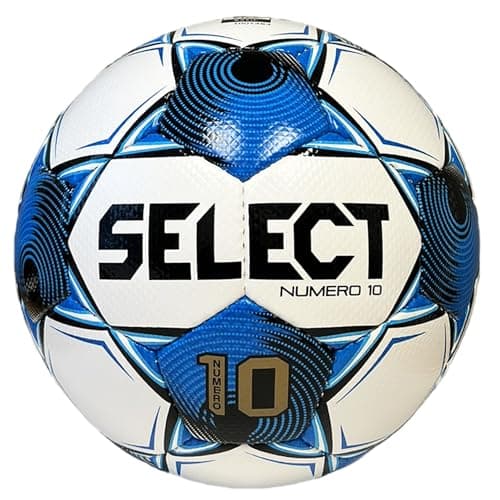
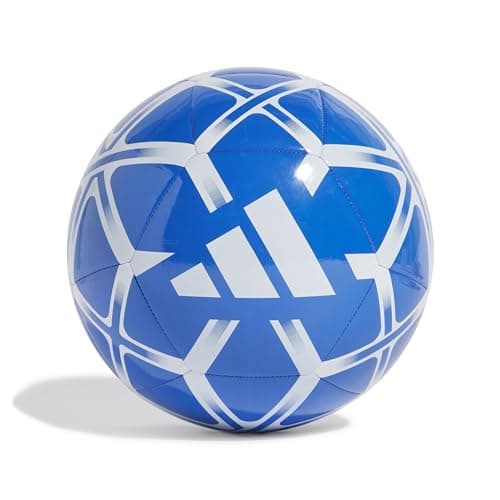
A 10-year-old needs a size 4 ball — that is the published age-division answer, not a preference — and the pick is the adidas Starlancer Club, the default recreational ball at every size. It is also the budget pick, because it is the cheapest size 4 on this site, and we would rather say that than invent a second tier. If the player is on a travel team and wants a match-quality ball, step up to the Select Numero 10. Prices come from the live price layer with an as-of date under each button.
The reason to answer the size question first is that it is the question behind the search. A parent asking what ball a 10-year-old needs is nearly always asking whether the size 5 in the garage will do, and the answer is published: AYSO's own size-of-ball table puts size 4 on the U9 through U12 divisions and size 5 from U13, and US Youth Soccer's small-sided formats progress along the same age boundaries.
So a 10-year-old is squarely in the middle of the size 4 band — not at the edge of it, and not at a point where either choice is defensible. A size 5 at ten is a heavier ball on a shorter leg, and the practical result is a child who scoops rather than strikes.
The age-to-size mapping, in full
Sizes are from AYSO's published size-of-ball table and the US Youth Soccer small-sided formats, not from us. The useful consequence for a 10-year-old is in the right-hand column: a size 4 bought now is correct for three more seasons.
Age / division
Ball size
What a 10-year-old should note
Under 6 (U6)
Size 3
A younger sibling's ball — too light to strike properly at ten
U7-U8
Size 3
Still size 3 under the published divisions
U9-U10
Size 4
A 10-year-old is here. This is the ball to buy.
U11-U12
Size 4
Same size for two more seasons, so a good size 4 lasts
U13 and above
Size 5
The jump to full size, and the reason not to buy a 5 early
Scroll the table sideways on a narrow screen.
How we sorted these
Correct size first. Every pick is a genuine size 4 in a size run a 10-year-old plays in. A ball that only exists as a size 5 is not an answer to this question however good it is.
Surface before badge. Where the ball lives decides more than the brand: a ball that spends its life on a driveway needs a tougher cover than a ball used on grass twice a week.
Specification over marketing. A ball is held to a published specification regardless of price, so claims that cannot be checked against one were ignored.
Durability weighted for this age. At ten a ball is kicked against walls, left outside and stood on. The pick that survives that is worth more than the pick that feels best new.
A named cheapest-workable pick. Not the cheapest ball on Amazon — the cheapest size 4 in our registry that holds pressure and shape for a season. On this page it happens to be the top pick too, and we say so rather than manufacturing a distinction.
Quick picks
Tap any row to jump to the full write-up. The price in each button is the one Amazon reported on the date stamped under it — tap through for today’s number, which is the only one that can be relied on.
#
Product
Best for
Surface
Fit notes
Price
1
adidas Starlancer ClubThe sensible default youth ball — right size range, right price, air stays in.
U6, U7–U8 rec, U9–U10, U11–U12, U13+ travel & club
Sizes 3, 4 and 5
Check the size on the ball, not the box: size 3 is for roughly U8 and under, size 4 for U9–U12, size 5 from U13..
The one to buy if the ball is going to live in the yard rather than the gear bag.
Best for
A practice ball that lives outside, U7+
Levels
U7–U8 rec · U9–U10 · U11–U12 · U13+ travel & club
Type / surface
Size 4
How it fits
Size 4 is the U9–U12 match size. Confirm the size on the listing before buying — the colorways are listed separately and not every one carries every size.
What we like
Costs little enough that a ball lost over a fence is an annoyance rather than a replacement purchase
An adidas training ball rather than an unbranded one, so the cover and valve are to a known standard
Where it falls short
Heavier feel than a match ball, which is fine for practice and noticeable in a game
Listed in size 4 only, so it suits U9 upward rather than the youngest brackets
Manufacturer’s published specs
adidas's basic training ball, listed in size 4 (adidas)
Requires inflation on arrival
These are the manufacturer’s own claims, not measurements we took.
Still a size 4 for two more seasons. For a player now training three times a week, a competitive training ball holds its shape better than a rec ball being kicked daily.
The published divisions put the jump at U13, which for most players is two to three seasons after their tenth birthday. That is a long time, and it is the single most useful fact on this page, because it means a decent size 4 bought at ten is still the correct ball at twelve.
What a size 5 actually changes is mass and circumference. IFAB's Law 2 specifies a size 5 at 68 to 70 cm circumference and 410 to 450 g at the start of the match, and a size 4 is meaningfully smaller and lighter than that. On a ten-year-old's leg the extra mass does not build strength, it changes technique — the child leans back to get the ball up, and that habit is harder to unlearn than it was to acquire.
There is one honest exception. A player who is training with an older age group, or one who will move up a division mid-season, is better off owning both — and a size 4 is cheap enough that owning both is not an extravagance. Size 4 vs size 5 soccer ball sets the comparison out properly, and best size 5 soccer balls is the page for when the jump comes.
The size printed on the ball is the thing to check in the shop. A 10-year-old wants a 4, and under the published divisions they will still want a 4 at twelve.
Where the ball lives matters more than the brand
At ten, most balls are not destroyed in matches. They are destroyed on driveways, against garage doors, and by being left outside through a frost. So the question that actually separates these picks is where the ball will spend its life.
On grass, a recreational machine-stitched ball is entirely sufficient and the cheapest pick here does the job. On concrete or asphalt, a tougher cover outlasts a nicer one — a premium cover is actively worse on a hard surface, because the material that gives a better touch also abrades faster. And for a child who plays indoors in winter, neither is the right ball at all: a futsal ball is specified as a different ball with a capped first rebound, not as a smaller one.
A pump with an inline gauge is worth more than an upgrade from the cheapest ball to the second-cheapest, and this is not a close call. Most balls that families complain about — dead, heavy, hard to strike — are simply underinflated, and a ball at the wrong pressure behaves worse than a cheap ball at the right one.
The second is a care habit rather than a product. A ball manufacturer's own published care instructions warn that high temperatures — naming a car trunk in summer — cost a ball its tuned shape and deteriorate the carcass, and that the ball should be stored in a cool dry place out of direct sunlight. A ball that lives in the trunk is on a clock no amount of money shortens.
No, and the specification is why. A ball is measured against the same published numbers regardless of price: Law 2 sets the circumference, the weight and the pressure, and a cheap ball and an expensive ball are held to the same figures. The FIFA quality marks do not change those tests either — the published program applies the same battery of tests, with the higher mark meaning tougher conditions rather than extra tests.
What a match ball genuinely buys is a thermally bonded construction that keeps its shape in sustained rain and a bladder that holds pressure longer. Both are real and neither is visible to a ten-year-old in a rec league.
The exception is a league that requires a marked match ball, in which case the requirement decides rather than the player. Training ball vs match ball sets the difference out, and best soccer balls under $25 covers the band nearly every family should be shopping in.
Common questions
What size soccer ball for a 10 year old?+
A size 4. AYSO's published size-of-ball table puts size 4 on the U9 through U12 divisions and size 5 from U13, and US Youth Soccer's small-sided formats progress on the same age boundaries. A 10-year-old is in the middle of the size 4 band, not at the edge of it — and will still be on a size 4 at twelve.
What is the best soccer ball for a 10 year old?+
The adidas Starlancer Club in size 4: the default recreational ball, with a cover that survives a driveway, and the cheapest size 4 on this site. It is both our top pick and our budget pick, which we would rather state than invent a second tier for. For a travel player who wants a match-quality build, the Select Numero 10 is the step up.
Can a 10 year old use a size 5 soccer ball?+
They can, but they should not. A size 5 is specified at 68 to 70 cm circumference and 410 to 450 g under IFAB's Law 2, which is meaningfully heavier than a size 4. On a ten-year-old the extra mass changes technique rather than building strength — the child leans back to lift the ball, and that habit is harder to unlearn than to acquire. The published divisions put the jump at U13.
When does a child move up to a size 5 ball?+
At U13 under the published age divisions, which for most players is two to three seasons after their tenth birthday. That is the most useful thing to know when buying at ten: a decent size 4 bought now is still the correct ball at twelve, so it is worth buying one that lasts rather than the smallest possible one.
Does a 10 year old need an expensive soccer ball?+
No. A ball is held to the same published specification regardless of price — Law 2 sets the circumference, weight and pressure, and the FIFA quality program applies the same tests to every mark, with the higher mark meaning tougher conditions rather than extra tests. An expensive ball buys a thermally bonded shell and a better bladder, neither of which a ten-year-old notices in a rec league.
What should I buy before upgrading my child's ball?+
A pump with an inline gauge. Most balls families describe as dead or heavy are simply underinflated, and a cheap ball at the right pressure plays better than a good ball at the wrong one. After that it is a habit rather than a purchase: a manufacturer's own care instructions warn that high temperatures such as a car trunk in summer cost a ball its shape and deteriorate the carcass.
Sources
AYSO — Size of Ball and Field by Age Division — Official ball sizes, circumference and weight ranges, and field dimensions by age division. Used for every ball-size and field-size figure on this site.
IFAB Laws of the Game — Law 2, The Ball — The official size 5 specification quoted on this site: circumference between 68 cm (27 in) and 70 cm (28 in), weight between 410 g (14 oz) and 450 g (16 oz) at the start of the match, and pressure equal to 0.6-1.1 atmosphere at sea level, which the Law itself states as 8.5-15.6 lbs per square inch.
FIFA — the quality marks for footballs — The three FIFA quality marks (FIFA QUALITY PRO, FIFA QUALITY, FIFA BASIC), the seven laboratory tests every certified ball must pass — weight, circumference, roundness, bounce, water absorption, loss of pressure, and shape and size retention — and the fact that the Pro mark means passing those same seven tests under more demanding conditions rather than passing extra tests.
Molten — ball care instructions — A ball manufacturer's published care instructions, and the source for the ball-care facts on this site: always use a thin inflation needle to avoid damaging the valve, and inflate slowly to the pressure printed on the ball; a very dirty synthetic-leather ball is cleaned with plenty of water and a mild detergent, never left immersed in detergent, and rinsed and drained thoroughly; detergent chemicals may fade the colors; the ball is then left to dry in a well-ventilated place out of the sun, and never dried with a hair dryer or similar appliance; store it in a cool dry place away from direct sunlight; never leave a ball in high temperatures or humidity such as a car trunk in summer, which costs it its tuned shape and deteriorates the carcass; leather protection creams and sprays must not be used because they make the surface slippery; and rotating two or more balls extends the life of each.