Heads up: we earn a commission if you buy through our links, at no extra cost to you. It never changes which product we recommend — here’s how that works.
The short answer
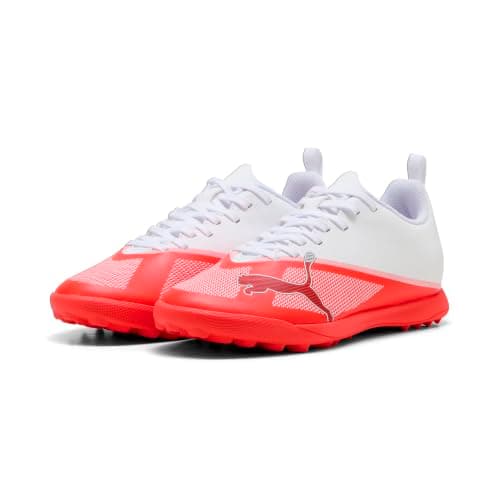
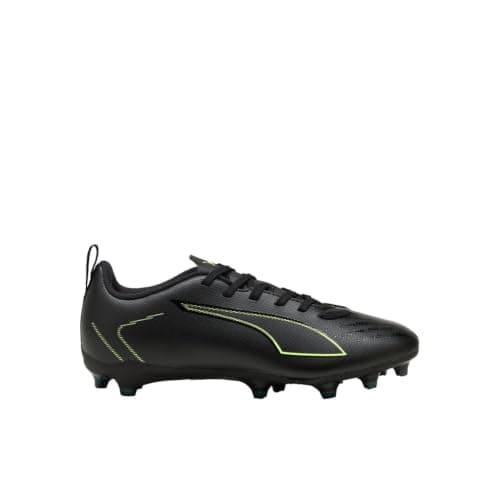
The closest junior alternative to the adidas F50 is the PUMA Ultra Play FG — Ultra is PUMA's speed silo, described in a specialist guide as built for players who put speed and acceleration first with a lightweight, streamlined shape, and the entry tier undercuts the F50's league tier. The budget alternative is the PUMA Ultra 7 Play TT on a turf outsole. But if your reason for looking is that the F50 pinched, the honest answer is the adidas Kids Copa Pure 3 FG — and the rest of this page explains why. Prices come from the live price layer with an as-of date under each button.
What the F50 is: adidas's speed silo. A specialist retailer's guide to the adidas lines positions it for wingers, attacking fullbacks and forwards, and the same guide ranks the three adidas shapes for width — F50 narrowest, Predator in the middle, Copa most accommodating. It is a good boot, it is widely stocked in junior sizes, and it does what the badge says.
That width ranking is the reason this page is shaped the way it is. On most alternatives searches the reasons split roughly evenly between price and fit. On the F50 they do not: it is the narrowest last adidas makes, so the overwhelming majority of people who go looking for something else are looking for room, not a discount.
Which produces an uncomfortable recommendation, and we would rather give it than dress it up: if the F50 was too narrow, the right move is usually to leave the speed category rather than to buy a different brand's speed boot. The three speed silos — adidas F50, Nike Mercurial and PUMA Ultra — are all the narrowest shapes their brands make, because a tapered last is what a speed boot is.
Which reason is yours?
Seven reasons, seven answers. Every row is positioning published by the brand or by a specialist retailer, not our own testing — this site does not lab-test and publishes no scores.
If your reason is
Buy
Because
It was too narrow
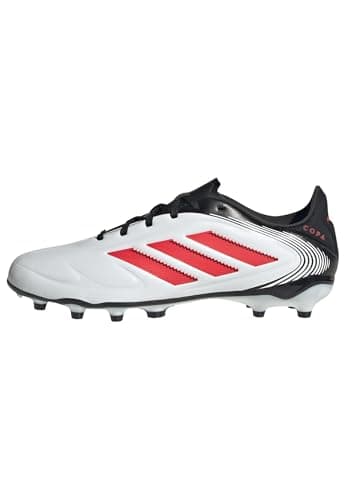
adidas Kids Copa Pure 3 FG
The most accommodating adidas shape in the published fit guidance, and the same brand's sizing
You want the same idea, cheaper
PUMA Ultra Play FG
Entry tier of PUMA's speed silo, under the F50's league tier
The budget is tight
PUMA Ultra 7 Play TT
The cheapest way into a speed shape, on a turf outsole
You want Nike's speed boot instead
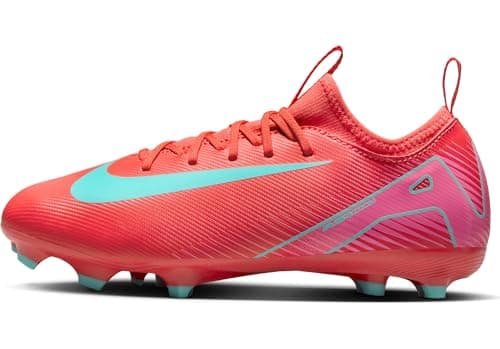
Nike Jr. Mercurial Vapor 16 Academy
Nike describes Mercurial as built for speed, best for forwards and wide midfielders
You strike the ball more than you sprint
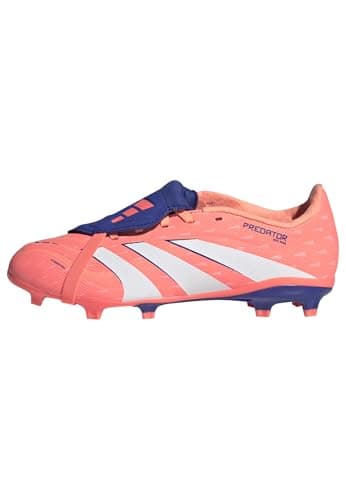
adidas Kids Predator League FG
Mid-range adidas width, and the silo positioned for number 8s and 10s
Your fields are artificial turf
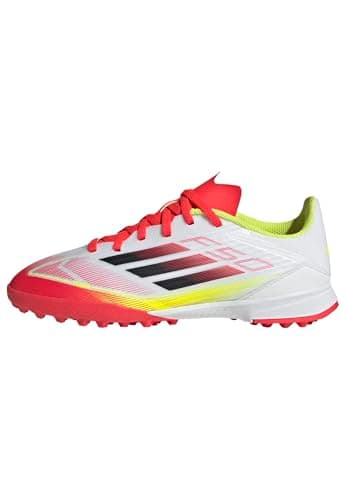
adidas Kids F50 League Turf
Same silo, correct outsole — if the F50 shape itself was fine
You just need a cheap pair that fits
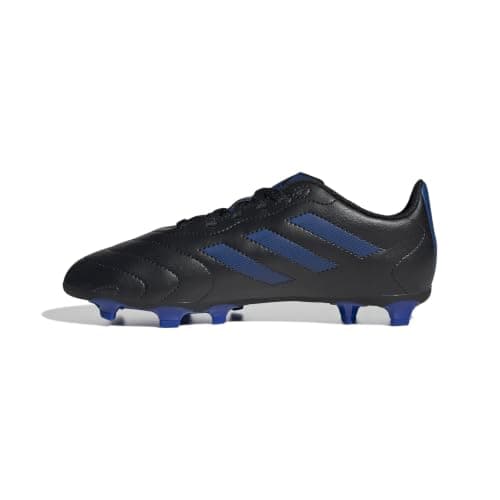
adidas Kids Goletto VIII FG
Entry tier, substantial upper, the best survival-per-dollar in the registry
Scroll the table sideways on a narrow screen.
How we sorted these
A stated reason, or it is not on the page. Each pick answers one of the reasons above. A list of similar-looking boots with no reason attached is not an answer to an alternatives question.
Width treated as a first-class variable. The published cross-brand fit guide is explicit that width is a property of the MODEL rather than the badge, and that is the guidance this page leans on hardest, because it is the dominant reason for this particular search.
Availability verified before featuring. Every pick was checked against its live listing on 2026-11-20. One registry product that would otherwise have fitted this page — the PUMA Ultra 7 Match LL — came back as currently unavailable on that check and was left off rather than listed with a dead buy row.
No weights anywhere. No manufacturer publishes a weight for a junior size, so a gram figure on a youth page is invented. Picks are ranked by stated design intent and construction, and the page says so.
A named budget pick. The cheapest route into a speed shape gets called out explicitly, rather than being buried at the bottom of a list.
Quick picks
Tap any row to jump to the full write-up. The price in each button is the one Amazon reported on the date stamped under it — tap through for today’s number, which is the only one that can be relied on.
adidas Goletto VIII Firm GroundThe sensible answer when the honest requirement is a cleat that survives one rec season and costs as little as possible.
U6, U7–U8 rec, U9–U10
FG
Runs slightly generous in width and true in length.
At this age a speed silo is a preference rather than an advantage, and a narrow last on a foot that is still broadening is the worst trade in the category.
For an older player who has settled into a shoe size and wants the most widely stocked mid-tier speed boot, on a plate that covers grass and artificial grass.
This sounds like a contradiction and it is not. A tapered last holds the foot close to the plate with very little volume around it, which is what makes a speed boot feel direct and connected. On a foot that genuinely fills that last, the result is exactly as intended.
On a broader foot the same last presses across the forefoot. What follows is predictable and we see it described constantly: blistering at the first metatarsal, a child who plants hesitantly rather than committing to a turn, and a pair that gets left in the bag in favor of last season's. None of that is fast.
So the published guidance that width is a model property rather than a brand property is the single most useful thing a parent can take from this page. A Copa-shaped boot on a wide foot will produce more speed on a field than a Mercurial or an F50 will, because the player will actually push off it. Best soccer cleats for wide feet is the proper starting point if that describes your player, and best soccer cleats for speed is the straight speed roundup if the F50 fit and you only want options.
The check that settles this page: a thumb's width at the toe, the heel locked, and no pressure across the widest part of the foot.
The three speed silos, and why swapping between them rarely fixes fit
All three brands publish what their speed line is for, and the descriptions are close enough that the badge is not the interesting variable. A specialist adidas guide puts F50 with wingers, attacking fullbacks and forwards. Nike's own guidance describes Mercurial as built for speed and best for forwards and wide midfielders. A PUMA guide describes Ultra as built for players who put speed and acceleration first, with a lightweight construction and a streamlined shape.
Note what all three share: streamlined, lightweight, tapered. Swapping an F50 for a Mercurial because the F50 was tight is swapping one narrow last for another, and the published wide-foot guidance does not rank any of the three speed silos among the accommodating options. The exception worth knowing is that PUMA junior tends to run SHORT rather than narrow, so a PUMA Ultra in the next size up is a genuinely different fit from an F50 — which is why two of the picks here are PUMA.
Plenty of families want to stay in one brand's sizing, and that is a reasonable thing to want — a size that fitted in one adidas boot is a better starting guess than a size in a brand you have never bought.
Within adidas the ladder on width is published and short: F50 narrowest, Predator in the middle, Copa most accommodating. So the sideways step from an F50 that pinched is the Copa Pure, and the step for a player who shoots more than they sprint is the Predator. adidas also positions its kids Copa Pure line on comfort, ball control and natural touch, which is a different brief from speed and is worth reading as a feature rather than a downgrade.
The entry tier of any speed silo gives you the shape and the badge with a thicker upper, which for a player under about U10 is the right trade — and it is cheaper than the F50's league tier, which is the practical answer to anyone whose reason for being here is price.
The mid tier is where the upper thins and the plate sharpens, and it is defensible for a player training three or four times a week. Above that, the junior top tier is a want until a player stops growing a size a season. Best soccer cleats under $50 is the entry band, best soccer cleats under $100 is the mid tier, and are expensive soccer cleats worth it runs the cost-per-season arithmetic.
One durability note that cuts against the whole speed category: a thinner upper has less material to lose, and artificial turf is abrasive. If the pair has to survive two turf seasons, best durable youth soccer cleats argues for buying down rather than up, and it is right.
Common questions
What is a good alternative to the adidas F50 for kids?+
The PUMA Ultra Play FG is the closest like-for-like: Ultra is PUMA's speed silo, described in a specialist guide as built for players who put speed and acceleration first with a lightweight, streamlined shape, and the entry tier undercuts the F50's league tier. If the reason you are looking is that the F50 was too narrow, the better answer is the adidas Copa Pure 3 FG, which the published fit guidance ranks as the most accommodating adidas shape.
Is the adidas F50 narrow?+
It is the narrowest of the three adidas shapes, according to published cross-brand fit guidance that ranks F50 narrowest, Predator in the middle and Copa most accommodating. That is a design consequence rather than a flaw: a tapered last is what makes a speed boot feel direct. On a foot that fills it the fit is as intended; on a broader foot it presses across the forefoot.
What is the Nike equivalent of the adidas F50?+
The Mercurial. Nike's own guidance describes Mercurial as built for speed and best for forwards and wide midfielders, which is close to how a specialist adidas guide positions F50 for wingers, attacking fullbacks and forwards. Worth knowing before you swap: the Mercurial line also runs narrow through the midfoot, so changing badge does not usually fix a width problem.
Should a wide-footed kid wear a speed boot at all?+
Generally no. All three speed silos — adidas F50, Nike Mercurial and PUMA Ultra — are the narrowest shapes their brands make, and none of them appears among the accommodating options in published wide-foot guidance. A broad foot in a tapered last blisters and plants hesitantly, which costs more speed than the shoe adds. A Copa-style or King-style shape is the faster boot on that foot in every practical sense.
Is there a cheaper cleat like the adidas F50?+
Yes, and the cheapest route is the entry tier of a speed silo rather than a different brand's mid tier. The PUMA Ultra 7 Play TT is our budget pick: it shares the Ultra shape and badge on a turf outsole at well under a league-tier price. The entry tier of any speed silo gives you the shape with a heavier upper, which is the right trade for a player under about U10 anyway.
Does PUMA fit the same as adidas in junior sizes?+
Not quite, and the difference is useful. PUMA junior tends to run SHORT rather than narrow, so a PUMA in the next size up is a genuinely different fit from an adidas at the same stated size — which is why two picks on this page are PUMA. Published fit guidance also treats width as a property of the specific model rather than of the brand, so compare shoes, not badges.
What position is the adidas F50 for?+
A specialist adidas guide positions it for wingers, attacking fullbacks and forwards — players whose game is running in behind or down the line. Central midfielders are usually better served by the Predator, which the same guide places with number 8s and 10s, and center-backs by the Copa. At U10 and below the position changes every few weeks, so fit should decide the purchase and the silo can wait.
Sources
Unisport — adidas Predator vs F50 vs Copa — Position mapping for the adidas silos — Predator for number 8s and 10s, F50 for wingers, attacking fullbacks and forwards, Copa for center-backs, defensive midfielders and classic number 9s — plus the width ranking (F50 narrowest, Predator middle, Copa most accommodating).
Unisport — top 10 best football boots for wide feet in 2026 — A retailer fit guide written model by model rather than brand by brand, and the source for the cross-brand width claims on this site: the PUMA King 20 Ultimate ranked first because it is "seriously wide", with room in the heel, midfoot, forefoot and outsole; the Nike Phantom 6 Low Elite described as having good width in the forefoot and a particularly generous heel; the Nike Tiempo Legend Pro called one of Nike's widest-fitting options, with space through the forefoot, midfoot and heel; and the adidas Copa Pure 4 Elite included in a wide-feet ranking despite a relatively tapered midfoot, because its wider forefoot compensates. The guide makes no claim that any one brand is narrowest overall — it treats width as a property of the model rather than the badge, which is the point the cross-brand fit page is built on.
Unisport — your guide to PUMA boots — The source for PUMA's three silos as the retailer describes them: Future "designed for creative playmakers who rely on agility and freedom of movement" with "an adaptive fit that wraps comfortably around the foot"; Ultra built for players who put speed and acceleration first, with a "lightweight construction and a streamlined shape"; King "well suited for players who value a soft, comfortable touch and long-lasting durability over lightweight speed". The guide itself publishes no width or volume figures for any silo.
Nike — Mercurial, Phantom and Tiempo compared by playing style — Nike's own statement of which silo suits which position: Mercurial 'built for speed; best for forwards and wide midfielders', Phantom 'built for precision; best for central midfielders and playmakers', Tiempo 'built for comfort and control'. The source for every Nike position claim on this site.
adidas — kids' Copa Pure — adidas's own positioning of the kids' Copa Pure line around comfort, ball control and natural touch.
adidas — kids' soccer — Verified current availability of the adidas models named here, plus adidas's published material and construction claims.