Heads up: we earn a commission if you buy through our links, at no extra cost to you. It never changes which product we recommend — here’s how that works.
The short answer
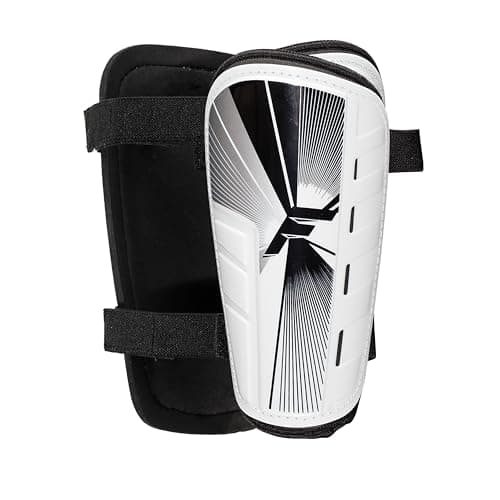
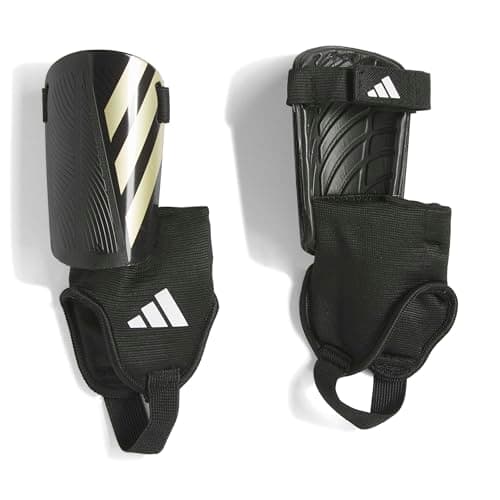
Under $25 the pick is the adidas Tiro Match Shin Guards Kids — a hard shield with an attached ankle guard, which is the most protective shape a young rec player can wear and the one coaches expect. The budget pick is the Franklin Sports Superlight Soccer Shin Guards, the cheapest strapped hard shell here and perfectly adequate for a first season. Prices are read from the live Amazon listing when you load the page, with the date printed under each button.
About the prices: this page is built from the live price layer rather than typed-in list prices. Every pick was under $25 when Amazon last reported a price for it, and the as-of date renders under its button. Tap through for today's number before you buy.
Here is the thing worth knowing before you read any further: $25 is not a tight budget for youth shin guards. It is close to the whole category. Of all the youth guards on this site, exactly one sits above the cap — a premium slip-in model — and everything else, across every type, is under it. So this page is not a list of compromises, and it would be dishonest to present it as one.
What that means practically: stop optimizing for price and start optimizing for type and fit. Those are the two variables that decide whether a guard gets worn, and a guard that does not get worn protects nothing.
The one rule the purchase has to satisfy
Law 4 of the Laws of the Game lists shinguards as compulsory equipment and sets three conditions: they must be made of a suitable material, they must be of an appropriate size, and they must be covered by the socks. The Law then puts responsibility for suitability on the player rather than on the referee or the manufacturer.
Two consequences that matter in this band. First, a cheap commercial guard satisfies the material and size conditions as readily as an expensive one — nothing in the Law is about price. Second, covered by the socks is the condition families fail, usually by buying tall guards and short socks. Do shin guards go under socks is the long version and the youth sock size chart is why you size socks up rather than down.
How we sorted these
Under the cap on the live listing. Nothing is here on a list price. The price layer reads Amazon and stamps the date.
Type coverage, not price ranking. The list deliberately spans the three shapes a youth player actually chooses between — hard shell with ankle protection, strapped hard shell without it, and sock-style guards — because that is the real decision.
Height sizing where it exists. Guards should be sized by the player's height, since a shin is a length. Products with published height bands outrank products labeled with a twelve-year age range.
A named cheapest-workable pick. The cheapest guard in the registry that is a genuine hard shell with a real child size run, not the cheapest listing on Amazon.
Quick picks
Tap any row to jump to the full write-up. The price in each button is the one Amazon reported on the date stamped under it — tap through for today’s number, which is the only one that can be relied on.
#
Product
Best for
Surface
Fit notes
Price
1
adidas Tiro Match Shin Guards KidsThe best first pair of shin guards for a young rec player, precisely because it protects the ankle too.
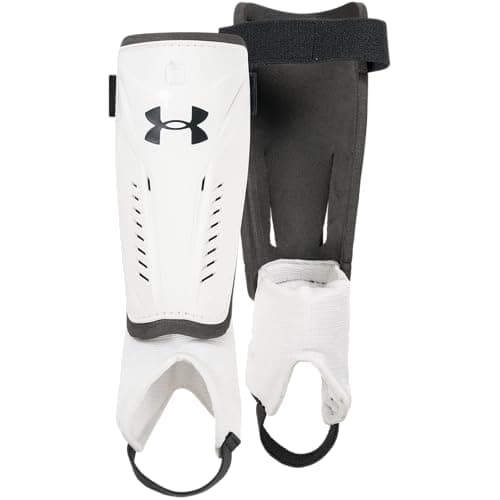
Under Armour Challenge Youth Shin GuardsThe right guard when protection is the priority — a young defender, a nervous beginner, or a kid who has already taken a bad knock.
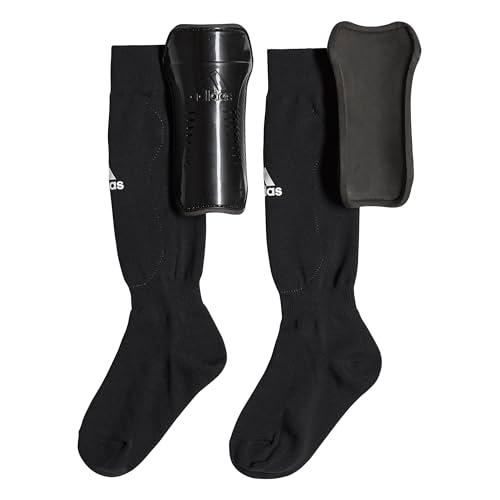
adidas Performance Youth Sock Shin GuardsThe safe default in a badly documented category: a recognizable brand, height-based sizing and the format coaches expect, as long as you check the chart rather than the age on the box.
U7–U8 rec, U9–U10
Sleeve with a removable shell
Sized by height, not by shoe size, and the bands are narrow — measure the child rather than guessing from their age.
The safe default in a badly documented category: a recognizable brand, height-based sizing and the format coaches expect, as long as you check the chart rather than the age on the box.
Best for
The default shin sock, U7 through U10
Levels
U7–U8 rec · U9–U10
Type / surface
Sleeve with a removable shell
How it fits
Sized by height, not by shoe size, and the bands are narrow — measure the child rather than guessing from their age. Because the reported fit runs small, a child near the top of a band should go up. The shell should sit with its top roughly two finger-widths below the kneecap and cover down to the top of the boot.
What we like
The only option here from a brand a parent already recognizes, which matters when a coach says "shin guards" and you have thirty seconds in an aisle
The sleeve-plus-shell format is the one most coaches mean by a shin sock, so it is the least likely to be queried at a check-in
Height-based sizing bands rather than foot size, which is the correct way to size a guard and is the thing slip-in guards get wrong
Where it falls short
The published youth size charts for these disagree between retailers by as much as a full band, so order from a retailer whose chart you can read and expect to check it
Reviewers on multiple listings report the sizing runs small — if the child is near the top of a band, the next size up is the safer order
One colorway per listing, so matching a team kit means finding a different listing rather than a different option
Manufacturer’s published specs
Sold as a sock-style guard with a shell held in a sleeve, with no straps (listing)
Listed in youth Small, Medium and Large, sized by the player's height rather than by foot size (retailer charts)
Black/White colorway on this listing
adidas Performance Hardgoods is named as the manufacturer on the listing
These are the manufacturer’s own claims, not measurements we took.
The right first pair for a young child, because it is the one product here that cannot be assembled wrongly or half-lost.
Best for
A first season, U6 through U8
Levels
U6 — first kicks · U7–U8 rec
Type / surface
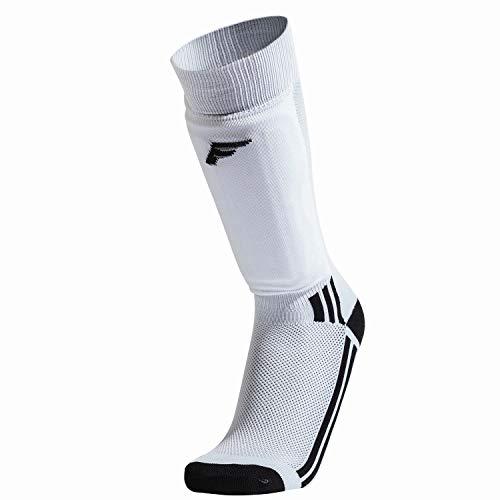
True 2-in-1 sock with integrated guard
How it fits
Sized XS through L by the retailer's chart rather than by foot size. This is the smallest-fitting option here, which is why it is the U6 pick, and because the guard is fixed you want the size that puts the shell over the shin bone now rather than one bought for next season.
What we like
A genuine one-piece item, which is the entire point for a young child — there is nothing to lose, nothing to put on in the wrong order and nothing for a four-year-old to get backwards
Machine washable as a single thing, so the guard actually gets washed instead of living in the bag all season
Starts at an Extra Small, which is a real size for a four- or five-year-old rather than an adult small relabeled
Where it falls short
One-piece means the guard cannot be removed, so the protection and the sock wear out together and you replace both at once
The shell is fixed in place, so if it sits wrong on a particular child there is no adjusting it — the only fix is a different size
The listing states ages 4 to 12 for a product sold in discrete sizes, which is a range too broad to order from; go by the size chart, not the age claim
Manufacturer’s published specs
Described on the listing as a "2-In-1 Protective Combo" — the sock and the guard are one item
"Impact-Resistant Shell" and an "Air-Cooled Breathable Design" (listing)
Machine washable (listing)
Rated by the listing for ages 4 to 12
This listing is the Extra Small, Black/White
These are the manufacturer’s own claims, not measurements we took.
Which type, by age and by what the player will tolerate
The protection column is a comparison of coverage and construction, not a tested rating. This site publishes no impact data and holds none.
Type
Protection
Best for
Catch
Hard shell with attached ankle guard
Highest
U6 to U10, and defenders at any age
Bulkiest; older players often refuse them
Strapped hard shell, no ankle
High
U10 and up
Needs a sock tall enough to cover it
Vented or carbon-look shell
High
U13 and up, warm climates
Vents are comfort, not a protection upgrade
Sock-style guard with removable shell
Moderate
U7 to U10 who lose things
Less coverage than a full shell
True 2-in-1 sock
Moderate
First seasons, U6 to U8
A worn-out sock throws away a good guard
Slip-in with no ankle protection
Lowest of these
Older players who want minimum bulk
Migrates down the leg without a sleeve
Scroll the table sideways on a narrow screen.
The genuine trade-off running through that table is coverage against compliance. The most protective guard is the bulkiest, and somewhere around U11 to U13 players start taking guards off in the car or wearing the thinnest thing they can find. A smaller guard that is actually worn beats a bigger one that is not — which is why best slip-in shin guards for kids and youth soccer shin socks exist as their own pages rather than being dismissed.
Sizing, which is where money gets wasted in this band
Shin guards are sized by the player's height, not by shoe size and not by age. A shin is a length and the guard has to cover most of it, leaving clearance at the ankle and below the knee. The youth shin guard size chart has the height bands this site uses, and how should shin guards fit covers where the guard should sit.
Two warnings specific to this price band. An age range like three to fifteen printed across two or three sizes is not a size guide — it says the range as a whole fits somebody between three and fifteen, which is true and useless. And several listings in this band report running small, so a child near the top of a band should go up rather than down.
The check before the first game: the sock covers the guard. Law 4 requires it, and separate purchases fail it constantly.
Is the one guard above $25 worth crossing the line for?
Honestly, sometimes — and the reason is compliance rather than protection. The premium slip-in on this site is thinner and lighter than anything here, and for an older player who has started leaving their guards at home, a guard they will actually wear is worth more than a better guard they will not. That is not a protection argument, and we are not going to dress it up as one.
For everyone else the cap is irrelevant. A $12 strapped hard shell in the right height band, under a sock long enough to cover it, satisfies Law 4 and does the job it exists to do. Spend the difference on the sock.
Making a cheap guard last
Clean them, which almost nobody does. A manufacturer's own care instruction for a hard-shell guard is to remove dirt with a soft brush and wipe with a damp cloth, and specifically not to use solvents or other cleaners, which may cause damage. How to wash shin guards covers the rest.
Keep them out of heat and sun. The same instructions warn against exposing a guard to excessive heat or strong sunlight, and against storing it anywhere but a dry ventilated place, because the performance of the guard reduces significantly otherwise. A kit bag in a car boot is the exact opposite of that.
Replace the strap, not the guard. On youth guards the strap and the foam fail long before the shell does, which is covered in how long do shin guards last.
Fix slipping with a sleeve, not a bigger guard. A compression sleeve over existing guards is the cheapest fix in the category — how to stop shin guards slipping ranks the options by cost.
Common questions
What are the best shin guards under $25?+
The adidas Tiro Match Shin Guards Kids are our pick: a hard shield with an attached ankle guard, which is the most protective shape a young rec player can wear. The Franklin Sports Superlight guards are the budget pick and a perfectly adequate strapped hard shell for a first season. In this category $25 covers nearly every youth guard worth buying, so type and height sizing matter far more than price.
Are cheap shin guards safe?+
A commercial youth shin guard in the right size is safe, and nothing in the Laws is about price. Law 4 requires guards of suitable material, of appropriate size, and covered by the socks, with the player responsible for their suitability — all of which an inexpensive hard shell satisfies. What is genuinely unsafe is a guard that is too short to cover the shin, or a compression sleeve with no pad in it, which is not a shin guard at all.
How much should you spend on youth shin guards?+
Between about $12 and $20 for the overwhelming majority of youth players. Of all the youth guards on this site exactly one sits above $25, and the premium it charges buys thinness rather than protection. The better place for extra money is a sock tall enough to cover the guard, since that is the Law 4 condition families most often fail.
What size shin guards does my child need?+
Size by the player's height, not by shoe size or age. A shin is a length, the guard has to cover most of it, and height is the only input that predicts that. Ignore any listing that prints a wide age range across two or three sizes — that is not a size guide. Several listings in this price band also report running small, so a child near the top of a band should size up.
Which type of shin guard is best for a 7 year old?+
A hard shell with an attached ankle guard, or a one-piece sock-style guard if the child tends to lose things. At that age the failure mode is not the thickness of the shell — it is a guard left in the car or put on backwards, and both of those shapes remove the problem. Slip-in guards without an ankle wing suit older players who want minimum bulk.
Do expensive shin guards protect better?+
Not in a way anyone can show you, and this site publishes no impact data because it holds none. What the premium end of the youth market actually sells is less bulk and less weight, which matters for compliance rather than protection — a thinner guard an older player will keep wearing is worth more than a bigger one they take off. For coverage, the cheap hard shell with an ankle wing is the more protective shape.
Sources
Coaching American Soccer — Law 4, The Players' Equipment — The Law 4 requirements quoted on this site: footwear is compulsory but cleats are not specified; shinguards must be of suitable material, appropriate size and covered by the socks, with the player responsible for suitability; a player must not use equipment that is dangerous; and the referee-level guidance that worn, pointed or exposed-shaft studs and shoes with sharp metal or pointed spikes are not permitted.
IFAB Laws of the Game — Law 4, The Players' Equipment — The Law text quoted on this site: undershorts and tights must be the same color as the main color of the shorts or the lowest part of the shorts, and players of the same team must wear the same color; shinguards must be of suitable material and appropriate size, covered by the socks, with the player responsible for their suitability; non-dangerous protective equipment of soft, lightweight padded material is permitted; and a player must not use equipment or wear anything that is dangerous, which must be removed rather than taped or covered. Law 4.3 is also the source for the kit-color rules quoted here: the two teams must wear colors that distinguish them from each other and the match officials, and each goalkeeper must wear colors that are distinguishable from the other players and the match officials. Law 4.4 names gloves, headgear, facemasks and knee and arm protectors of soft, lightweight padded material as permitted non-dangerous protective equipment, and separately permits goalkeepers caps and tracksuit bottoms.
Reusch — Shinguard Attrakt Supreme (care instructions) — A manufacturer's own care instructions for a hard-shell shinguard, quoted on this site: remove dirt with a soft brush and wipe with a damp cloth; do not use solvents or other cleaners as they may cause damage; do not expose the product to excessive heat or strong sunlight; store in a dry and ventilated area, otherwise the performance of the shinguard reduces significantly.
Authentic Soccer — Kwik Goal Shinguard Compression Sleeve — The retailer listing carrying Kwik Goal's own specification for the shinguard compression sleeve, and the source for every figure quoted about it: Polyester Lycra construction, a Youth and an Adult size listed as 5 in and 8 in, machine washable, and the stated purpose that it "Holds shin guard in place without tape" and "Helps reduce cramping and fatigue". The listing names no insert pocket, which is the distinction the shin-socks page draws between a plain compression sleeve and a pocketed one.