Heads up: we earn a commission if you buy through our links, at no extra cost to you. It never changes which product we recommend — here’s how that works.
The short answer
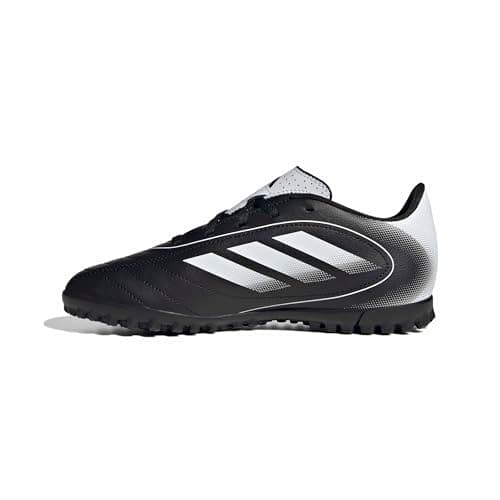
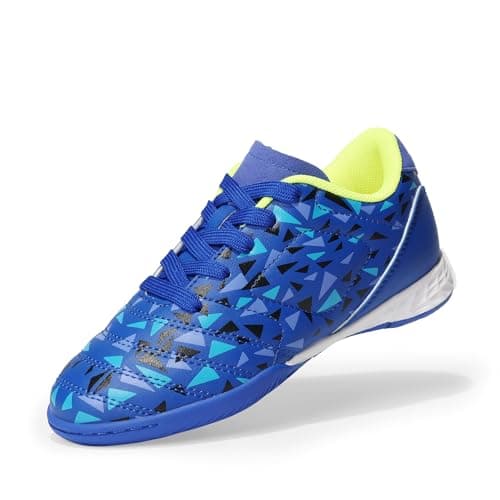
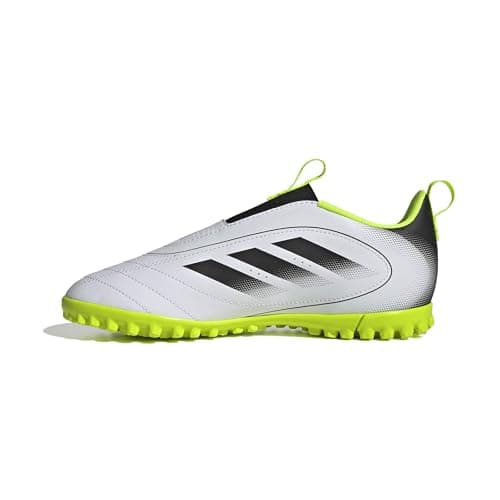
For a toddler the pick is the adidas Goletto IX Laceless Turf — a turf outsole, which grips a dry field and a gym floor without the point-loading of a stud, and no laces for a child who cannot tie them. The budget pick is the DREAM PAIRS Kids' Indoor Soccer Shoes, a flat indoor sole at the lowest price here. Every price on this page is read live from the Amazon listing with the date it was read printed under the button.
This page is about soccer SHOES — turf outsoles and flat indoor soles. If the program genuinely plays on soft, chewed-up grass and the coach has asked for studs, best toddler soccer cleats is the page you want instead.
The reason this page exists separately from the cleat page is that most toddler soccer does not happen on a surface that needs a stud. First-touch programs run in gyms, on indoor turf, on dry park grass in the fall, and on small artificial-turf boxes. A molded stud is designed to bite into soft natural ground; on a hard, dry or artificial surface it does not bite, it just concentrates the child's weight onto eight or twelve small points.
There is also a foot-development argument, and it comes from a children's hospital rather than from a brand. Monroe Carell Jr. Children's Hospital at Vanderbilt's published footwear guidance is that a child needs a flexible, soft shoe that allows freedom for feet to develop normally, and that shoes with soles that are too stiff are not good for feet because they limit movement. A cleat plate is a stiff sole by design. That is the correct trade for a nine-year-old who needs traction to turn at speed, and a poor one for a three-year-old who is mostly learning to run.
And the laws do not require studs. Law 4 makes footwear compulsory but does not specify cleats at all — a point worth knowing before buying a stud a toddler program never asked for.
Which shoe for which first season
Five surfaces, five answers. Every row reflects the outsole the manufacturer specifies the shoe for, not our own testing — this site does not lab-test and publishes no scores.
If the program is
Buy
Because
Indoors, on a gym floor
DREAM PAIRS Kids' Indoor Soccer Shoes
A flat gum-style sole is the only outsole that grips a polished floor — and the cheapest shoe here
On small artificial turf
adidas Goletto IX Laceless Turf
Many short rubber studs spread the load, and nothing to tie
On dry park grass
adidas Goletto IX Turf
A turf outsole grips dry grass perfectly well and is far more comfortable to walk in
Indoor, and a wider foot
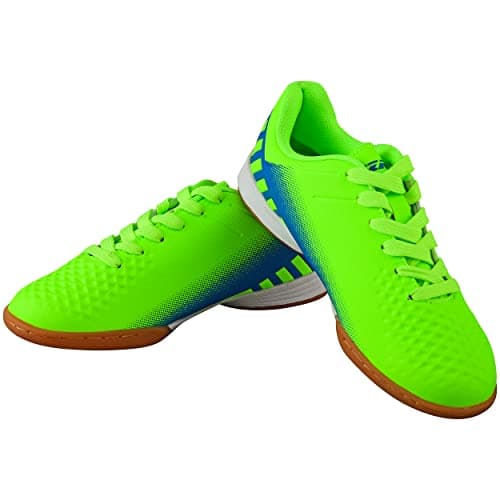
Vizari Santos Jr Indoor
Vizari's indoor line runs more accommodating than the branded equivalents
Soft grass, and the coach insists
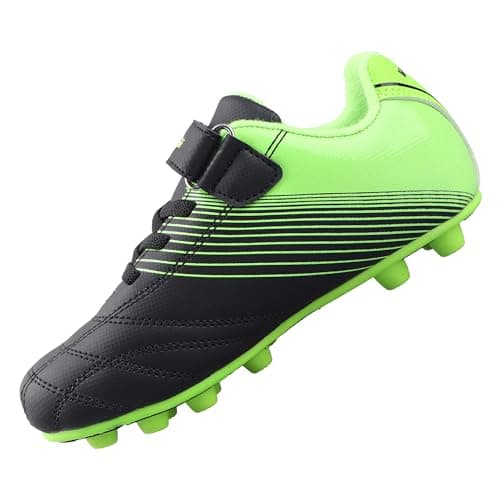
Vizari Firm Ground Youth (hook-and-loop)
A genuine molded stud in the smallest sizes made, with a strap instead of laces
Scroll the table sideways on a narrow screen.
How we sorted these
Non-studded first. A turf outsole or a flat indoor sole is the default here, and the one studded pick is included only because some programs genuinely ask for it.
Closure over everything else. A toddler cannot tie laces, and a shoe that comes undone mid-session gets abandoned. Laceless and hook-and-loop options are ranked above lace equivalents.
The smallest size runs made. Several models that would otherwise fit this page do not reach down into toddler sizing at all, and were left off rather than listed with a caveat.
Flexibility, as the published children's-footwear guidance frames it. A sole that bends easily in the hand is the right sole at this age.
A named cheapest-workable pick. Not the cheapest listing on Amazon — the cheapest shoe in our registry with a real soccer outsole and a toddler size run.
Quick picks
Tap any row to jump to the full write-up. The price in each button is the one Amazon reported on the date stamped under it — tap through for today’s number, which is the only one that can be relied on.
#
Product
Best for
Surface
Fit notes
Price
1
adidas Goletto IX Laceless TurfA genuinely useful answer for the pre-lace-tying age, provided the foot is average width or wider.
The combination that actually survives a toddler session: a turf outsole that works on every surface a first-touch program uses, and no laces to come undone.
Toddler soccer-shoe sizing is the most inconsistent sizing in this whole category, because the same stated size can be a little-kid last or a big-kid last depending on the model. The reliable method is the one the cleat sizing page uses: draw round the foot, measure heel to longest toe in centimeters, and compare that against the model's own chart rather than against the US number on the box.
The number to ignore is the one a parent is most tempted by, which is next year's size. Vanderbilt's guidance does say shoes are much better too large than too small, and advises buying at least half an inch longer than the foot — but half an inch is one size, not two. A soccer shoe two sizes long slides at the heel, and a sliding heel is how a toddler ends up walking instead of running.
The test that settles it at this age: bend the sole in your hands. If it barely flexes, it is the wrong shoe for a three-year-old regardless of what the badge says.
Turf outsole or flat indoor sole?
These are genuinely different shoes and the difference matters more than the brand. A turf outsole has dozens of short rubber nubs molded across the whole sole. It grips dry grass, artificial turf, packed dirt and a driveway, and it is comfortable to walk in — which is why it is the single most useful outsole a toddler can own.
A flat indoor sole is a smooth gum-rubber pad with no nubs at all. On a polished gym floor it is the only outsole that works; a turf shoe skates on a sealed hardwood surface, and a studded shoe is usually banned outright from indoor facilities. On grass, though, a flat sole has nothing to hold with.
So the question is simply where the program meets. If it is a gym, buy indoor. If it is anything outdoors and dry, buy turf. If it is both, buy turf and accept slightly less grip indoors — the reverse does not work. Futsal shoes vs indoor soccer shoes explains the further split inside the indoor category, and best indoor soccer shoes for kids covers the age group above this one.
Do toddlers need soccer shoes at all?
Often not, and we would rather say so on a page that sells them. For a six-week introductory program on dry grass, a pair of flexible sneakers the child already owns is an entirely defensible answer, and Law 4 is satisfied by any footwear.
What changes the answer is repetition and surface. A child who is at a session twice a week, on turf, in a shoe with a smooth sneaker sole will slip — and slipping is what stops a three-year-old running. At that point a turf outsole is worth the twenty-odd dollars, not for performance but because the child stops thinking about their feet.
Do toddlers need cleats or regular shoes for soccer?+
Usually neither a cleat nor a regular sneaker: a turf-outsole soccer shoe is the best single answer. Most toddler programs run indoors, on small artificial turf, or on dry park grass, and a molded stud only bites into soft natural ground. Law 4 makes footwear compulsory but does not specify cleats at all, so nothing requires studs at this age.
What is the difference between toddler soccer shoes and toddler soccer cleats?+
The outsole. A cleat has molded studs for soft grass. A turf soccer shoe has dozens of short rubber nubs across the whole sole, which grip dry grass, artificial turf and a driveway while staying comfortable to walk in. An indoor soccer shoe has a smooth flat gum sole, which is the only thing that grips a gym floor.
What size soccer shoes should a toddler wear?+
Measure rather than guess: draw round the foot, measure heel to longest toe in centimeters and compare against the specific model's chart, because the same stated US size is a different length across brands. A children's hospital's footwear guidance is that shoes are better too large than too small and recommends about half an inch of room — which is one size, not two. A shoe two sizes long slides at the heel.
Are laceless soccer shoes good for toddlers?+
Yes, and at this age it is the single most useful feature. A toddler cannot tie laces, and a shoe that comes undone mid-session gets taken off. Laceless and hook-and-loop closures remove the problem entirely, which is why the top pick here is a laceless turf shoe rather than the laced version of the same model at the same price.
Can toddlers wear turf shoes on grass?+
Yes. A turf outsole grips dry and firm natural grass perfectly well, and it is more comfortable to walk and stand in than a studded plate. The surface that defeats a turf shoe is soft, wet, chewed-up grass, which almost no toddler program plays on — and a sealed indoor floor, where only a flat gum sole works.
Should toddler soccer shoes be flexible?+
Yes. Monroe Carell Jr. Children's Hospital at Vanderbilt's published footwear guidance is that a child needs a flexible, soft shoe that allows freedom for feet to develop normally, and that soles which are too stiff limit movement. A cleat plate is stiff by design, which is right for an older player who needs to turn at speed and wrong for a three-year-old still learning to run. Bend the sole in your hands before buying.
Sources
Monroe Carell Jr. Children's Hospital at Vanderbilt — how to choose shoes for your child — A children's hospital's published footwear guidance, quoted on the toddler-cleats page: "Your child needs a flexible, soft shoe that allows freedom for feet to develop normally"; "Shoes with soles that are too stiff are not good for feet because they limit movement"; "Shoes are much better when they are too large rather than too small"; and the advice to buy shoes at least half an inch longer than the child's feet "because children's feet grow quickly and because the toes need enough room to move". Used for general foot development and fit, not for any claim specific to cleats.
Coaching American Soccer — Law 4, The Players' Equipment — The Law 4 requirements quoted on this site: footwear is compulsory but cleats are not specified; shinguards must be of suitable material, appropriate size and covered by the socks, with the player responsible for suitability; a player must not use equipment that is dangerous; and the referee-level guidance that worn, pointed or exposed-shaft studs and shoes with sharp metal or pointed spikes are not permitted.
Under Armour — how to buy soccer cleats for kids — A manufacturer's own buying guide, and the source for the statement that kids' soccer cleats are unisex and sized to normal shoe size, plus its guidance on leaving about half an inch at the toe and fitting with match socks on.