Cleats
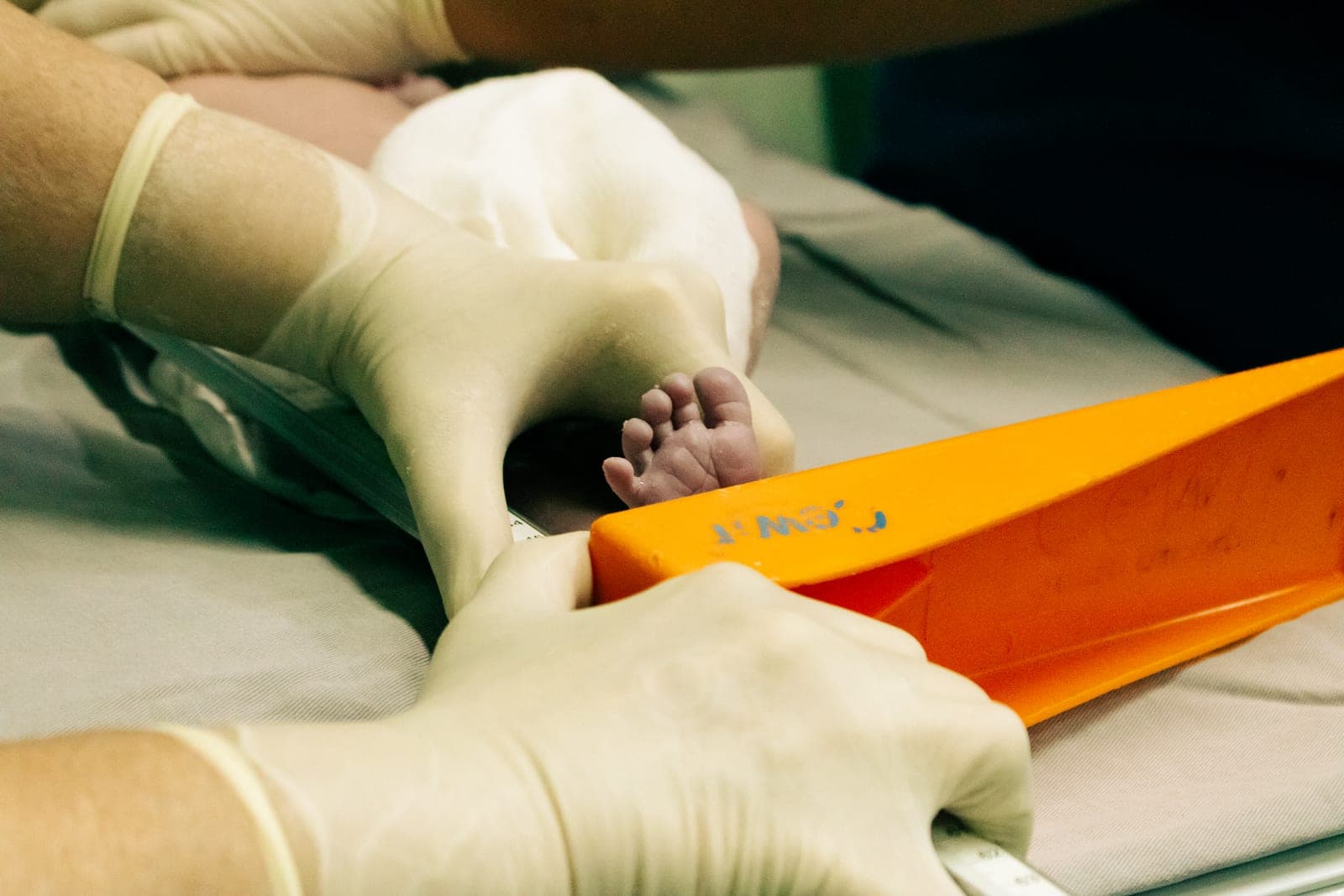
How to measure kids' feet for soccer cleats
Four minutes with a sheet of paper beats guessing from last year's sneakers.
By Ryder M. · Published October 17, 2026
The short answer
- Measure late in the day, with the soccer socks your kid actually plays in on.
- Stand them on a sheet of paper against a wall, heel touching the wall, weight on the foot.
- Mark the paper at the longest toe — which is not always the big toe.
- Measure wall to mark in centimeters, and do both feet.
- Use the longer foot, then add roughly a thumb's width of room and convert to a cleat size on the size chart.
Cleats are the one piece of youth soccer kit where a half size wrong ruins the season, and they are also the item most often bought from memory — last year's size, plus one for growth. The measurement takes four minutes and it is the single highest-value thing a parent can do before clicking buy.
This page is the how. The number-to-size conversion lives on the youth soccer cleat size chart, and the question of how much room to leave is covered in how should kids' soccer cleats fit.
The method, in full
- Pick the time of day. Feet swell over a day of standing and running, and a cleat fitted to a morning foot is tight by 4pm. Measure in the evening, or straight after a session.
- Put the match socks on. Under Armour's own kids' buying guide says to fit with match socks on, and it matters more than it sounds — a thick soccer sock is a measurable amount of material around the foot, and a shin guard sits in there too.
- Tape a sheet of paper to a hard floor against a wall or a door frame. Carpet lets the heel sink and skews the number.
- Have them stand on it, not sit. Weight-bearing spreads the foot, and the foot in the cleat will be weight-bearing. A seated measurement reads short.
- Heel flat against the wall. Then mark the paper at the tip of the longest toe. On a lot of kids the second toe is longer than the big toe, so look rather than assume.
- Measure both feet. Most people have one foot slightly longer, and the pair has to fit the longer one.
- Write the number down with the date. A dated measurement from three months ago tells you how fast the foot is growing, which is more useful than any single reading.
Turning the measurement into a size
Two steps, and the second is where people go wrong.
First, add room. Under Armour's guide suggests leaving about half an inch at the toe — the familiar thumb's-width rule — and that is room for the foot to move forward as it lands, not room for growth. A cleat with no room in it bruises toenails; a cleat with two sizes of room in it slides, and a sliding foot blisters.
Second, convert on a chart rather than by brand instinct. Kids' soccer cleats are unisex and sized to normal shoe size, which makes the conversion straightforward in principle — and the brands still disagree in practice. Do soccer cleats run big or small collects the behavior by brand, and the short version is that PUMA junior runs short while Nike and adidas are closer to true.
Cleats that fit a measured foot without guesswork
adidas
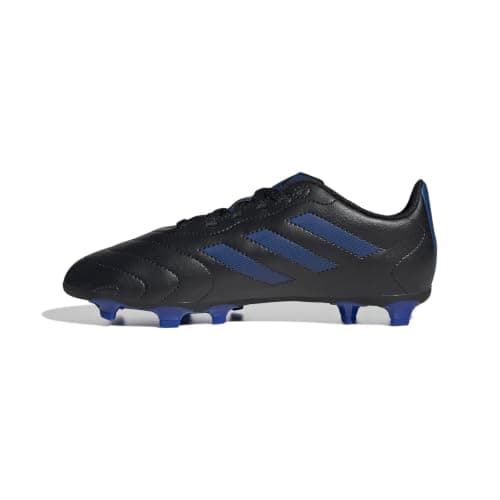
adidas Goletto VIII Firm Ground
The sensible answer when the honest requirement is a cleat that survives one rec season and costs as little as possible.
$33.67View on Amazon#ad — we may earn a commission · price as of October 17, 2026
Nike
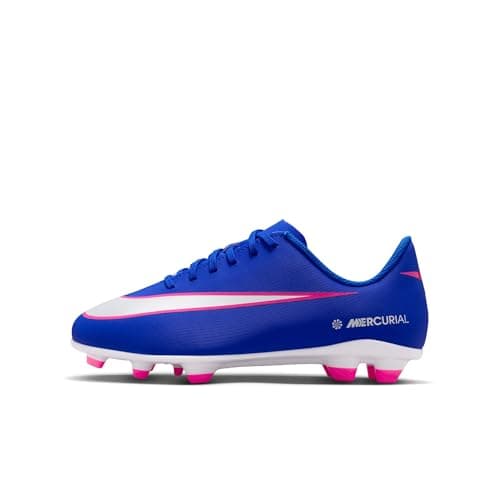
Nike Jr. Mercurial Vapor 16 Club MG
The safest default cleat for a rec player between U7 and U12, as long as the foot is average width or narrower.
$60.88View on Amazon#ad — we may earn a commission · price as of October 17, 2026
adidas
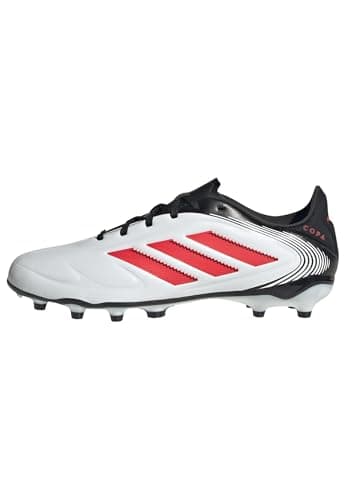
adidas Copa Pure 3 League Firm Ground (Kids)
The best mainstream junior cleat for a wide foot, and a real help to a player still learning first touch.
$60.00View on Amazon#ad — we may earn a commission · price as of October 17, 2026
Product photos come from each item’s current Amazon listing.
The three mistakes that cost half a size
- Sizing up for growth. This is the big one. Growing room sounds thrifty and plays badly: the heel slips, the foot slides forward on every landing, and the blisters start in week two. The American Academy of Dermatology is direct about it — shoes should fit properly, neither too tight nor too loose, because chafing is what causes blisters.
- Measuring barefoot and buying for socks. A measurement taken without the match sock is a measurement of a different foot. Take the sock into account or take it off the chart, but do not mix the two.
- Trusting the sneaker size. Sneakers run roomy and are often bought with growing room already in them, so a sneaker size is a measurement of last year's shopping, not of this year's foot.
How often to re-measure
More often than parents expect. A primary-school foot can gain a size in a season, and the gain is not evenly spread — it arrives in bursts. The practical cadence is one measurement before each season, and a quick check at the mid-season point if your kid is in a growth phase.
There are also signs that do not need a tape measure. A kid who starts taking cleats off the moment the whistle goes, who has a red mark across the top of the foot, or whose big toenail is bruised has outgrown the pair. When to replace kids' soccer cleats goes through what worn-out versus outgrown looks like, and how to break in soccer cleats covers the difference between a shoe that needs a week and a shoe that is wrong.
Width, which a tape measure will not give you
A length measurement is most of the job and not all of it. Junior soccer cleats are almost never offered in width fittings, so width is managed by choosing a model rather than by choosing a size. That is a decision the number cannot make for you.
What it can do is tell you when width is the problem. If a cleat is the right length by the chart and your kid still says it hurts across the forefoot, the shoe is too narrow rather than too short, and going up a size will make it worse by adding heel slip to the pinch. Best soccer cleats for wide feet and best youth soccer cleats for narrow feet cover the models at each end, and do soccer cleats come in wide sizes answers the question directly.
One last practical point. If you can try cleats on in a shop, do it at the same time of day you measured, in the match socks, and have your kid stand up and walk. A measurement is a very good way to narrow the choice to two models. It is not a substitute for five minutes on a foot.
Common questions
How do I measure my kid's feet for soccer cleats at home?
Tape paper to a hard floor against a wall, put their match socks on, and have them stand with the heel touching the wall and weight on the foot. Mark the paper at the longest toe, measure wall to mark in centimeters, and do both feet. Use the longer foot, add about a thumb's width, and convert on a size chart. Measure late in the day, when feet are at their largest.
Should I measure with soccer socks on?
Yes. Under Armour's own kids' buying guide says to fit with match socks on, and a thick soccer sock plus a shin guard is a real amount of material around the foot. The important thing is consistency: measure in the socks and buy for the socks, rather than measuring barefoot and then adding a guess.
How much growing room should soccer cleats have?
About half an inch, or a thumb's width, at the toe — and that is room for the foot to move forward on landing rather than room to grow into. A cleat bought a size large slips at the heel and slides on every step, which is the chafing that produces blisters. Buy the measured size and replace the pair when it is outgrown.
Which foot should I size from?
The longer one, always. A difference of around half a centimeter between feet is normal and invisible until a shoe is tight on one side. If the gap is unusually large, fit the longer foot and take up the slack on the shorter side with a thin insole or a slightly thicker sock rather than compromising on size.
Can I just use my kid's sneaker size?
It is a starting point and not a measurement. Sneakers run roomy and are often bought with growing room already included, so a sneaker size usually reflects last year's shopping rather than this year's foot. It is also unrelated to how a specific cleat line fits — some junior ranges run short, others true.
How often should I re-measure?
Before every season, plus a mid-season check if your kid is in a growth phase. A primary-school foot can gain a full size across a season and it does not do so evenly. Cheap signals are just as useful as the tape: a red mark across the top of the foot, a bruised big toenail, or cleats being pulled off the instant the whistle goes.
What if the length is right and the cleat still hurts?
Then it is a width problem, not a length one, and going up a size will make it worse by adding heel slip to the pinch. Junior cleats are rarely offered in width fittings, so width is managed by changing model: the comfort silos — Nike's Tiempo, adidas's Copa — are the roomiest junior lasts, and the speed silos are the narrowest.
Sources
- Under Armour — how to buy soccer cleats for kids — A manufacturer's own buying guide, and the source for the statement that kids' soccer cleats are unisex and sized to normal shoe size, plus its guidance on leaving about half an inch at the toe and fitting with match socks on.
- Nike — kids' soccer cleats and shoes — Verified that each Nike model named on this page is currently sold, and the source for Nike's own published upper, plate and surface descriptions.
- adidas — kids' soccer — Verified current availability of the adidas models named here, plus adidas's published material and construction claims.
- Unisport — top 10 best football boots for wide feet in 2026 — A retailer fit guide written model by model rather than brand by brand, and the source for the cross-brand width claims on this site: the PUMA King 20 Ultimate ranked first because it is "seriously wide", with room in the heel, midfoot, forefoot and outsole; the Nike Phantom 6 Low Elite described as having good width in the forefoot and a particularly generous heel; the Nike Tiempo Legend Pro called one of Nike's widest-fitting options, with space through the forefoot, midfoot and heel; and the adidas Copa Pure 4 Elite included in a wide-feet ranking despite a relatively tapered midfoot, because its wider forefoot compensates. The guide makes no claim that any one brand is narrowest overall — it treats width as a property of the model rather than the badge, which is the point the cross-brand fit page is built on.
- American Academy of Dermatology — how to prevent and treat blisters — Board-certified dermatologists' published guidance, and the source for the blister-prevention facts on this site: blisters are caused by chafing and are prevented by preventing chafing; to prevent blisters on the feet, wear nylon or moisture-wicking socks, and if one pair does not help, try two pairs; shoes should fit properly and be neither too tight nor too loose; avoid cotton in activewear because cotton soaks up sweat and moisture, which leads to friction and chafing; adhesive moleskin or soft bandages help at problem areas; stop the activity if there is pain, discomfort or redness; most blisters heal on their own in one to two weeks; and a blister should be left unpopped and loosely covered rather than drained.
Read next
- Youth soccer cleat size chartUS, EU and centimeter conversions with approximate ages, plus how each brand's junior sizing actually runs.
- How should kids' soccer cleats fit?The thumb's-width rule and four hands-on fit checks — because asking a kid whether shoes fit does not work.
- Do soccer cleats run big or small?Why cleats feel smaller than sneakers at the same number, which junior lines run shortest, and the one-measurement method that gets the order right first time.
- Do soccer cleats come in wide sizes?Why soccer cleats rarely come in width letters, which lines run wide, and the lacing and sizing fixes for a broad foot.
- Best youth soccer cleats for wide feetWhich lines genuinely run wide, which only claim to, and why sizing up makes a width problem worse.
- Best youth soccer cleats for narrow feetWhich junior lines are built slim, why laceless is the wrong category for a narrow foot, and the lacing fixes that work.
- When to replace kids' soccer cleatsThe four signs a pair is finished, how often replacement actually happens, and what to check every two months.
- How to break in soccer cleatsFive steps to break cleats in without blisters, and why the water trick is a bad idea on modern uppers.