Heads up: we earn a commission if you buy through our links, at no extra cost to you. It never changes which product we recommend — here’s how that works.
The short answer
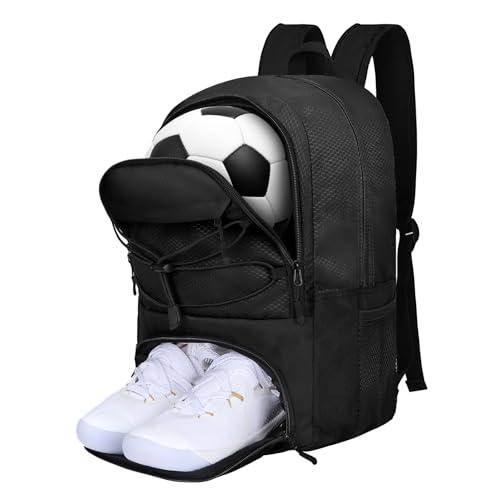
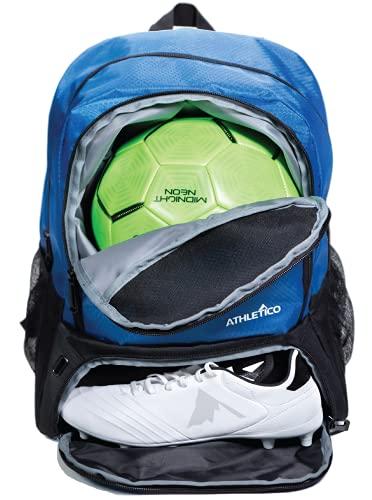
Best overall: the Athletico Youth Soccer Bag — separate cleat and ball compartments in a bag that is genuinely scaled for a child rather than an adult bag a kid is expected to grow into.
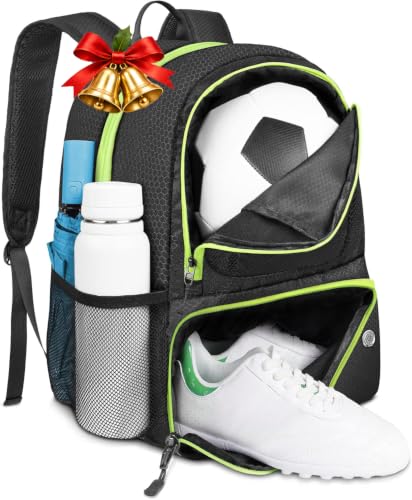
Budget pick: the YOREPEK Soccer Backpack, the cheapest bag here that still keeps ball, boots and kit apart.
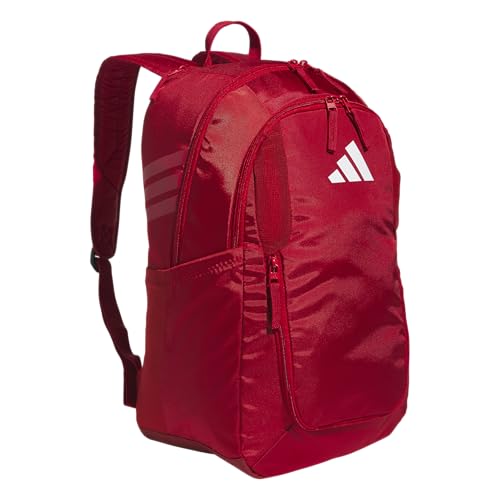
Best for school and soccer: the adidas Stadium Soccer Backpack 36L, with a sealed internal ball pocket and a water-resistant base.
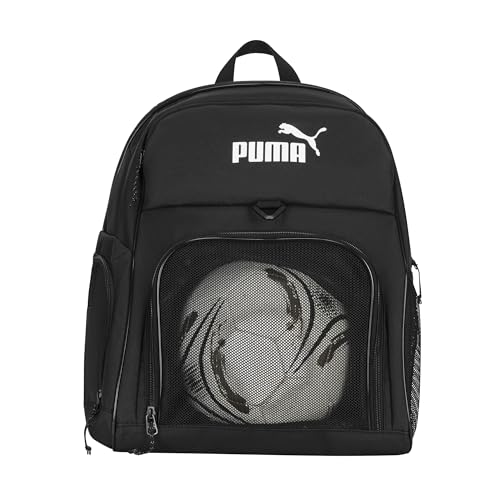
Best when the ball is always muddy: the PUMA Pitch Ball Backpack, whose front mesh compartment keeps a wet ball outside the bag entirely.
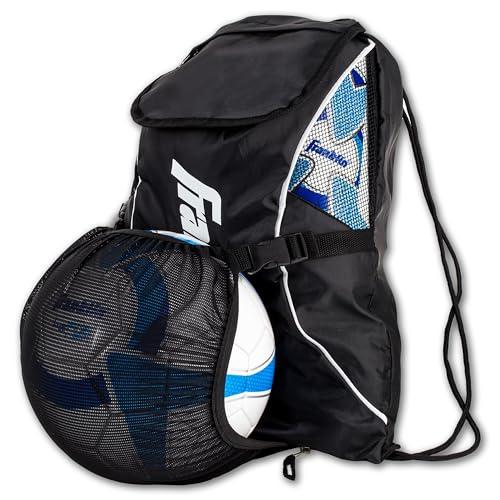
Best first bag at U6 to U8: the Franklin Sports Deluxe Soccer Sack — cheap, light, and a child can work it alone.
The thing to decide first: whether the ball rides OUTSIDE the bag or inside it. Everything else on this page follows from that.
Search for a soccer backpack with a ball holder and you get a wall of listings that all claim the same feature and do not do the same thing. Three mechanisms share the phrase. An external mesh pocket straps the ball to the outside of the bag. A sealed internal compartment swallows it into a dedicated section. And a drawstring sack has a sleeve that holds the ball inside the one space there is.
Those are not variations on a theme, they are different trade-offs, and the right one for your player depends almost entirely on how wet and muddy the ball usually is when it goes in. So this page sorts by mechanism first and recommends second.
If you are not yet sure the ball needs to travel with the bag at all, best soccer bags for kids is the broader page — it is organized around the cleat compartment, which is the feature that matters most when a ball is not part of the equation.
The three ball holders, side by side
Three real mechanisms and one honest fourth option. Which you want is decided by the state the ball is in when it goes into the bag.
Mechanism
Ball rides
Best when
The cost
External mesh pocket
Outside, in open mesh
The ball is usually wet or muddy
It swings, snags and catches on doorways
Sealed internal compartment
Inside, in its own section
The bag doubles as a school bag
A ball eats a lot of the capacity
Drawstring sack sleeve
Inside the single main space
The player is 5 to 8 years old
Nothing is separated from anything else
No ball holder at all
In a hand, or left behind
The club supplies match balls
The one thing that gets forgotten
Scroll the table sideways on a narrow screen.
The row families get wrong most often is the second one. A dedicated internal ball pocket sounds like the premium answer, and it is — right up until a size 4 ball comes off a wet field caked in mud and goes into the same bag as a school laptop. Mesh dries and mud falls out of it. A sealed compartment does neither.
How we sorted these
Mechanism first. The list is grouped by how the ball is actually carried, because that is the decision. Ranking a mesh bag against a sealed-pocket bag on price alone would tell you nothing useful.
Does it fit a child? Almost everything in this category is an adult bag in one size. A youth-scaled bag is rare enough that it decided the top pick, because a bag whose straps slide off a nine-year-old's shoulders does not get carried.
Does it separate the boots? A ball holder is pointless if muddy cleats are loose against a clean kit. Every pick but one has a separate cleat compartment, and the exception is labeled.
School-and-soccer duty. The live search completions for this phrase keep pairing it with school use, so capacity, a water-resistant base and a shape that does not embarrass a twelve-year-old are all scored.
A named budget pick. This is a category where $16 and $39 both buy a working bag, so the cheapest one that does the three jobs gets called out rather than buried.
Quick picks
Tap any row to jump to the full write-up. The price in each button is the one Amazon reported on the date stamped under it — tap through for today’s number, which is the only one that can be relied on.
#
Product
Best for
Surface
Fit notes
Price
1
Athletico Youth Soccer BagThe best fit for the age group this site is written for, and the one we would buy for a nine-year-old without thinking about it.
U7–U8 rec, U9–U10, U11–U12
Youth backpack, separate cleat and ball compartments
adidas Stadium Soccer Backpack 36LThe bag to buy if it has to do school and soccer for several years, and the one on this page a teenager will not be embarrassed by.
The honest first bag: cheap, light, child-operable, and deliberately not trying to be a backpack.
Best for
A first bag at U6 to U8, and the cheapest thing that works
Levels
U6 — first kicks · U7–U8 rec · U9–U10
Type / surface
Drawstring sack with a built-in ball holder
How it fits
Right for U6 to U8, where the load is a ball, a pair of small boots and a bottle. The moment a full kit and a size 4 ball go in, the cords stop being comfortable.
What we like
A five-year-old can carry it, open it and close it alone, which no structured backpack on this page is true of
Weighs nothing empty, so it does not add to what a small child is already carrying
At this price it is replaceable, which matters for the age group that leaves bags on fields
Where it falls short
It is a sack, not a backpack: drawstring cords dig into shoulders once there is a ball and boots in it
No separate cleat compartment, so muddy boots share space with a clean kit unless you bag them
Nothing in it is protected — a water bottle that leaks soaks everything
Manufacturer’s published specs
Ball holder built in, with room stated for cleats and shin guards (Franklin Sports listing)
Headphone port access
Drawstring sack construction rather than a structured backpack
The cheapest item on this page
These are the manufacturer’s own claims, not measurements we took.
Here is the single most useful thing on this page: almost every soccer backpack sold is an adult bag in one size. The listings say youth, the photographs show teenagers, and what arrives is a full-size pack with a torso length built for someone five foot six.
On a nine-year-old that produces a bag that rides low on the hips, straps that slide off the shoulders and a load that pulls backward. The child compensates by hunching, hates carrying it, and the bag ends up in a parent's hand — which is the real reason so many families end up buying a second bag within a year.
Two practical tests before you order. Check whether the listing gives dimensions at all, and compare the back-panel height to a school backpack that already fits: anything over about 18 inches tall is an adult bag. And check the capacity — a 36 liter bag is a secondary-school and travel-club size, not a U9 size, however good the ball pocket is.
Does it also need to be a school bag?
For a lot of families, yes — and that is the question hiding inside most searches for this phrase. One bag that goes to school in the morning and training in the evening is less to remember, less to buy, and less to lose.
Three features make a soccer bag survive that double duty. A water-resistant base is the big one, because a bag that gets put down on wet grass twice a week will otherwise wick straight through to whatever is inside. A vented shoe compartment matters more, not less, when books share the bag. And genuine capacity — enough that a ball, a kit and a folder can coexist rather than competing.
What makes a soccer bag a bad school bag is an external ball on the outside. It catches on corridors, lockers and bus seats, it swings into other children, and some schools simply ban it. If school duty is part of the brief, buy the sealed internal pocket and accept the capacity cost.
The job description: boots away from the kit, the ball somewhere it will not soak the rest, and straps a child can actually carry.
What should actually go in it
A ball holder is only worth buying if the bag is packed properly around it. The list we use is short and it is the same every week: boots in their own compartment, shin guards, two pairs of socks rather than one, a full water bottle, and a warm layer that does not depend on the weather at kickoff.
The second pair of socks is the one people skip and the one that saves a Saturday. Wet socks are the shortest route to blisters, and the published dermatology guidance on blisters is specifically about friction and moisture — wear moisture-wicking socks, try two pairs if one does not help, and avoid cotton in activewear because it soaks up sweat and increases chafing. Best soccer socks to prevent blisters covers it properly, and what to pack in a youth soccer bag is the full game-day and tournament list.
Two more things that belong in the bag and almost never are. A spare set of shin guard sleeves, because the guards themselves are rarely the thing that goes missing — youth soccer shin socks explains the four products sold under that name. And in winter, gloves, which do more for a cold child than any amount of extra clothing: best cold weather soccer gloves for kids is the roundup.
Caring for a bag that lives in a car
Empty it after every session. Not for tidiness — a wet kit sealed in a bag for three days is what makes a soccer bag smell permanently, and no amount of washing afterward fully fixes it.
Never put muddy boots in loose. That is what the cleat compartment is for, and if your bag does not have one, a supermarket bag inside the main space does the same job.
Wash it by hand, not in the machine. Structured backpacks with foam panels do not survive a wash cycle; sponge the lining and air it instead.
Check the ball-holder stitching after the first month. On budget bags, that attachment is the known failure point, and it is far easier to return a bag in week four than in month six.
Let it dry open. A bag zipped shut wet is the same problem as a kit left in it — how to wash a soccer jersey covers the kit half of the same habit.
What we would actually buy
For a player between about U7 and U12, the Athletico youth bag, because it is the only pick here that is genuinely cut for a child and it still does all three jobs. For a tight budget, the YOREPEK — $16 for a bag that separates ball, boots and kit is a good trade even with the marketplace caveats. For a U13 who needs one bag for school and soccer, the adidas Stadium.
And for a five-year-old, the Franklin sack, without apology. It is not a backpack and does not pretend to be. At that age the bag only has to hold a ball, small boots and a bottle, and a child being able to open it alone is worth more than any compartment. Youth soccer jersey sizing and the U6 first kicks kit list cover the rest of what goes in it.
Common questions
What is the best youth soccer backpack with a ball holder?+
The Athletico Youth Soccer Bag, because it has separate cleat and ball compartments and is one of very few bags in this category genuinely scaled for a child rather than sold as an adult one-size bag. If the same bag also has to go to school, the adidas Stadium Soccer Backpack 36L is the better buy, with a sealed internal ball pocket and a water-resistant base.
Is a mesh ball holder better than a ball compartment?+
It depends on the state of the ball. An external mesh pocket keeps a wet, muddy ball outside the bag entirely and dries between sessions, which is the right answer for a player on grass in winter. A sealed internal compartment protects the ball and keeps the silhouette clean, which is the right answer when the bag also carries school books. Mesh swings and snags; a sealed pocket eats capacity.
What size soccer backpack does a 9 year old need?+
A youth-scaled bag, which usually means a back panel under about 18 inches and well under 36 liters. Almost every soccer backpack sold is an adult bag in one size, and on a nine-year-old that rides low, slides off the shoulders and gets carried by a parent instead. Buying large to grow into does not work with bags the way it does with jackets.
Can a soccer backpack be used as a school bag?+
The ones with a sealed internal ball pocket, yes, and the ones with an external mesh ball carrier, not really. An external ball catches on corridors, lockers and bus seats, and some schools ban it outright. If the bag has to do both jobs, look for a water-resistant base, a vented shoe compartment and enough capacity that a ball, a kit and a folder are not competing for the same space.
Do soccer bags come with the ball?+
Almost never, and the listings are confusing about it. A ball holder, ball compartment or ball sleeve describes the space, not the contents — the ball is a separate purchase in essentially every case on this page. If you need both, our ball roundups cover the sizes by age group, and a size 3 or size 4 is what most youth players carry.
What is the difference between a soccer sack and a soccer backpack?+
A sack is a drawstring bag with a single main space and cord shoulder straps; a backpack has structured straps, a back panel and separate compartments. A sack is lighter, far cheaper and a small child can work it alone, which makes it the right first bag at U6 to U8. Once a full kit and a size 4 ball go in, the drawstring cords dig into shoulders and it stops being comfortable.
How do you stop a soccer bag from smelling?+
Empty it after every session, keep muddy boots in their own compartment or a separate plastic bag, and let the bag dry open rather than zipped shut. A wet kit sealed inside for a few days is what makes the smell permanent, and washing afterward rarely removes it fully. Structured backpacks should be sponged by hand rather than machine washed, because foam panels do not survive a cycle.
Are expensive soccer backpacks worth it?+
The step from about $16 to $30 buys a bag scaled for a child and better stitching at the ball holder, which is the known failure point on budget bags. The step above that buys a water-resistant base and the capacity to double as a school bag, which is worth it only if the bag genuinely does both jobs. Beyond that you are mostly paying for the badge.
Sources
Pro:Soccer — youth soccer shorts — The availability check for this site's shorts picks on 2026-10-09: the current youth teamwear short lines in stock are the adidas Entrada 26, the adidas Tiro 26 Youth League and the adidas Tiro 26 Youth Competition Match Day, alongside club replica shorts. Used to establish which generation of each line is the one a parent can actually buy today.
adidas — Entrada 22 jersey — Verified current availability and adidas's published AEROREADY fabric description for the youth Entrada 22.
American Academy of Dermatology — how to prevent and treat blisters — Board-certified dermatologists' published guidance, and the source for the blister-prevention facts on this site: blisters are caused by chafing and are prevented by preventing chafing; to prevent blisters on the feet, wear nylon or moisture-wicking socks, and if one pair does not help, try two pairs; shoes should fit properly and be neither too tight nor too loose; avoid cotton in activewear because cotton soaks up sweat and moisture, which leads to friction and chafing; adhesive moleskin or soft bandages help at problem areas; stop the activity if there is pain, discomfort or redness; most blisters heal on their own in one to two weeks; and a blister should be left unpopped and loosely covered rather than drained.