Heads up: we earn a commission if you buy through our links, at no extra cost to you. It never changes which product we recommend — here’s how that works.
The short answer
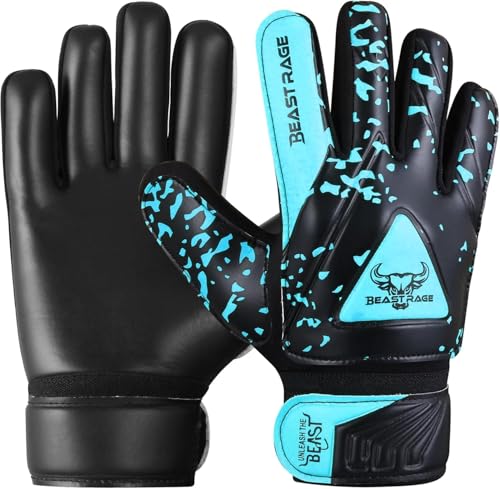
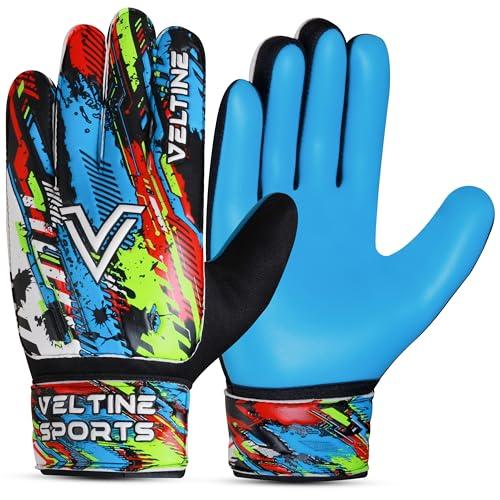
For genuinely small hands the pick is the Veltine Sports Youth Goalkeeper Glove in size 4 — a real size 4, stated for 6-to-9-year-olds, with a published 4 mm latex palm, which is more disclosure than most gloves in this band offer. The budget pick is the BEAST RAGE Kids Goalkeeper Glove, the cheapest keeper glove on this site. If you want a specialist brand in junior sizing, the Reusch Attrakt Solid Junior also starts at size 4. Prices come from the live price layer with an as-of date under each button.
The problem with small keeper gloves is not quality, it is existence. Most of the glove market starts at size 6 and the ranges below that are thin, so a parent searching for a seven-year-old's first pair is routinely sold a size 7 described as "youth" — which is an adult glove with a youth label on it.
That matters more than it sounds. A glove that is too long bunches at the fingertips, and a keeper who cannot feel the ball through the palm stops catching and starts parrying. It is the one piece of goalkeeper equipment where fit changes outcomes on the field rather than just comfort.
Which size, and which glove actually comes in it
Age bands are the sellers' own stated ranges, not our measurements — and they are approximate, which is why the sizing method below matters more than the band. This site does not lab-test and publishes no scores.
Hand / age
Size
Buy
Because
A 6-to-9-year-old
4
Veltine Sports Youth Goalkeeper Glove
A genuine size 4 with a published 4 mm latex palm — the hardest size to find
A 6-to-9-year-old, specialist brand
4
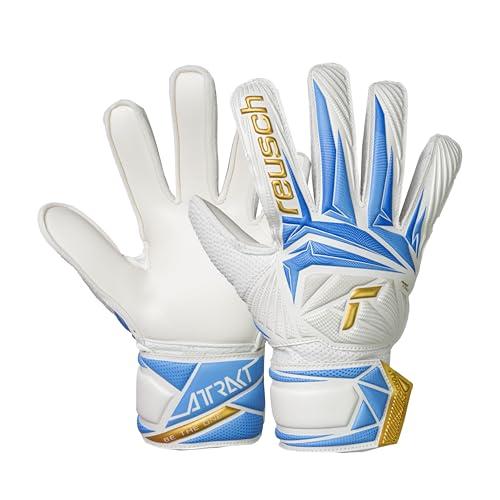
Reusch Attrakt Solid Junior
A keeper-brand glove in real junior sizing, with Reusch's own Exclusive Cut
A 9-to-12-year-old
5
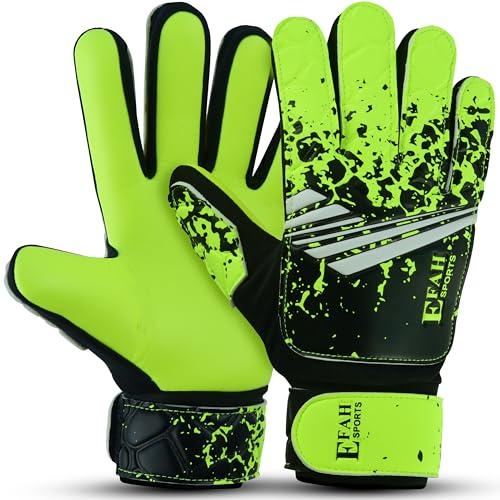
EFAH SPORTS Youth Goalkeeper Gloves
Light, unspined and age-banded — what a rotating keeper keeps on
A 9-to-12-year-old, first pair
5
BEAST RAGE Kids Goalkeeper Gloves
The cheapest keeper glove here, and the right buy for one week in goal
Small hands, already jammed a finger
5 upward
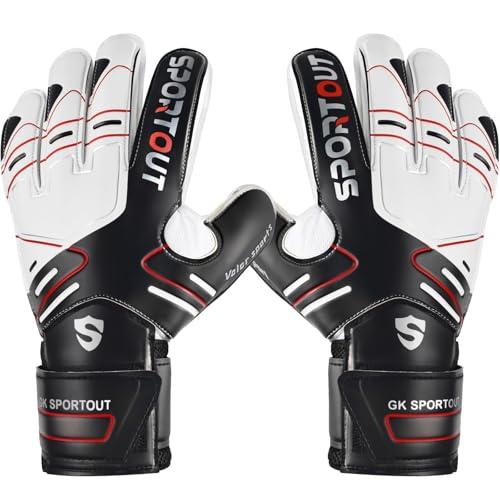
Sportout Youth & Adult Gloves with Finger Spines
Finger protection at about a third of a branded Fingersave price
Growing out of size 5
6
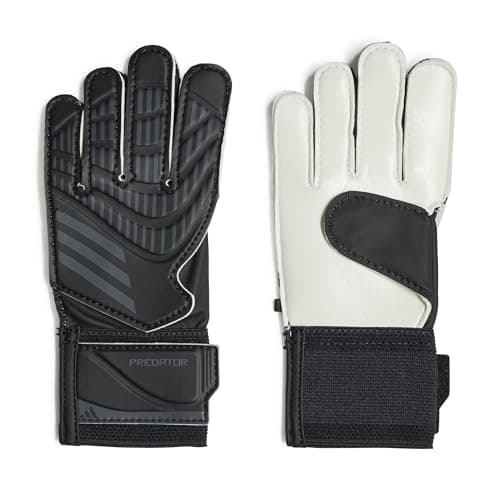
adidas Youth Predator Training
The step into a branded training glove once the hand has outgrown the junior sizes
Scroll the table sideways on a narrow screen.
How we sorted these
A real small size, or it is not on the page. Every pick is listed in size 4 or size 5, or starts there. Gloves whose smallest size is a 6 or 7 were left off however good they are, because they do not answer this question.
Published palm figures outrank grip adjectives. Where a listing states a latex thickness, that counts for more than "super grip", which is unverifiable.
Spines are optional, not a default. Finger protection stiffens the backhand and a young keeper who has never jammed a finger usually dislikes it, so the spined option is ranked by need rather than by protection.
Availability verified before featuring. Every pick was checked against its live listing on 2026-11-21. One registry glove — the Nike Jr. Match — came back with no buyable offer on that check and was left off rather than listed with a dead buy row.
A named budget pick. The cheapest glove here that is still a goalkeeper glove, called out rather than buried at the bottom of the list.
Quick picks
Tap any row to jump to the full write-up. The price in each button is the one Amazon reported on the date stamped under it — tap through for today’s number, which is the only one that can be relied on.
EFAH SPORTS Youth Goalkeeper Gloves (Size 5)A sensible rotation glove: enough grip and padding for a quarter in goal, at a price that does not punish a player who is not really a keeper.
U9–U10, U11–U12
Latex grip palm, no finger spines
Measure around the palm and compare with the age band rather than trusting it.
BEAST RAGE Kids Goalkeeper GlovesThe budget pick: the cheapest glove here that is still a goalkeeper glove, and the right answer for a first week in goal or a second pair in the bag.
Product photos come from each item’s current Amazon listing.
The picks in full
1. Veltine Sports
Veltine Sports Youth Goalkeeper Gloves (Size 4, 4 mm Latex)
The best small-hands option in this registry: a real size 4 with a published palm thickness, at a price that suits a first season in goal.
Best for
The smallest hands on the team, stated for 6 to 9 year olds
Levels
U7–U8 rec · U9–U10
Type / surface
4 mm latex palm, size 4
How it fits
Size 4 is roughly a 6-to-9-year-old hand. If the fingertips bunch, the glove is too long and the child will lose the feel of the ball; a keeper glove should sit close with about a thumb's width spare.
What we like
A published palm thickness is more than most gloves in this price band disclose, and 4 mm is a real cushion for a small hand
Size 4 is the hardest size to find, and it is the size most U8 and U9 keepers actually need
Cheap enough to own two pairs so one is always dry, which matters more than brand at this age
Where it falls short
Marketplace latex with no grade stated, so it will not hold grip in sustained wet the way a match glove does
Size 4 is outgrown quickly — this is a one-season glove for most children
Manufacturer’s published specs
Palm specified as 4 mm latex, which is an actual published figure rather than a grip adjective (listing)
Listed size 4, stated by the seller as suitable for 6 to 9 year olds (listing)
Double wrist protection on the sibling colorways in the same range (listing)
These are the manufacturer’s own claims, not measurements we took.
The pick for a keeper who is in goal every week, wants a specialist brand, and does not want finger protection.
Best for
A regular U9-U12 keeper who wants a specialist brand without finger spines
Levels
U9–U10 · U11–U12
Type / surface
Exclusive Cut, synthetic latex palm
How it fits
Reusch junior sizing runs close to the published hand-circumference chart. A keeper glove should have about a thumb's width of space at the fingertips — tighter than a field glove, looser than a second skin.
What we like
A keeper-brand glove in genuine junior sizing, which is still unusual below about size 6
Synthetic latex is the right trade for a child who trains on turf, where soft match latex is destroyed in weeks
No finger spines, so a young keeper who dislikes the stiffness has a specialist option without them
Where it falls short
Synthetic latex grips less than a soft match latex in the wet — that is the deal being made, not a defect
Stock was thin on our 2026-11-21 check (the listing showed only six pairs), so availability may be short-lived
Manufacturer’s published specs
Synthetic latex palm, specified by Reusch as durable on artificial turf (listing)
Exclusive Cut — Reusch's own cut name, a preshaped fit rather than a flat-palm classic cut (listing)
Listed in junior sizing from size 4 (listing)
Described as breathable, flexible and preshaped (listing)
These are the manufacturer’s own claims, not measurements we took.
A sensible rotation glove: enough grip and padding for a quarter in goal, at a price that does not punish a player who is not really a keeper.
Best for
A 9-to-12-year-old rotating into goal a quarter of the game
Levels
U9–U10 · U11–U12
Type / surface
Latex grip palm, no finger spines
How it fits
Measure around the palm and compare with the age band rather than trusting it. These run true to the stated size; if a child is between bands, size up, because a glove that is slightly roomy still catches and a tight one gets taken off.
What we like
Priced so that a rec player who is in goal for one quarter is not an expensive purchase
Age-banded sizing is genuinely useful for a parent buying without the child present
Light and unspined, which is what a rotating keeper actually keeps on
Where it falls short
No published latex grade, and at this price the palm will wear faster than a specialist glove's
Age-band sizing is approximate — a big-handed nine-year-old will be between sizes
Manufacturer’s published specs
Listed size 5, stated by the seller as suitable for 9 to 12 year olds (listing)
Described as a super-grip protective palm (listing)
Sold in several colorways at one price (listing)
These are the manufacturer’s own claims, not measurements we took.
Sportout Youth & Adult Goalkeeper Gloves with Finger Spines
The cheapest honest route to finger protection for a youth keeper, and the right first spined glove before spending on a branded one.
Best for
A U10+ keeper who wants finger protection at a rec-league price
Levels
U9–U10 · U11–U12 · U13+ travel & club
Type / surface
Finger-spine glove, latex palm
How it fits
Sizing is listed by age band as well as by number and the two do not always agree — go by hand circumference. Spined gloves feel stiff out of the box and loosen over the first few sessions.
What we like
Finger protection at roughly a third of what a branded Fingersave glove costs, which is the whole reason this entry exists
A size run that covers a growing keeper for more than one season
Available in several colors, which matters more to a ten-year-old than any spec on this list
Where it falls short
Spines stiffen the backhand, and a keeper who has never jammed a finger usually dislikes the feel
A marketplace brand with no published latex grade, so durability cannot be compared with Reusch or adidas on paper
Manufacturer’s published specs
Finger spines through the backhand, described as preventing hyperextension injuries (listing)
Listed in a size run that spans youth and adult hands, verified at size 5 (listing)
Described as a strong-grip palm for hard saves (listing)
These are the manufacturer’s own claims, not measurements we took.
The budget pick: the cheapest glove here that is still a goalkeeper glove, and the right answer for a first week in goal or a second pair in the bag.
Best for
A first pair, or the spare that lives in the bag
Levels
U6 — first kicks · U7–U8 rec · U9–U10
Type / surface
Youth latex palm
How it fits
Sizing follows the stated age band. There is no half-size, so a child between bands should take the larger and accept slightly long fingers rather than a glove that pinches.
What we like
Cheapest route into a keeper glove anywhere in this registry, which is the correct purchase for a child who has volunteered once
Bright colorways, which is a real factor in whether a young keeper wants to go in goal at all
Low enough cost to be the permanent spare, so a wet pair never ends a session
Where it falls short
No published latex grade or palm thickness, so grip in the wet is unknown and should be assumed modest
At this price the palm is the first thing to go — treat it as a season, not an investment
Manufacturer’s published specs
Listed in youth sizing with a stated age band on the size — the verified listing is size 5 for 9 to 12 year olds (listing)
Sold as a youth soccer and football goalkeeper glove (listing)
The cheapest keeper glove in this registry with a live price
These are the manufacturer’s own claims, not measurements we took.
Measure, do not guess from the age band. Wrap a tape measure around the palm at the widest point, just below the knuckles and excluding the thumb, and note the circumference in inches. Keeper glove sizes are built on that number, which is why the same stated size fits a nine-year-old and a twelve-year-old with different hands.
Then add about a thumb's width at the fingertips — no more. A keeper glove is meant to fit closer than a field glove, because the palm has to transmit the feel of the ball, and the commonest mistake with a growing child is a pair bought a size up to last. A glove bought to last is a glove that bunches, and a bunched fingertip is a dropped ball.
The check: with the glove on, the child should be able to press the palm flat against a ball with no slack at the fingertips. Slack there is what turns a catch into a parry.
Cut matters less than size at this age, but it is not nothing
A published cuts guide splits keeper gloves into flat or classic, roll finger, negative and hybrid, and the differences are real: a negative cut has the seams on the inside and fits tightest, a roll finger wraps more latex around the finger, and a flat cut is the roomiest and the most traditional.
For a small hand the practical consequence is one line long: a negative cut on a child's hand is tight on tight, so unless the player has specifically asked for it, a preshaped or roll-style cut is the safer buy. It is also worth knowing from a manufacturer's own wear guidance that negative-cut gloves show wear on the fingers and thumbs quicker than looser cuts, because of the tighter fit and internal stitching.
Less than you would think, and the reason is published rather than our opinion. A glove manufacturer's own latex guide positions entry-level latex explicitly for kids and recreational players to be "used and abused" while technique develops, rather than as a compromise — which is a brand saying out loud that a young keeper does not need match latex.
The same guides are blunt about durability: latex wear is normal and can start from the very first save, it depends on the surface and the volume of saves, and gloves are predominantly designed for natural surfaces unless a specialist turf latex is specified. A soft match latex on a child who trains twice a week on artificial turf is money spent on something that will be gone by Christmas.
Measure the palm circumference at the widest point just below the knuckles, excluding the thumb, and buy to that number rather than to an age band. Size 4 suits roughly a 6-to-9-year-old hand and size 5 roughly a 9-to-12-year-old, but published age bands are approximate and the same stated size fits very different hands. Allow about a thumb's width at the fingertips and no more.
What are the best goalie gloves for a 7 year old?+
A genuine size 4 — the Veltine Sports Youth Goalkeeper Glove is our pick, with a published 4 mm latex palm and a stated 6-to-9-year-old band. The Reusch Attrakt Solid Junior is the specialist-brand alternative in the same size. Most gloves sold as "youth" start at size 6, which is an adult glove with a youth label, so check the size run before the brand.
Do goalie gloves come in size 4?+
Yes, but the range is thin. Most of the glove market starts at size 6, and genuine size 4s are a small corner of it — which is why this page exists. Two of the picks here are listed in size 4: one marketplace glove with a published palm thickness, and one specialist keeper brand's junior cut.
Should I buy goalie gloves a size up for my child to grow into?+
No. A keeper glove is meant to fit closer than a field glove because the palm transmits the feel of the ball, and a pair bought a size up bunches at the fingertips. A bunched fingertip turns a catch into a parry, so a glove bought to last costs saves. Two cheap pairs in the right size are a better purchase than one expensive pair that is too big.
Is a negative cut good for a child's hand?+
Usually not. A negative cut has the seams on the inside and fits tightest of the four cuts, which is tight on tight for a small hand. A preshaped or roll-style cut is the safer buy unless the player has specifically asked for a negative. A manufacturer's own wear guidance also notes that negative cuts show finger and thumb wear faster, because of the tighter fit and internal stitching.
How much should I spend on a young keeper's first gloves?+
Not much, and a glove brand says so itself: its published latex guide positions entry-level latex explicitly for kids and recreational players to be used and abused while technique develops. The same guidance notes latex wear can begin on the very first save and that gloves are mostly designed for natural surfaces unless a turf latex is specified. For a child on turf twice a week, two cheap pairs beat one expensive pair.
Sources
The One Glove Co — goalkeeper glove latex guide — A manufacturer's latex guide, cited for two points: that its durability ratings explicitly assume the care routine is followed and that 'durability depends on how well you care for them and what surface you play on', and that entry-level latex is positioned for kids and recreational players to 'be used and abused' while technique develops rather than as a compromise.
The One Glove Co — goalkeeper glove care guide — A glove manufacturer's own care guide and the source for the glove-care facts quoted on this site: pre-wash a new pair before first use and let them dry naturally, to remove manufacturing preservatives from the latex and activate it; dampen the palms occasionally in use because 'latex is not designed to be dry'; wash immediately after use in warm water at a maximum of 30C, squeeze rather than twist the water out, and dry naturally away from direct heat or light, since heat and UV dry the latex out and make it brittle; wrap in a towel and press rather than scrub; allow about 24 hours to dry, then store cool and out of direct sunlight with the palms not touching, because palms left in contact stick together and tear when peeled apart; never store them unwashed. Also the source for the wear facts: latex wear is normal and 'can even start from the very first save'; latex degradation depends on the surface and the volume of saves; gloves are predominantly designed for natural surfaces unless a specialist 3G/astro latex is specified, and 'if you are using a goalkeeper glove on an artificial surface such as 3G or astro turf you will be placing a higher level of stress on the latex, therefore it will wear much quicker'; negative-cut gloves show wear on the fingers and thumbs quicker than looser cuts because of the tighter fit and internal stitching, while roll finger and classic-fit cuts fare better; and using the palms to push up off the ground in training adds avoidable wear.
One Glove — goalkeeper glove cut guide — A glove manufacturer's own cut guide and the source for the cut definitions quoted on this site: flat palm has external stitched gussets between fingers and palm with one piece of latex attached to the back and is 'known for great latex coverage on the ball'; roll finger connects the backhand directly to the palm with no gussets so the latex rolls around the fingers, giving 'a fairly spacious fit that provides a lot of latex coverage on the ball'; negative is built like a flat cut but with the stitching and gussets inside the glove, which 'provides a much tighter and snug fit with control on the ball that is more true to your hand'. Also the source for the snugness ranking — flat and roll finger at the loose end, negative at the snug end — and for hybrids combining a negative lower section with a roll-finger or flat upper.
Reusch — Attrakt goalkeeper gloves — Reusch's own description of the Finger Support system, AirVent ventilation and its youth sizing range.