Heads up: we earn a commission if you buy through our links, at no extra cost to you. It never changes which product we recommend — here’s how that works.
The short answer
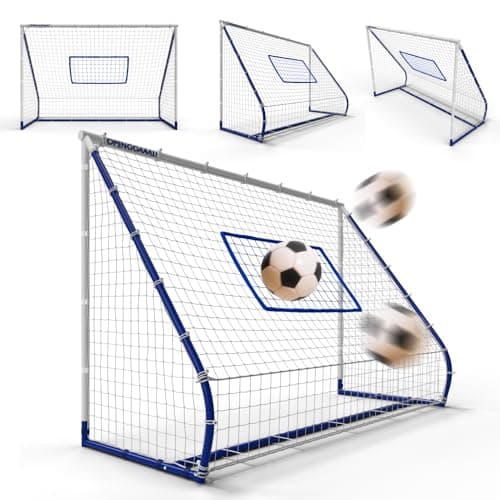
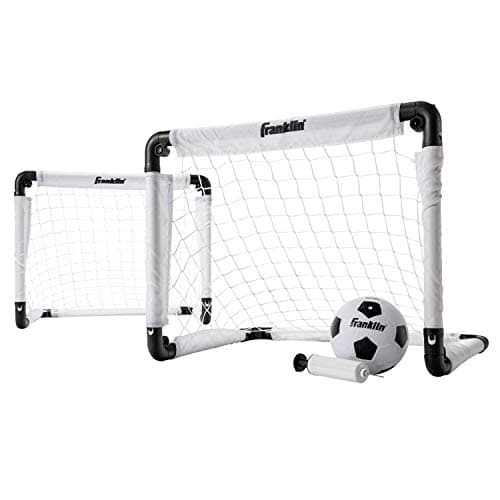
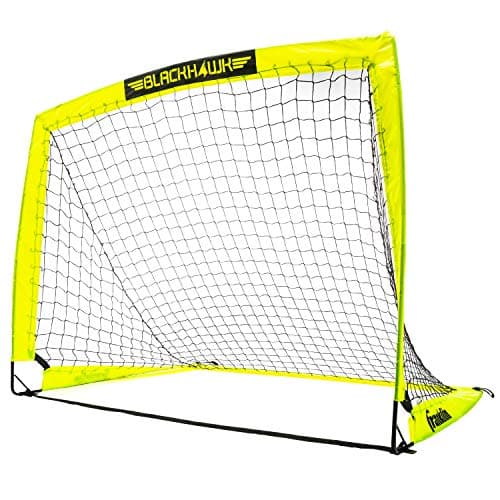
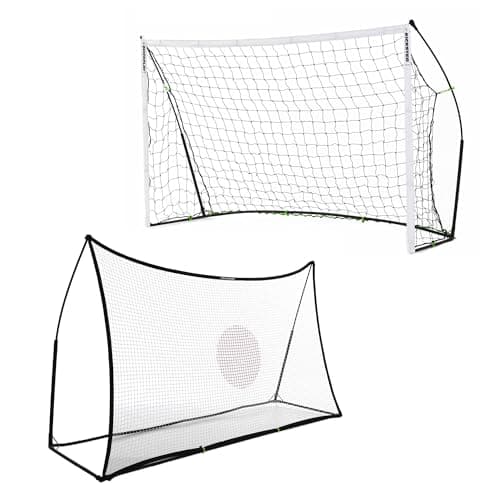
Under $200 the pick is the QuickPlay Kickster 2-in-1 Goal / Rebounder 8x5 — because at this cap the sensible purchase is a goal that also returns the ball, which turns a solo kickabout into actual practice. If the yard is small or has neighbors, buy the Open Goaaal 3-in-1 instead: it is a goal, a rebounder and a backstop. The budget pick is the Franklin Sports Blackhawk, at under a seventh of the cap. Prices are read live from Amazon with the date under every button.
About the prices: this page is built from the live price layer, not from list prices we typed in. Each pick was under $200 when Amazon last reported a price for it, and the as-of date renders under its button. Prices move — tap through for today's number, which is the only one that can be relied on.
Here is what is different about this band, and it is worth saying before the list. Almost every backyard goal in existence costs well under $100, so the gap between $100 and $200 does not buy a bigger version of the same thing. It buys a category change: the two most expensive picks here are not goals with more steel, they are goals that do a second job.
That second job is the one most families actually need. A goal alone produces a child who kicks the ball, retrieves it, and kicks it again — which is half practice and half walking. A unit that returns the ball removes the walking.
What the extra money buys at this cap
Four bands, four genuinely different products. Function descriptions are each manufacturer's own published positioning, not our testing — this site does not lab-test and publishes no scores.
Price band
What it buys
Pick
Under $30
A small pop-up or a mini goal — a target, and nothing else
Franklin Sports Blackhawk
$30-$60
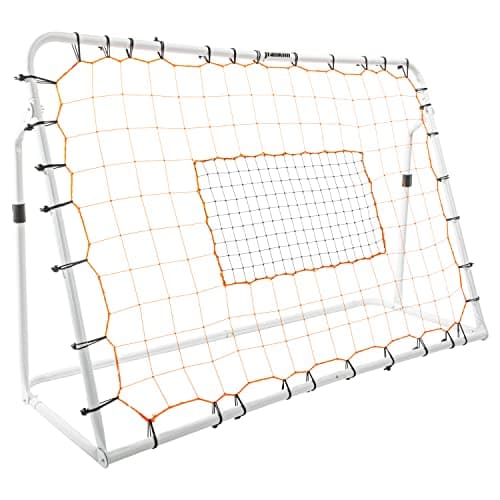
A pair of goals, or a first rebounder
GoSports Pop Up Goals (set of two), Franklin Adjustable Rebounder
$100-$130
A full-size-ish frame that is ALSO a rebounder
QuickPlay Kickster 2-in-1 8x5
$150-$200
A goal, a rebounder AND a backstop that keeps the ball in the yard
Open Goaaal 3-in-1
Scroll the table sideways on a narrow screen.
How we sorted these
Under the cap on the live listing. No pick appears here on the strength of a list price. The price layer reads Amazon and stamps the date, and anything without a live price under the cap is off the page.
A live offer, or off the page. One registry goal was excluded because its price-layer entry showed no buyable offer on the 2026-11-21 read, rather than being listed with a dead buy row.
Function before size. At this cap the useful variable is what the unit does, not how wide the mouth is — so the combo units lead and the plain frames follow.
Anchoring treated as part of the purchase. The CPSC's movable-goal guidance is explicit about tipover risk, and a goal that cannot be anchored on your surface is the wrong goal whatever it costs.
A named budget pick. Not the cheapest listing on Amazon — the cheapest goal in our registry that a child will actually shoot at all season.
Quick picks
Tap any row to jump to the full write-up. The price in each button is the one Amazon reported on the date stamped under it — tap through for today’s number, which is the only one that can be relied on.
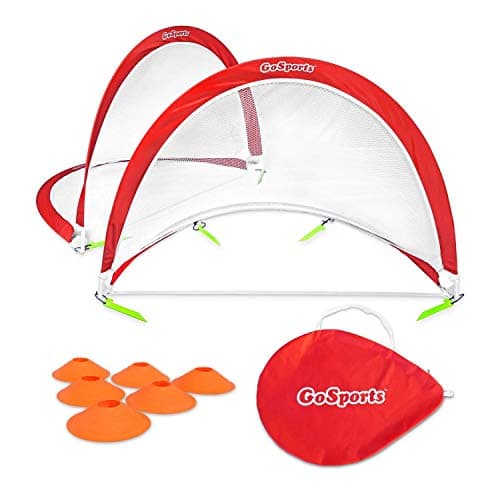
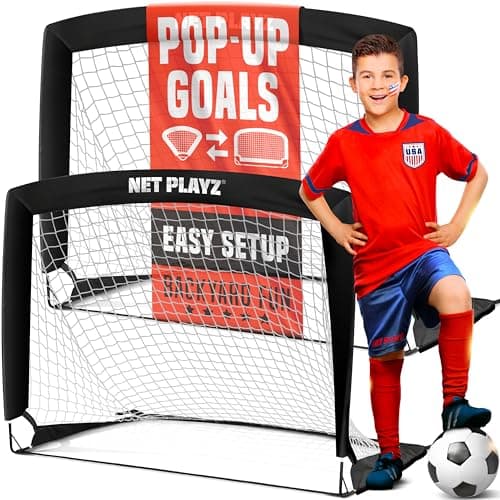
GoSports Portable Pop Up Soccer Goals, 4 ft (set of two)
The pick when the point is a game between two kids rather than shooting practice, and the easiest set here to pack away.
Best for
A garage, a gym floor or a yard, U8 through U12
Levels
U7–U8 rec · U9–U10 · U11–U12
Type / surface
4 ft pop-up pair, hard floor or grass
How it fits
The 4 ft pair is the version to buy for a garage or a yard. GoSports also lists 2.5 ft for tight indoor spaces and 6 ft for older players — check the size on the listing before ordering. The pair needs clear floor between them, not just behind them.
What we like
A pair rather than a single goal, which is what makes a space a game instead of shooting practice
Both stake types in the box, so the same set works on turf and on grass without a second purchase
Collapses into a carry case, so it genuinely moves between a garage, a gym and a yard
Where it falls short
At 4 ft these are small-sided targets, not a goal a U12 player can practice shooting corners into
Stakes do not work on a hard floor, so indoors the goals shift under a hard shot unless they are backed against something
Manufacturer’s published specs
Two collapsible 4 ft goals plus six training cones and a carrying case (GoSports)
Both plastic and metal stakes included (GoSports)
Sets up and takes down in seconds with no assembly (GoSports)
Also listed in 2.5 ft and 6 ft sizes (GoSports)
These are the manufacturer’s own claims, not measurements we took.
The more a goal costs in this category, the bigger and lighter it tends to be — a tall aluminum or fiberglass frame with a big net. That combination is exactly the one the US Consumer Product Safety Commission's guidelines for movable soccer goals warn about, and those guidelines exist because movable goals have caused deaths and serious injuries by tipping over.
The CPSC's recommendations are specific: anchor or counterweight the goal, never allow anyone to climb on the net or the frame, and secure or disassemble goals that are not in use. On a backyard unit at this price that means buying an anchor with the goal rather than after it, and it means the goal does not stay standing unattended through a windy week.
What anchor depends entirely on the surface, which is the thing most listings do not tell you. How to anchor a backyard soccer goal walks through the CPSC guidance properly, and best soccer goal anchors ranks sandbags, pegs and screw-in augers by what your ground actually allows.
The purchase that should never be separated from the goal: an anchor matched to the surface. The CPSC's movable-goal guidance is explicit that anchoring or counterweighting is the control for tipover.
The small-yard case for spending at the top of the band
There is one situation where the most expensive pick here is straightforwardly the right buy, and it is not the one people expect. It is not a big yard — it is a small one.
In a small yard the limiting factor is not the goal, it is what happens when the child misses. A missed shot goes over the fence, into a window, or into a neighbor's garden, and after about the fourth time the yard stops being used. The Open Goaaal is built precisely for that: its own positioning is a goal, a rebounder and a backstop in one frame, and the backstop is the part that solves the actual problem.
If the budget does not reach it, the honest alternative is to solve the three jobs separately and cheaply, which is usually possible. Alternatives to the Open Goaaal works through exactly which of its three jobs can be replaced for less, and soccer goal vs rebounder is the decision page if you can only buy one thing.
Should you buy at this cap at all?
For most families, no, and we would rather say that on the page than sell up. A $25 pop-up that gets used every evening is a better purchase than a $160 frame that gets used in April and then anchored badly in the corner of the yard until the net perishes.
The two conditions that genuinely justify spending here are a player who practices alone — where a return surface changes what an hour in the yard produces — and a yard that cannot contain a missed shot. If neither applies, buy at the bottom of the band and spend the difference on a ball, cones and a pump.
What is the best backyard soccer goal under $200?+
The QuickPlay Kickster 2-in-1 Goal / Rebounder 8x5, because at this cap the sensible purchase is a goal that also returns the ball rather than a bigger plain frame. If the yard is small or has neighbors, the Open Goaaal 3-in-1 is the better buy: its own positioning is a goal, a rebounder and a backstop in one unit, and the backstop solves the problem small yards actually have.
Is it worth spending $200 on a backyard soccer goal?+
Only in two situations: a player who practices alone, where a return surface changes what an hour in the yard produces, and a yard that cannot contain a missed shot. Otherwise no — almost every backyard goal costs well under $100, and a cheap pop-up that gets used every evening beats an expensive frame that gets used in April.
What does the extra money buy between $100 and $200?+
A different kind of product, not a bigger one. Under $100 you are buying a goal. Between $100 and $200 you are buying a goal that is also a rebounder, and at the top of the band a goal that is also a rebounder and a backstop. The frames do not get dramatically stronger across that gap; the number of jobs the unit does changes.
Do backyard soccer goals need to be anchored?+
Yes, and more so at this price, because the bigger and lighter frames in this band are exactly what the US Consumer Product Safety Commission's movable-goal guidelines warn about. Those guidelines exist because movable goals have caused deaths and serious injuries by tipping. The CPSC recommends anchoring or counterweighting, never climbing on the frame or net, and securing or disassembling goals not in use.
What size backyard soccer goal should I buy?+
Match it to the yard rather than to the age. An 8x5 frame is a real shooting target for an older player but needs the space behind and beside it for retrieval, which a small yard does not have. Our dedicated sizing page runs through the usable widths and what each one suits; in a tight yard a smaller goal with a backstop beats a wider goal without one.
Goal or rebounder — which should I buy first?+
A goal, if the child plays with other people; a rebounder, if they mostly practice alone. The combo units in this band exist because most households are both, and buying one unit that does both is usually cheaper than buying the two separately. Our goal-versus-rebounder page works through the trade in detail.
Sources
US CPSC — Guidelines for Movable Soccer Goals — Tipover fatality and injury figures, and the CPSC's specific anchoring, counterweighting and storage recommendations. The source for every safety figure on the goal pages.