Heads up: we earn a commission if you buy through our links, at no extra cost to you. It never changes which product we recommend — here’s how that works.
The short answer
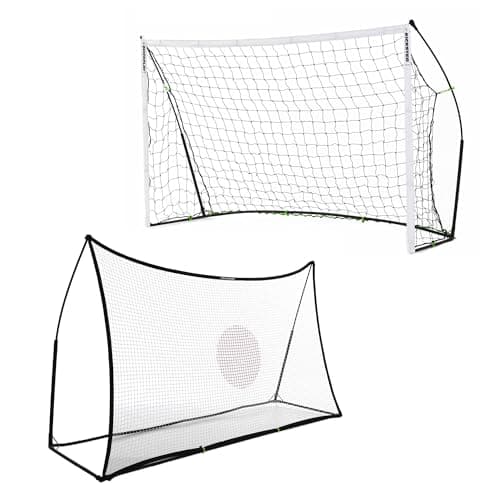
Closest like-for-like: the QuickPlay Kickster 2-in-1 8x5 — a goal on one side and a rebounder on the other, via a swappable panel, at a lower price than the Open Goaaal.
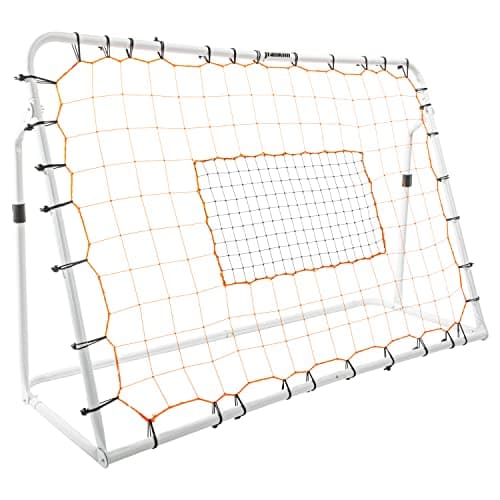
Best value combination: the Franklin Sports Adjustable Soccer Rebounder plus a cheap portable goal. Two items, two jobs, well under the cost of one three-in-one frame.
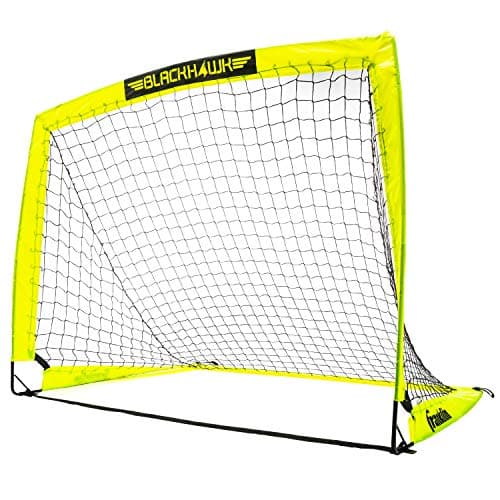
Budget pick: the Franklin Blackhawk Portable Soccer Goal — the cheapest frame here that is still a real goal.
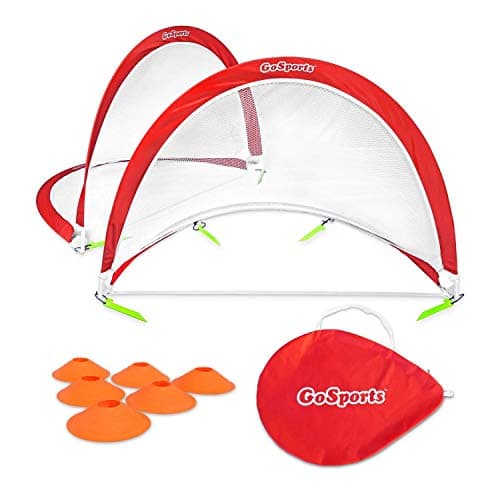
Best for small-sided games: the GoSports Portable Pop Up Soccer Goals, a pair of 4 ft nets with cones and a case.
What nothing here replaces: the BACKSTOP. Open Goaaal's own description is a patented system combining a full-size goal, a ball-returning rebounder and a protective backstop, and the backstop — the part that stops a missed shot reaching a window or a neighbor — has no equivalent in the rest of this category.
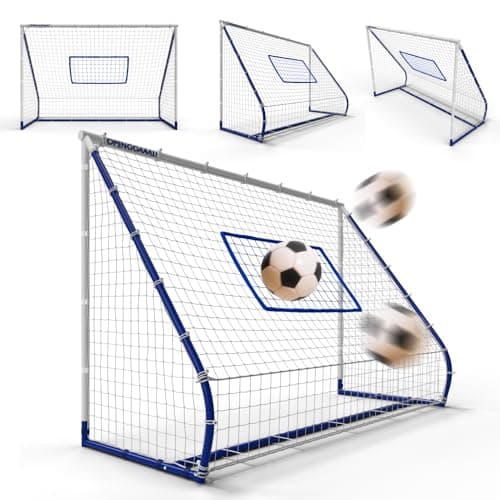
The Open Goaaal is a genuinely unusual product, and it is worth being clear about what it does before listing anything against it. Its maker describes it as a patented system combining three things in one frame: a full-size goal, a ball-returning rebounder, and a protective backstop. The current listing is the 4 x 6 ft version, and it sits at the top of the backyard price range on this site.
Two of those three jobs are well covered elsewhere. The third is not, and that is the honest headline of this page: if the reason you are looking at an Open Goaaal is that missed shots are hitting a fence, a window or a neighbor's yard, the backstop is the product, and the cheaper combinations below do not solve it.
If what you actually want is one of the other two jobs — a goal to shoot at, or a rebounder that sends the ball back — then yes, you can spend a lot less. That is most of what follows.
What the three jobs are, and who needs which
Three jobs in one frame is the product's whole proposition. Decide which of the rows you are actually buying before you compare prices.
The job
What it solves
Cheapest honest answer
Goal
Something to shoot at
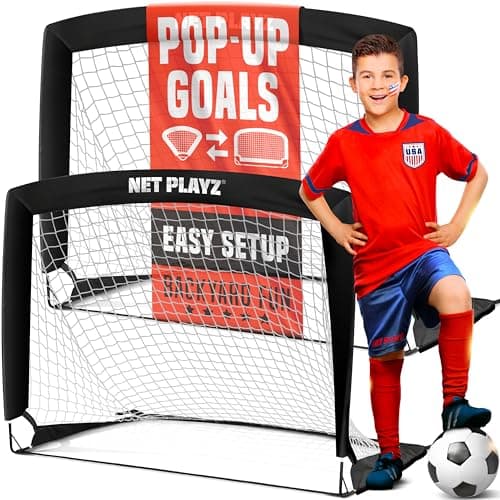
A portable 4 ft x 3 ft frame
Rebounder
The ball comes back, so practice is touches instead of fetching
A standalone adjustable rebound net
Backstop
Missed shots do not reach the window, the fence or next door
Nothing else in this category. This is the Open Goaaal's own ground
All three, one frame, one setup
A small yard where there is no room for two items
The Open Goaaal itself
Scroll the table sideways on a narrow screen.
The fourth row is the one people underrate. A combination unit is not only about money — it is about a yard that cannot hold a goal and a separate rebounder, and about a setup a child will actually do alone rather than needing an adult to assemble two things.
How we sorted these
Job coverage first. Each pick is here because it covers a stated one of the three jobs, and the page says which. Nothing is listed as a general substitute for a three-in-one frame, because nothing is.
Availability verified before featuring. Every pick, and the Open Goaaal itself, was checked against its live listing on 2026-11-20 and reporting a buyable offer at the time of the check.
Combinations are allowed as answers. The most useful alternative to a combined product is frequently two separate products, and the arithmetic for that is on the page rather than implied.
Anchoring counted against the big frames. The CPSC publishes guidance on securing movable goals, and a larger frame with a wind-catching net needs more anchoring, which is a real cost attached to the bigger options.
A named budget pick. The cheapest item here that is still a real goal gets called out, rather than leaving a reader to assume the cheapest thing on the page is a compromise.
Quick picks
Tap any row to jump to the full write-up. The price in each button is the one Amazon reported on the date stamped under it — tap through for today’s number, which is the only one that can be relied on.
Product photos come from each item’s current Amazon listing.
Every row names what the cheaper option costs you. The last row is deliberate: on a factory site it would be easy to pretend there is always a cheaper answer, and here there is not.
GoSports Portable Pop Up Soccer Goals, 4 ft (set of two)
The pick when the point is a game between two kids rather than shooting practice, and the easiest set here to pack away.
Best for
A garage, a gym floor or a yard, U8 through U12
Levels
U7–U8 rec · U9–U10 · U11–U12
Type / surface
4 ft pop-up pair, hard floor or grass
How it fits
The 4 ft pair is the version to buy for a garage or a yard. GoSports also lists 2.5 ft for tight indoor spaces and 6 ft for older players — check the size on the listing before ordering. The pair needs clear floor between them, not just behind them.
What we like
A pair rather than a single goal, which is what makes a space a game instead of shooting practice
Both stake types in the box, so the same set works on turf and on grass without a second purchase
Collapses into a carry case, so it genuinely moves between a garage, a gym and a yard
Where it falls short
At 4 ft these are small-sided targets, not a goal a U12 player can practice shooting corners into
Stakes do not work on a hard floor, so indoors the goals shift under a hard shot unless they are backed against something
Manufacturer’s published specs
Two collapsible 4 ft goals plus six training cones and a carrying case (GoSports)
Both plastic and metal stakes included (GoSports)
Sets up and takes down in seconds with no assembly (GoSports)
Also listed in 2.5 ft and 6 ft sizes (GoSports)
These are the manufacturer’s own claims, not measurements we took.
An 8 ft x 5 ft frame that switches between goal and rebounder is the one combination unit that suits a player hitting the ball hard enough to need both.
The arithmetic, since that is usually the real question
Here is the comparison people are actually making, and it is worth laying out plainly rather than gesturing at it. A three-in-one frame is a single purchase at the top of the backyard range. A goal plus a separate rebounder is two purchases, each from much lower down the range, and together they come to well under the cost of the combined unit — on the listings we checked, roughly half.
What the two-item route costs you is not money. It costs a second footprint in the yard, a second thing to store, a second thing to anchor, and a setup a young child is less likely to do unsupervised. In a small yard those are real objections and they are the reason combination units exist at all.
What it buys you, beyond the saving, is flexibility: a rebounder angle set for ground passes one day and aerial returns the next, and a goal you can carry to a park. Soccer goal vs rebounder works the goal-versus-rebounder decision through properly if you have not settled it, and best soccer rebounders for kids ranks the rebounders on their own terms.
What a backstop actually does, and the cheap workarounds
A backstop is netting behind and around the goal that catches everything the goal does not. In a small yard it is the difference between practice happening and practice being banned after the third broken plant pot, and it is the single most common reason families end up looking at the expensive end of this category.
Nothing else in this registry has one, and we are not going to pretend otherwise. Three partial workarounds are worth knowing, in descending order of how well they work:
Point the practice at a wall or a fence instead of away from it. A rebounder set against a solid boundary turns the boundary into the backstop. This is free and it is the reason a rebounder suits a small yard better than a goal does.
Use a smaller ball and a smaller goal. A size 3 ball at a 4 ft frame travels a fraction as far on a miss as a size 5 at a full-size goal. What size backyard soccer goal covers the sizing, best soccer goals under $50 is where the small frames are, and best soccer balls under $50 covers the ball — a size 3 is a different proposition in a small yard than a size 5.
Add a separate barrier net. Generic garden barrier netting is not a soccer product and we do not rank it, but it exists, and it is cheaper than upgrading the whole goal. Rig it to posts you already have rather than to the goal frame.
Accept the retrieval. If the yard is big enough that a miss is only annoying rather than expensive, a plain goal plus a ball bag is the cheapest answer of all.
A rebounder against a fence gets you two of the three jobs for a fraction of the money — the fence does the backstop's work.
Anchoring is a cost of the big frames
Worth adding to the comparison because it rarely makes it into one. The larger and more net-covered a frame is, the more wind it catches and the more anchoring it needs — and the CPSC publishes guidance on securing movable goals for good reason, having documented tipover deaths and a substantial annual injury count.
In practice that means a full-size combination frame wants proper anchoring at the rear whenever it is up, which is a real purchase on top of the goal. Best soccer goal anchors covers the sandbags, stakes and screw-in augers and which of them your surface allows, and how to anchor a backyard soccer goal is the method. A pair of 4 ft pop-ups needs pegging rather than anchoring, which is a much cheaper problem.
A note on badges in this category
One thing worth knowing before you compare brand names here, because it changes how two of these products relate. QuickPlay states on its own about page that it designed the KICKSTER, launched in 2007 as its first product, holds patents in the UK and internationally, and LICENSED the KICKSTER design to SKLZ, which sells it in the US as the QUICKSTER. So those two portable goals are one design under two badges, and should be compared on price and stock rather than on brand quality.
Best soccer goal brands for kids goes through the rest of the badges in this category at brand level, including which ones publish a specification you can actually check. And if your player has outgrown the backyard scale entirely, best backyard soccer goals for teens is the step up.
Common questions
What is a good alternative to the Open Goaaal?+
The QuickPlay Kickster 2-in-1 is the closest like-for-like: an 8 ft x 5 ft frame that works as a goal on one side and a rebounder on the other via a swappable panel, at a lower price. If two separate items are acceptable, a standalone adjustable rebounder plus a cheap portable goal covers the same two jobs for roughly half the cost of a three-in-one frame. Neither includes a backstop.
Is the Open Goaaal worth it?+
It depends which of its three jobs you are buying. As a goal, or as a rebounder, it is expensive for what it does and cheaper products cover each. As a BACKSTOP — netting that stops missed shots reaching a window, a fence or a neighbor's yard — nothing else in this category replaces it, and for a small yard with close neighbors that single feature can be the whole reason to buy.
Can I just buy a goal and a rebounder separately?+
Yes, and on the listings we checked the two together came to roughly half the cost of a combined three-in-one frame. What you give up is not money: it is a second footprint in the yard, a second item to store and anchor, and a setup a young child is less likely to manage alone. In a small yard those objections are the reason combination units exist.
What does a soccer backstop do?+
It is netting behind and around the goal that catches everything the goal does not. In a small yard it is the difference between practice continuing and practice being banned after something breaks. The partial workarounds are to set a rebounder against a solid fence so the boundary does the backstop's work, to use a smaller ball and a smaller goal so misses travel less far, or to rig separate barrier netting to posts you already own.
Is the QuickPlay Kickster the same as the SKLZ Quickster?+
By QuickPlay's own account, the design is the same. QuickPlay states on its about page that it designed the KICKSTER, launched it in 2007 as its first product, holds patents in the UK and internationally, and licensed the design to SKLZ, which sells it in the US as the QUICKSTER. So compare those two on price and availability rather than on brand quality.
Do combination goals need anchoring?+
More than a plain frame does, because a bigger structure covered in netting catches more wind. The CPSC publishes guidance on securing movable soccer goals after documenting tipover deaths and a substantial annual injury count, and a full-size combination frame should be anchored at the rear whenever it is up. Factor the anchors into the price — they are a separate purchase, and your surface decides which kind you can use.
What is the cheapest way to practice shooting in a backyard?+
A rebounder against a fence. It covers the goal function loosely, returns the ball so ten minutes becomes fifty touches rather than twelve, and uses the existing boundary as a backstop. If you specifically want a target to aim at, a 4 ft x 3 ft portable goal is the cheapest real frame, and a pair of them turns the yard into a pitch for small-sided games.
QuickPlay — about us — QuickPlay's own company history and the source for: founding in 2007 by Allen Holland and Will Parsons, product design graduates of Sheffield Hallam University; headquarters in Sheffield, UK and San Diego, USA; the KICKSTER as the company's first product, launched in two sizes in 2007 and designed to set up in seconds and be easy to carry; design work that the company states has earned patents in the UK and internationally; and its statement that the KICKSTER design was licensed to SKLZ, which sells it in the US as the QUICKSTER.
US CPSC — Guidelines for Movable Soccer Goals — Tipover fatality and injury figures, and the CPSC's specific anchoring, counterweighting and storage recommendations. The source for every safety figure on the goal pages.
GoSports Portable Pop Up Soccer Goals Set (pair) — The retailer listing for the GoSports pop-up pair and the source for its published figures: two collapsible goals plus six training cones, a carrying case and both plastic and metal stakes; a 3 lb set weight; premium nylon fabric, netting and a metal frame; high-visibility reflective fabric for low-light play; goals that set up and take down in seconds with no assembly required; and the listing's own note that they can be secured to grass or taped to hard courts, which is the detail that makes the pair usable on an indoor floor. Confirmed in stock when checked.