Heads up: we earn a commission if you buy through our links, at no extra cost to you. It never changes which product we recommend — here’s how that works.
The short answer
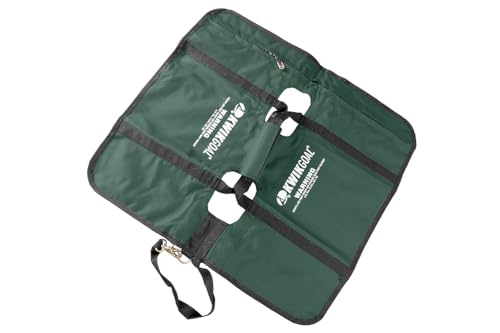
Best overall: the Kwik Goal Saddle Anchor Bag — it drapes across the rear ground bar so the weight stays put when the goal gets dragged, and it works on every surface including ones you cannot stake.
Budget pick: the SaKaguro Heavy Duty Soccer Goal Anchor Bag, a stated 50 lb capacity for a fraction of the price — good, as long as you actually fill it.
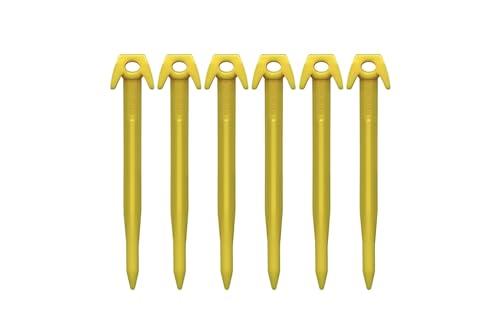
Best on grass, cheapest: the Kwik Goal Nylon Net Pegs, six 6-inch nylon pegs that will not rust into a lawn and are blunt underfoot.
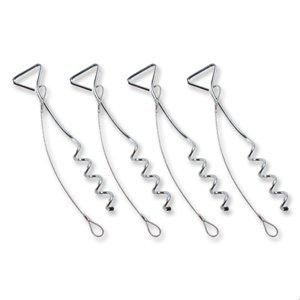
Strongest hold: the KwikGoal Portable Auger Anchors, which screw in and resist exactly the upward pull that tips a goal.
The rule that decides this page: the US CPSC recommends peg or stake anchors roughly ten inches long, driven in at angles. A lot of what is sold as a goal peg is six inches or less.
The mistake that makes an anchor useless: every sandbag here ships EMPTY. A 50 lb bag with 10 lbs of sand in it is a 10 lb anchor.
A soccer goal anchor is the cheapest safety equipment in this entire sport and the most widely skipped. The US Consumer Product Safety Commission has documented at least 21 deaths between 1979 and 1994 from movable soccer goals tipping over, and estimated around 120 injuries a year involving falling goals treated in US emergency rooms between 1989 and 1993. The hazard it identifies is not a freak gust — it is children climbing on a goal or hanging from the crossbar on a frame that is unanchored or not properly anchored.
So this page exists to answer one practical question that our how to anchor a backyard soccer goal guide deliberately does not: which product do you actually put in the cart. That page is the method — where the anchors go, how often to check them, what to do when the goal is down. This one is the shopping, and it is organized the way the decision actually works.
Your surface chooses the anchor, not your budget
There are only three mechanisms in this category, and two of them are unavailable to a lot of families. Work out which row you are in before you compare prices, because an anchor you cannot install is not a cheap anchor, it is a wasted one.
Three mechanisms, and the surface decides. A facility or HOA rule always overrules a row here, and almost every artificial turf field prohibits stakes outright.
Your surface
Mechanism that works
What to buy
Established grass over soil
Ground penetration, or weight
Pegs or stakes; sandbags also fine
Dry, hard-baked summer ground
Weight, mostly
Sandbags — pegs will not drive and will not hold
Artificial turf
Weight only
Sandbags. Never stake a turf field
Driveway, patio, blacktop
Weight only
Sandbags
A goal that lives in one spot all season
Screw-in
Auger anchors
Frozen winter ground
Weight only
Sandbags — nothing drives into frozen soil
Scroll the table sideways on a narrow screen.
That table is also why the top pick on this page is a sandbag rather than the strongest anchor on it. Weight works everywhere. Stakes work on perhaps half the surfaces American families actually have, and augers work on fewer still.
How we sorted these
Mechanism first, price second. The list is grouped by how the anchor holds — weight, ground penetration, screw-in — because that is the decision, and ranking a sandbag against a peg on price alone would be meaningless.
Measured against the CPSC's own guidance. The CPSC recommends at least two auger-style helical anchors on grass, or two to four peg or stake anchors roughly ten inches long driven in at angles, and sandbags or counterweights on hard surfaces where you cannot stake. We say where a product falls short of that and why it can still be the right buy.
Sold for soccer goals, not repurposed. Searches in this category return a wall of trampoline and tent stakes. Those can work, but a soccer-specific listing is more likely to get the head shape and length right, so the picks here are soccer products with one stated exception.
Published specification where it exists. Only one brand here publishes a manufacturer specification. Everything else is listing copy, and the picks say so rather than implying a datasheet exists.
A named budget pick. Anchoring only works if you buy enough of it, so the cheapest product that genuinely does the job gets called out rather than buried at the bottom.
Quick picks
Tap any row to jump to the full write-up. The price in each button is the one Amazon reported on the date stamped under it — tap through for today’s number, which is the only one that can be relied on.
#
Product
Best for
Surface
Fit notes
Price
1
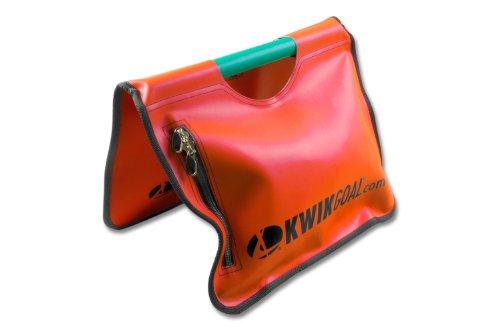
Kwik Goal Saddle Anchor BagThe anchor to buy if you want one that will outlive the goal, and the only one here with a manufacturer standing behind it.
U7–U8 rec, U9–U10, U11–U12, U13+ travel & club
Saddle-style sandbag, drapes over the back bar
Check your goal has a straight rear ground bar before ordering: saddle bags are designed to sit across one.
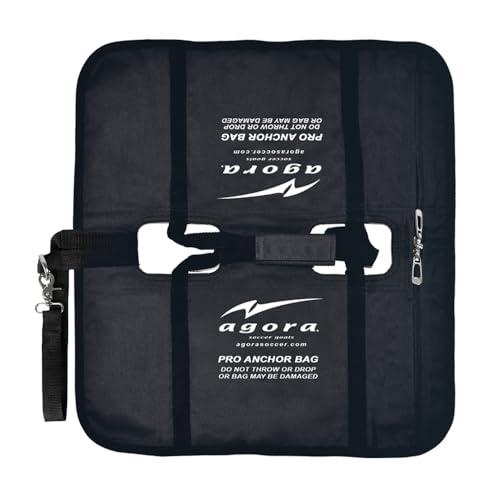
AGORA Pro Anchor Bag for Soccer GoalsA sensible middle option: a soccer-specific bag with a stated capacity, at a price that makes buying two or four realistic.
U9–U10, U11–U12, U13+ travel & club
Sandbag, stated 40 lb capacity
Plan on two bags for a 4 ft x 3 ft goal and four for a 6 ft x 4 ft one, filled rather than part-filled.
A toddler-height goal on a lawn needs holding still rather than anchoring against a teenager swinging on it, and nylon is the right material near small bare feet.
A teen-size frame left up all season is the case the CPSC guidance is really written about, and a screw-in auger is the class of anchor it names first.
The anchor to buy if you want one that will outlive the goal, and the only one here with a manufacturer standing behind it.
Best for
The default anchor for a portable goal that gets moved, U7 upward
Levels
U7–U8 rec · U9–U10 · U11–U12 · U13+ travel & club
Type / surface
Saddle-style sandbag, drapes over the back bar
How it fits
Check your goal has a straight rear ground bar before ordering: saddle bags are designed to sit across one. For a 4 ft x 3 ft backyard goal one bag per side is plenty; a 6 ft x 4 ft frame in wind wants two per side.
What we like
The saddle shape is the one that stays put when a goal is dragged a few feet, because the weight sits across the bar rather than clipped to it
Works on surfaces where stakes are impossible or banned — artificial turf, asphalt, a school blacktop
Kwik Goal is the only brand in this category with a published specification behind the product, which on a safety item is worth something
Where it falls short
Arrives empty, so the real cost includes a bag of play sand and the twenty minutes it takes to fill it
Costs roughly three times a marketplace sandbag that holds a similar weight, and the extra buys durability rather than more anchoring
A saddle bag only works on a goal with a rear ground bar to drape it over — it does nothing for a pop-up with a bent frame
Manufacturer’s published specs
Saddle design: the bag drapes over the goal's rear ground bar with weight hanging on both sides (Kwik Goal)
Sold empty — the buyer supplies the sand, which is how every sandbag anchor in this category is sold
From the manufacturer that supplies institutional goals, so it is built to the same durability brief rather than to a marketplace price
No tools and no ground penetration, so it works on turf, a driveway or a field you are not allowed to stake
These are the manufacturer’s own claims, not measurements we took.
A sensible middle option: a soccer-specific bag with a stated capacity, at a price that makes buying two or four realistic.
Best for
A mid-size backyard or club goal, U9 upward
Levels
U9–U10 · U11–U12 · U13+ travel & club
Type / surface
Sandbag, stated 40 lb capacity
How it fits
Plan on two bags for a 4 ft x 3 ft goal and four for a 6 ft x 4 ft one, filled rather than part-filled. A 40 lb bag filled to 15 lbs is a 15 lb anchor.
What we like
A stated capacity you can actually plan around, which several marketplace listings do not give
Sits in the middle of this category on price while still being sold specifically for soccer goals
No ground penetration, so it is legal on turf and on surfaces you cannot stake
Where it falls short
40 lbs is the capacity, not the contents — an unfilled bag anchors nothing, which is the most common complaint in this whole category
Single bag per order, so a goal needing two or four anchors gets expensive quickly
No published manufacturer specification behind the listing, so the capacity figure is the seller's
Manufacturer’s published specs
Listing states a fill capacity of up to 40 lbs of sand
Sand is explicitly not included — the listing says so in the title
Black, soccer-specific listing rather than a repurposed tent or trampoline weight
Sold as a single bag
These are the manufacturer’s own claims, not measurements we took.
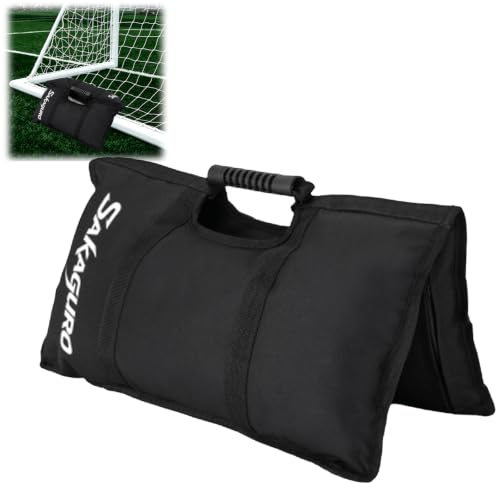
Heavy Duty Soccer Goal Anchor Bag Fill with Up to 50 Lbs
The budget pick, and a genuinely sound one as long as you treat the capacity as a target rather than a description.
Best for
The cheapest way to anchor a backyard goal properly
Levels
U6 — first kicks · U7–U8 rec · U9–U10 · U11–U12 · U13+ travel & club
Type / surface
Sandbag, stated 50 lb capacity
How it fits
Fill it. The commonest failure in this category is a 50 lb bag with 10 lbs of sand in it, which looks like an anchor and holds nothing. Two filled bags on a 4 ft x 3 ft goal is the sensible floor.
What we like
By far the cheapest route to a real anchor here, which matters because anchoring is only useful if you actually buy enough bags
The highest stated capacity on this page, so one bag can do the work of two cheaper ones if you fill it
A carry handle is a small thing that makes the difference between a bag that gets moved and one that gets left out all winter
Where it falls short
No manufacturer behind it, so the capacity and the water-resistance claim are the listing's own and cannot be checked against a spec sheet
A 50 lb bag of wet sand is more than a child can move, which is fine for safety and inconvenient on a lawn that needs mowing
Marketplace listings in this category change supplier and construction without changing the listing, so what arrives may not match a review from last year
Manufacturer’s published specs
Listing states a fill capacity of up to 50 lbs, with sand not included
Listing describes an ergonomic silicone handle and a water-resistant outer
Marketplace listing with no manufacturer specification behind it
Sold as a single bag
These are the manufacturer’s own claims, not measurements we took.
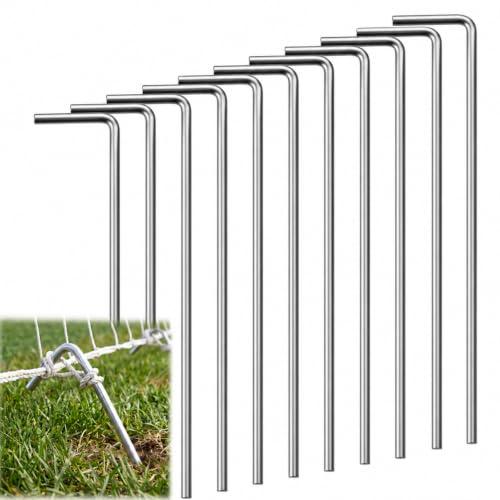
Hicarer 12 Pack Soccer Goal Net Pegs L-Shaped Lawn Anchors
The most stakes for the money and the strongest hold on hard ground, with a safety caveat that has to be respected.
Best for
A pair of goals, or a goal plus a net that keeps lifting
Levels
U6 — first kicks · U7–U8 rec · U9–U10 · U11–U12 · U13+ travel & club
Type / surface
L-shaped steel ground stakes, 12-pack
How it fits
Drive them fully home so no steel stands proud, and point the hook away from the playing area. If children play barefoot in the yard, use the nylon pegs or a sandbag instead.
What we like
Twelve stakes covers two goals, which is what most families actually own once small-sided games start
The L-shaped head holds a frame bar down rather than just passing through netting, which is the failure mode of a straight pin
Steel holds in dry, hard ground where a short nylon peg flexes and lifts
Where it falls short
Steel at ankle height on a surface children sprint across is a real hazard — these must go all the way in, and the L-head must face away from play
Rust-resistant is the listing's word, not a coating specification, so expect some staining after a wet season
Like every stake, worthless on turf, asphalt or frozen ground
Manufacturer’s published specs
Twelve L-shaped steel stakes per pack (listing)
Listing describes heavy-duty steel with a rust-resistant finish
L-shaped head, which hooks over a frame bar or a net cord rather than only pinning it
Marketplace listing with no manufacturer specification behind it
These are the manufacturer’s own claims, not measurements we took.
The cheap, sensible, grass-only answer — and nylon is the right material for something a child may land on.
Best for
Holding a net and a light frame down on grass, any age
Levels
U6 — first kicks · U7–U8 rec · U9–U10 · U11–U12 · U13+ travel & club
Type / surface
6-inch nylon pegs, set of 6
How it fits
Right for a pop-up or a light fold-up frame on established grass. For a heavier goal, or ground that is dry and hard, use these for the net and a sandbag for the frame.
What we like
Nylon is the safer material at ankle height on a surface children run on, and it does not rust into a lawn over a season
Six pegs is the right count for a small goal — four on the frame, two spare for the net
Cheapest route to holding a lightweight pop-up goal still on grass
Where it falls short
Six inches is short: in soft or sandy ground these pull out under a hard shot, and nylon flexes where steel would hold
Useless on anything you cannot push a peg into — no help at all on a driveway or on artificial turf
Stock on this listing has been thin, so check availability rather than assuming
Manufacturer’s published specs
Six nylon pegs, 6 inches long (Kwik Goal)
Nylon rather than steel, so they do not rust and are blunter underfoot
Designed for net and frame pegging on natural grass
From the only manufacturer in this category publishing a specification
These are the manufacturer’s own claims, not measurements we took.
Sandbags: the thing nobody tells you before you order
Every sandbag anchor on this page, and essentially every one sold anywhere, arrives empty. The weight in the listing title is a CAPACITY — the volume of sand the bag will hold — and the sand is your problem. Several of these listings say so in the title and it is still the single most common complaint in the category reviews.
Two consequences worth planning for. First, the real cost of a sandbag anchor is the bag plus a sack of play sand from a hardware store, and the sand is heavy enough that it is a car trip rather than a delivery. Second, and more important, a part-filled bag is a part-strength anchor. A 50 lb bag with a third of a sack in it looks exactly like an anchor and holds about seventeen pounds, which is nothing against a child hanging off a crossbar.
Our rule of thumb for a backyard frame: two filled bags for a 4 ft x 3 ft goal, four for a 6 ft x 4 ft one, placed at the rear so the weight opposes the direction the goal tips. If you are not sure what size frame you have, what size backyard soccer goal covers the measuring, and best soccer goals under $100 is where most backyard frames in that range live.
Pegs and stakes: read the length before you read the price
The CPSC's own guidance names peg or stake anchors of roughly ten inches, driven in at angles rather than straight down. That one figure disqualifies a surprising share of what is sold as a soccer goal peg, including one of the picks on this page, and it is worth understanding why before you decide it does not matter.
A short peg driven straight down resists sideways force reasonably and vertical pull-out badly, because all that holds it is friction along a few inches of soil. Tipping a goal is a vertical pull on the rear bar. Driving longer pegs at opposing angles turns that pull into a wedge against the soil instead, which is why the angle matters as much as the length.
So the short nylon pegs on this page are honestly described: they are the right material and the right price for holding a net and a light pop-up frame on grass, and they are not a substitute for proper anchoring on anything a child can climb. The twelve-pack of L-shaped steel stakes holds far better and brings a safety trade of its own — steel at ankle height on a surface children sprint across has to be driven fully home with the hook turned away from play.
The CPSC recommends at least two auger-style helical anchors on grass, or two to four peg or stake anchors roughly ten inches long driven at angles, and counterweights where staking is impossible.
Anchor type
Holds against
Works on
Watch out for
Saddle sandbag
Tipping, dragging
Everything
Needs a rear ground bar to sit across
Standard sandbag
Tipping
Everything
Arrives empty; must be filled properly
Short nylon peg
Net lift, light frames
Soft grass only
Well under the CPSC's 10-inch guidance
L-shaped steel stake
Frame lift on hard ground
Grass and dry soil
Trip and cut hazard if not driven flush
Screw-in auger
Vertical pull-out, which is what tips a goal
Soil deep enough to take it
Real work to install and remove
Scroll the table sideways on a narrow screen.
Anchors go at the REAR of the goal, flush to the ground. An anchor nobody can trip over is an anchor that stays installed.
How many anchors, and where they go
Anchors belong at the rear of the goal, because that is the direction it falls — forward, onto whoever pulled the crossbar. Two anchors is the working minimum on any goal a child can reach the crossbar of, and four is right for a 6 ft x 4 ft frame or anything larger. Set them flush so nobody trips, which is also what keeps them from being pulled out and left in the shed.
Two further points from the CPSC guidance that cost nothing and are skipped constantly. Check the anchors regularly rather than once: ground softens after rain, pegs work loose, and a goal is only as safe as its last check. And when the goal is not in use, remove the nets and lock or chain the frame to another goal or to a fixed structure, because an unused goal left standing in a yard is the one children climb unsupervised.
A note for anyone with a combination unit rather than a plain goal. A goal with a rebounder panel or a backstop catches far more wind than an open frame, so it wants the heavier end of whatever you buy — soccer goal vs rebounder covers which you should own, and best soccer rebounders for kids ranks the rebounders themselves.
What about pop-up goals?
Pop-ups are the lightest frames in the category and, counterintuitively, the ones most likely to move: a flexible frame under tension skates across a lawn under a hard shot and sails on a windy afternoon. They are also the frames least likely to kill anybody, because there is not enough mass in them.
So for a pop-up the honest requirement is pegging rather than anchoring, and the right purchase is a cheap replacement peg set — the pegs supplied with a pop-up bend or vanish within a season almost without exception. Best pop-up soccer goals is the roundup for the goals themselves, and if the frame has already bent, best replacement soccer goal nets covers the other part that fails first.
For most families reading this: two sandbags, filled, placed at the rear corners, and nothing else. It works on every surface, it survives being moved, it requires no tools, and it does not add a steel spike to a lawn children run on barefoot in July. Buy the budget bags if money is tight and the Kwik Goal saddle bag if you want one purchase that outlives the goal.
Buy stakes instead only if your goal lives on established grass and never moves to a hard surface, and buy augers only if the frame is large and stays in one place all season. And whatever you buy, read the method guide once: how to anchor a backyard soccer goal has the CPSC figures in full and the five habits that keep an anchor doing its job after the first month.
Common questions
What is the best way to anchor a soccer goal?+
For a backyard, two filled sandbags at the rear corners of the frame. Weight is the only mechanism that works on every surface, it survives the goal being moved, and it adds no spike to a lawn. On established grass you can use peg or stake anchors instead, and the CPSC's own guidance names at least two auger-style helical anchors or two to four pegs roughly ten inches long driven in at angles.
Do you really need to anchor a backyard soccer goal?+
Yes, and the figures are the reason. The US Consumer Product Safety Commission has documented at least 21 deaths between 1979 and 1994 from movable soccer goals tipping over, and estimated around 120 injuries a year treated in US emergency rooms between 1989 and 1993. The hazard it identifies is children climbing on a goal or hanging from the crossbar on a frame that is unanchored or improperly anchored — which is a backyard scenario, not a stadium one.
How much weight do you need to anchor a soccer goal?+
As a working rule for backyard frames: two filled bags for a 4 ft x 3 ft goal and four for a 6 ft x 4 ft one, at the rear of the frame. The number on a sandbag listing is a capacity, not contents — these ship empty and you supply the sand — so a 50 lb bag that is a third full is a seventeen-pound anchor. Fill them properly or the purchase does nothing.
Can you anchor a soccer goal on artificial turf?+
With weight only. Stakes and augers are prohibited on essentially every artificial surface because they puncture the backing and the drainage layer beneath it, and most facilities post that rule explicitly. Sandbags or counterweights are the CPSC's own recommendation for surfaces that cannot be staked, which also covers driveways, patios and blacktop.
How long should soccer goal stakes be?+
The CPSC's guidance names peg or stake anchors of roughly ten inches, driven in at angles rather than straight down. A lot of what is sold as a goal peg is six inches or shorter. Short pegs are fine for holding a net and a light pop-up frame still on soft grass, and they are not proper anchoring for a frame a child can climb — length and angle together are what resist the vertical pull that tips a goal.
Are sandbags or stakes better for soccer goals?+
Sandbags, for most families. They work on every surface, they move with the goal, they need no tools and they add nothing sharp to a lawn. Stakes hold better on established grass and cost less, but they are useless on turf, hard ground, blacktop or frozen soil, and steel stakes left standing proud are a genuine cut hazard at ankle height. If your goal never leaves soft grass, stakes are the cheaper answer.
Do pop-up soccer goals need anchors?+
They need pegging rather than anchoring. A pop-up frame is light enough that it is unlikely to injure anybody by falling, but a flexible frame under tension skates across a lawn under a hard shot and blows away in wind. Most pop-ups ship with pegs that bend or go missing in the first season, so a cheap replacement peg set is the sensible purchase — and a spare set in the bag is better still.
What do you do with a soccer goal when it is not in use?+
The CPSC's recommendation is to remove the nets and lock or chain the goal to another goal or to a fixed structure such as a permanent fence. An unused goal left standing with a net on it is the one children climb when no adult is watching, which is precisely the scenario behind the tipover figures. In a backyard, laying a light frame flat achieves the same thing.
Sources
US CPSC — Guidelines for Movable Soccer Goals — Tipover fatality and injury figures, and the CPSC's specific anchoring, counterweighting and storage recommendations. The source for every safety figure on the goal pages.
Kwik Goal — about the company — Kwik Goal's own account of itself and the source for every Kwik Goal brand claim on the goal-brands page: the idea originating on Christmas Eve 1980 with the Caruso brothers building the first prototype afterward, "Since 1981" as the start of its rise to market leadership, its description of itself as the leading supplier of soccer goals, field equipment, training equipment and seating for domestic and international markets and the #1 soccer goal supplier in North America, its statement that it is Technical Partner and the Official Goal of U.S. Soccer, and its dealer search and catalog/pricing request pages, which are the trade channel referred to there.
GoSports Portable Pop Up Soccer Goals Set (pair) — The retailer listing for the GoSports pop-up pair and the source for its published figures: two collapsible goals plus six training cones, a carrying case and both plastic and metal stakes; a 3 lb set weight; premium nylon fabric, netting and a metal frame; high-visibility reflective fabric for low-light play; goals that set up and take down in seconds with no assembly required; and the listing's own note that they can be secured to grass or taped to hard courts, which is the detail that makes the pair usable on an indoor floor. Confirmed in stock when checked.