Heads up: we earn a commission if you buy through our links, at no extra cost to you. It never changes which product we recommend — here’s how that works.
The short answer
Measure the frame in inches first. Replacement nets are sold by rounded feet and a net an inch short will not tension.
If the goal is a brand you recognize, buy that brand's net. Fit is the whole risk; Franklin's 4 x 6 with bungees is the easiest swap on a Franklin goal.
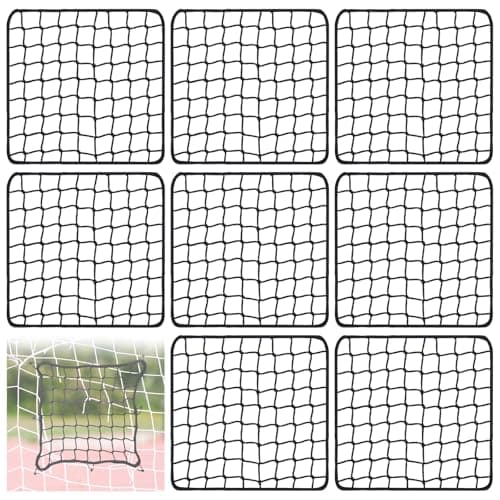
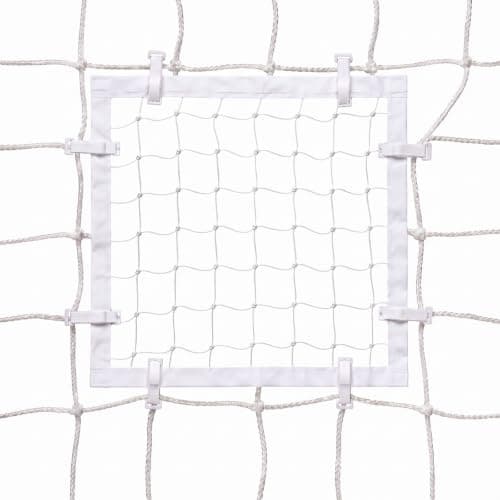
One hole is a repair, not a replacement. A 3 x 3 patch or an 8-patch kit with zip ties costs a fraction of a net.
For a goal that stays up all year:Kwik Goal's 3 mm net — the only one here with a published cord diameter (3 mm), mesh size (3.5 in / 90 mm) and UV treatment.
Watch the mesh. 120 mm mesh lets a size 1 or 2 mini ball straight through.
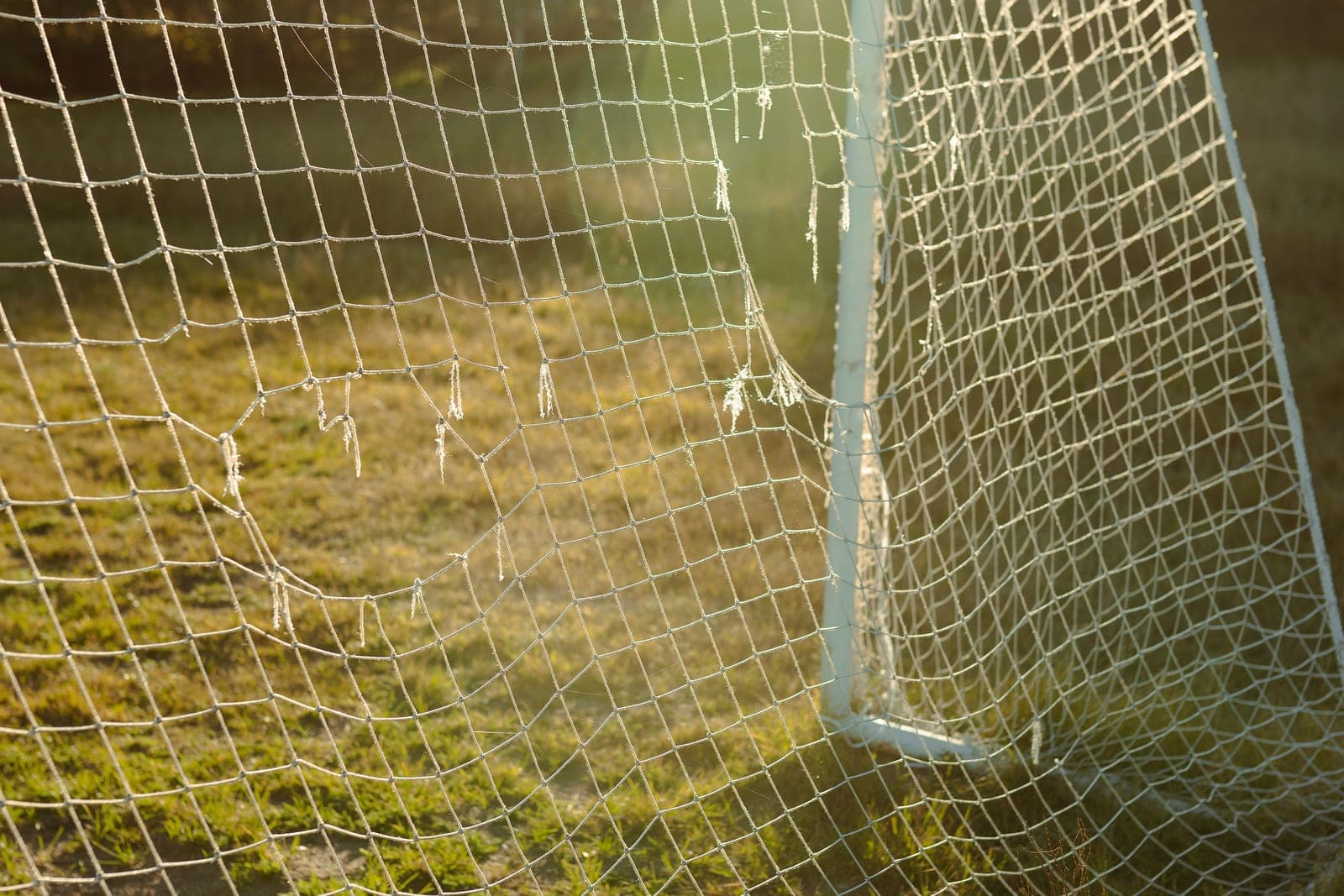
Everything about a backyard soccer goal is built to last except the net. The frame is steel or fiberglass and survives years of weather; the netting takes every shot, sits in UV all summer, freezes in winter and gets dragged across a lawn by whoever mows. It is the consumable part, and when it goes the goal looks finished when it is not.
Replacing it costs anywhere from the price of a pair of socks to the price of a cheap ball, depending on what you own and how long you want it to last. The only way to get that wrong is on fit, which is exactly where most of this page goes.
Before anything else: measure, in inches
Replacement netting is advertised in rounded feet — 4 x 6, 6 x 4, 12 x 6 — and goal makers round differently. A listing that says 6 x 4 might mean a 72 x 48 in opening, and your goal might be 70 x 46. An inch of mismatch is the difference between a net that tensions and a net that sags in the middle so the ball rolls under it.
Measure the opening, post to post and ground to crossbar, in inches. Not the net you are replacing — it has stretched.
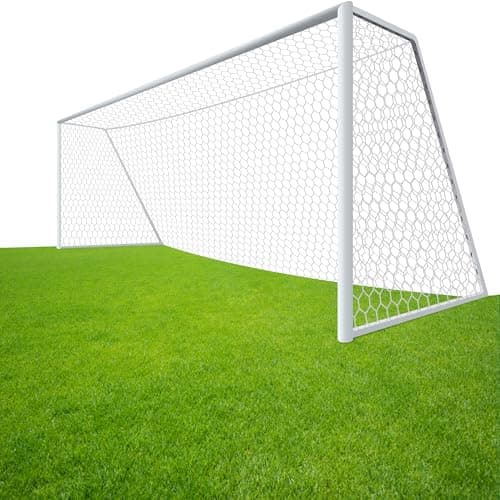
Measure the depth, top and bottom, if your goal has any. A real goal is a box: Kwik Goal specifies its 4 x 6 net as a 2 ft top depth and a 4 ft bottom depth. A flat-backed pop-up has neither, and a boxed net will not hang right on one.
Find the goal's own listed size from the manufacturer and compare it against your tape. If they disagree, trust the tape.
Check how the old net attached — bungees, hook-and-loop straps, zip ties or laced twine. Most replacement nets include nothing, and a net with no way to attach it is not usable.
The two specs that actually predict how long a net lasts
Netting listings are mostly adjectives. Two numbers are worth hunting for, and most listings in this category publish neither.
Kwik Goal is the only net on this page that publishes a cord diameter, a mesh size and a UV treatment together: High Tenacity Polypropylene, 3 mm cord, 3.5 in (90 mm) mesh, UV-treated, knotless solid braid. Everything else here states some of that or none of it.
Spec
What it tells you
What good looks like
Cord diameter
How much material takes the shot — the best single predictor of life
2.5 mm backyard, 3 mm for a goal that stays up
Mesh size
Whether small balls pass through, and how the net looks
90 mm (3.5 in) for mixed ages; 120 mm is big
Material
UV resistance, mostly
UV-treated PE or HTPP; plain nylon degrades faster outdoors
Ply count
A weave description, not a thickness
Useful only when comparing one brand to itself
'Heavy duty'
Nothing
—
Scroll the table sideways on a narrow screen.
The mesh figure matters more in a backyard than on a field, for one reason nobody warns about: a 120 mm mesh is roughly 4.7 in square, and a size 1 or size 2 mini ball will go straight through it. If a younger sibling plays in the same goal with a mini, buy the smaller mesh. The mini ball picks explain how small those balls actually are.
Repair first, replace second
Most backyard nets that look finished are not. Walk up to one and there are usually two or three specific failures rather than general decay, and they have different fixes.
A patch on netting that is already brittle buys weeks rather than seasons, which is the one case where repair is the wrong call. Brittleness is easy to test: pull two strands apart with your fingers and see whether they give.
What failed
The fix
Rough cost
A hole where shots land
A 3 x 3 patch, cut to size
Low
Several small holes
An 8-patch kit with zip ties
Lowest
The net has pulled off the frame
Repair twine, laced back on
Low, plus a patient half hour
Net is brittle and tears when handled
A new net — UV has finished it
Moderate
You moved to a bigger goal
A new net in the new size
Moderate
Scroll the table sideways on a narrow screen.
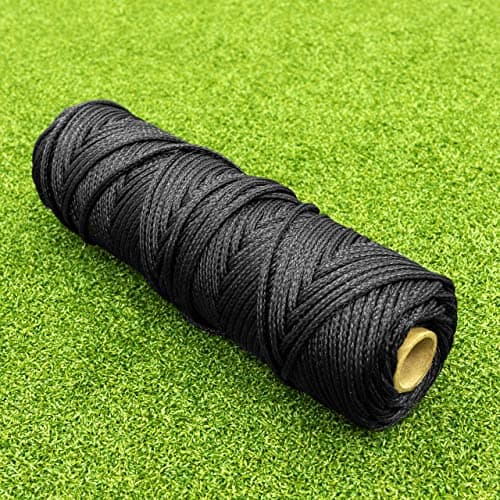
The attachment failure is the most common and the most over-treated. Nets come off frames at the ties, not in the netting, and a roll of 2 mm netting twine re-laces a net properly for less than a quarter of a replacement. Zip ties do the same job faster and worse — they go brittle in UV and snap in cold, and under tension they saw through the netting they are holding. For a backyard goal that is an acceptable trade; for a goal staying up all year it is not.
Try these before buying a net
HKOYTIUP
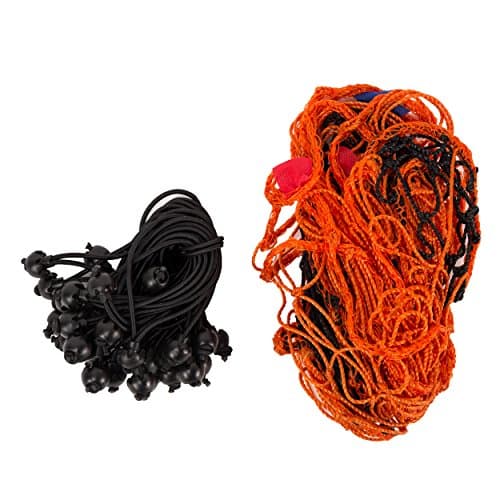
8 PCS Sports Net Repair Kits 8x8 Inch Net Replacement Patches with 100 PCS Nylon Zip Ties
A few dollars of net life extension, and the kit to own before you need it. Zip-tie repairs are temporary by nature, and that is fine for a backyard goal.
At this age the goal is almost certainly a 4 x 6 or smaller pop-up, and the manufacturer's own net with bungees is the swap least likely to go wrong. Bungees also mean it comes off for winter without cutting anything.
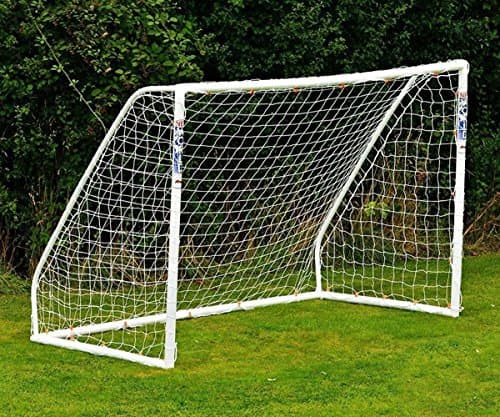
Regpre Soccer Goal Net Replacement 6x4, Set of 2 White Nets
Two nets for less than one branded net, which is the right economics for a goal that will be outgrown. Check the mesh if a toddler with a mini ball shares the goal — at 120 mm the mini goes through.
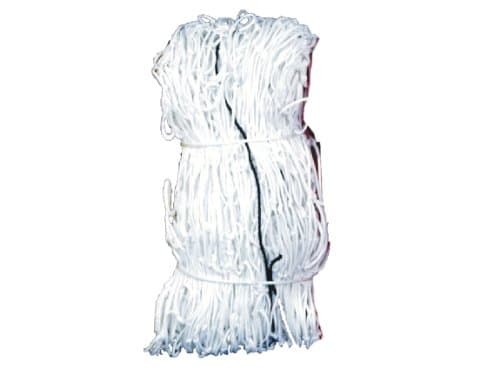
Soccer Goal Net Football Polyethylene Training Post Nets - 6 x 4FT - 2.5mm
A stated 2.5 mm cord at a backyard price, which is the sensible middle once the goal is getting shot at properly. Polyethylene is the right material for something living outdoors.
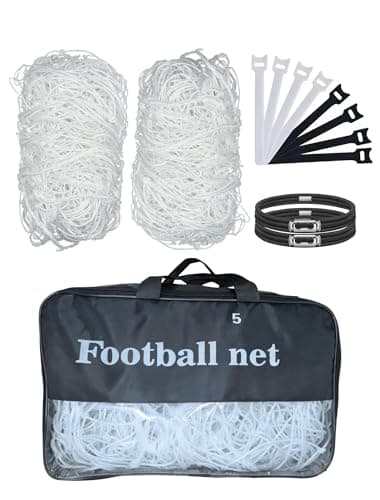
Soccer Goal Net Replacement 2-Pack, 10 x 6.5 FT PE Soccer Net
The age the goals get big, and the size most replacement netting ignores. Chosen because the 30 hook-and-loop straps are in the box — most nets this size include no attachment at all.
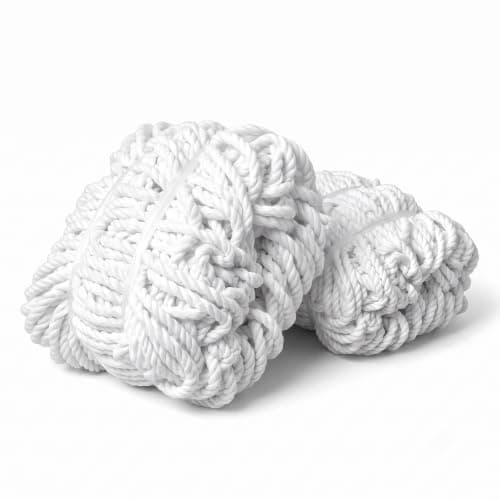
Kwik Goal 3mm Twisted Soccer Net, (4-Feet H X 6 W X 2-Feet D X 4-Feet B), White
If the goal is staying up, buy the net with published specs. 3 mm HTPP, UV-treated, 90 mm mesh, and sized as a real boxed goal rather than a flat rectangle. Check your frame's depth before ordering.
Tap any row to jump to the full write-up. The price in each button is the one Amazon reported on the date stamped under it — tap through for today’s number, which is the only one that can be relied on.
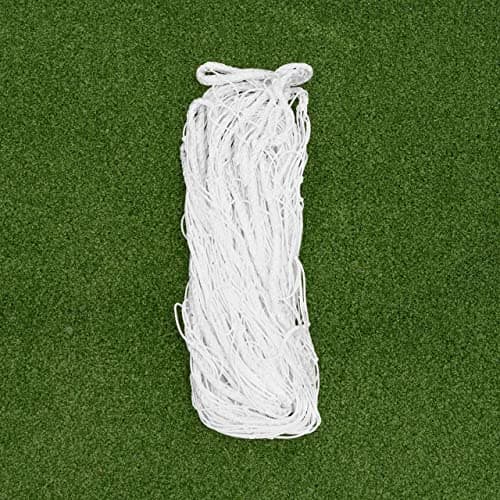
FORZA 6ft x 4ft Replacement Soccer Net [Single]The pick when the goal is in constant use and you want a net from a goal maker — you are paying for the brand's frame knowledge, not for stated specs.
U7–U8 rec, U9–U10, U11–U12
6 x 4 ft replacement net
The same rule applies as for any net: measure the frame, in both dimensions, and read the goal's listed size rather than guessing.
The 72 x 48 in figure is the number to check, not '6x4' — goal makers round differently and an inch of mismatch is the difference between a tensioned net and a sagging one..
Measure the frame in inches rather than trusting the foot figure, and check the depth your goal needs — a flat net on a deep-boxed frame leaves the back of the goal open..
Product photos come from each item’s current Amazon listing.
The level column above is a proxy for goal size rather than a recommendation about a player, because that is how netting is bought. If you are unsure which size goal you have or should have, what size backyard soccer goal has the sizing by age and by yard.
1. Franklin Sports
Franklin Sports 4' x 6' Replacement Net & Bungees
The right first choice if you own a Franklin goal, and the whole reason is fit rather than fabric.
Best for
Anyone who already owns a Franklin backyard goal
Levels
U6 — first kicks · U7–U8 rec · U9–U10 · U11–U12
Type / surface
4 x 6 ft replacement net, bungee attachment
How it fits
Measure your frame before ordering, in both dimensions, and compare against the goal's own listing rather than eyeballing it. Replacement netting is sold by frame size and a net an inch short will not tension.
What we like
It is the manufacturer's own part, which removes the one real risk in buying replacement netting — a net whose attachment points do not line up with your frame
Bungees rather than ties means it goes on in a few minutes and comes off for winter without cutting anything
Franklin states the ply count, which is more than most generic nets do and the number that tells you how a net will hold up to repeated shooting
Where it falls short
Only useful at 4 x 6, so it is the wrong purchase for a 6 x 4 pop-up measured the other way round or anything bigger
Bungees perish in sun faster than the net does, so plan on replacing them before the netting
It is a single net at a price where generic brands sell a pair; you are paying for the fit
Manufacturer’s published specs
Fits a 4 ft x 6 ft goal (Franklin Sports)
Heavy-duty 60-ply weave (Franklin Sports)
Bungee attachment included (Franklin Sports)
Listed as all-weather durable (Franklin Sports)
These are the manufacturer’s own claims, not measurements we took.
Kwik Goal 3mm Twisted Soccer Net, (4-Feet H X 6 W X 2-Feet D X 4-Feet B), White
The buy-it-once net for a goal that is staying up, and overkill for anything portable. It is also the only one here whose specs you can actually check.
Best for
A permanent backyard goal, or a club replacing netting properly
Levels
U7–U8 rec · U9–U10 · U11–U12 · U13+ travel & club
Type / surface
4 H x 6 W x 2 D x 4 B ft net, 3 mm twisted
How it fits
This is the net where measuring matters most. The 2 ft top depth and 4 ft bottom depth describe a real goal's box shape; a flat-backed pop-up has neither, and the net will not hang correctly on one.
What we like
The only net here that publishes a cord diameter, a mesh size and a full four-dimension size, which is the specification language clubs buy in and the reason you can tell whether it fits
UV-treated HTPP rather than unspecified polyethylene, and UV is what actually kills a net that lives outdoors all year
3.5 in (90 mm) mesh is small enough that a size 3 ball cannot pass through it, which the 120 mm backyard nets cannot promise
Kwik Goal is the brand most US clubs already use for field equipment, so this is the net on the goals your kid plays on at the park
Where it falls short
It costs more than three generic nets, which is hard to justify on a pop-up goal that will be outgrown in two seasons
Heavier netting needs a frame that can take the tension — on a flexible fiberglass pop-up it will pull the uprights inward
The four-dimension size has to match your frame's depth as well as its face, which rules out a lot of backyard goals
Manufacturer’s published specs
High Tenacity Polypropylene (HTPP), UV-treated to resist damage from sunlight (Kwik Goal)
3 mm cord, 3.5 in (90 mm) mesh (Kwik Goal)
4 ft high, 6 ft wide, 2 ft top depth, 4 ft bottom depth (Kwik Goal)
The pick when the goal is in constant use and you want a net from a goal maker — you are paying for the brand's frame knowledge, not for stated specs.
Best for
A 6 x 4 garden goal that gets shot at every day
Levels
U7–U8 rec · U9–U10 · U11–U12
Type / surface
6 x 4 ft replacement net
How it fits
The same rule applies as for any net: measure the frame, in both dimensions, and read the goal's listed size rather than guessing. A 6 x 4 net on a 6 x 3 frame sags in the middle and the ball goes under it.
What we like
FORZA builds goals as its main business, so the netting is specified against real frames rather than being a generic rectangle with an optimistic size on it
6 x 4 is the single most common backyard goal size in the US, which makes this the net most people are actually looking for
Available as a pair, which is the right buy if you have two goals and will eventually need both
Where it falls short
It is the most expensive single 6 x 4 net on this list, and a generic pair costs less than this one net
No ply count, mesh size or material stated on the listing, so there is nothing to compare against the nets that do publish those
No ties or bungees stated as included, so check what your frame needs before ordering
Manufacturer’s published specs
6 ft x 4 ft, sold single or as a pair (FORZA)
Sold specifically as a replacement net for kids' garden goals (FORZA)
These are the manufacturer’s own claims, not measurements we took.
Regpre Soccer Goal Net Replacement 6x4, Set of 2 White Nets
The value pick, and the mesh size is the catch: fine for size 3 and up, wrong if a toddler with a mini ball shares the goal.
Best for
Two goals, or one goal and a spare in the garage
Levels
U7–U8 rec · U9–U10 · U11–U12
Type / surface
6 x 4 ft nets, two per pack
How it fits
The 72 x 48 in figure is the number to check, not '6x4' — goal makers round differently and an inch of mismatch is the difference between a tensioned net and a sagging one.
What we like
Two nets for less than one branded net, which is the right economics for backyard netting that gets replaced rather than repaired
Publishes both the frame fit in inches and the mesh size, so you can check it against your goal instead of trusting a rounded foot measurement
A spare net in the garage means a shredded net is a ten-minute fix rather than a two-day wait
Where it falls short
No ties and no bungees in the box, so you need zip ties or cord before it is usable
120 mm is a large mesh — a size 1 or size 2 mini ball will go straight through it, which matters if younger siblings use the goal
No cord diameter stated, so there is no way to judge durability against the nets that publish one
Manufacturer’s published specs
6 x 4 ft, fits a 72 x 48 in frame (Regpre)
120 mm mesh (Regpre)
Two nets per pack (Regpre)
No posts or ties included (Regpre)
These are the manufacturer’s own claims, not measurements we took.
Soccer Goal Net Football Polyethylene Training Post Nets - 6 x 4FT - 2.5mm
The sensible middle: a stated cord diameter at a backyard price, bought instead of a pair precisely because the cord is heavier.
Best for
A middle option between a generic net and a club one
Levels
U7–U8 rec · U9–U10 · U11–U12
Type / surface
6 x 4 ft net, 2.5 mm polyethylene
How it fits
Measure the frame in inches rather than trusting the foot figure, and check the depth your goal needs — a flat net on a deep-boxed frame leaves the back of the goal open.
What we like
2.5 mm cord is stated, which puts it between the unspecified budget nets and Kwik Goal's 3 mm — and cord diameter is the one spec worth comparing
Polyethylene is the right material for a net living outdoors; it handles UV better than nylon, which is why most field netting is PE
Half the price of a goal maker's net with a published cord diameter, which the goal makers' own listings do not give you
Where it falls short
A single net at a price where Regpre sells two, so you are paying for the cord spec rather than for quantity
No ties included and no attachment method stated, so budget for zip ties
Boshen is a generic seller rather than a soccer brand; the spec is checkable but there is no track record behind it
Manufacturer’s published specs
6 x 4 ft (Boshen)
2.5 mm cord (Boshen)
Polyethylene (Boshen)
Post not included (Boshen)
These are the manufacturer’s own claims, not measurements we took.
Soccer Goal Net Replacement 2-Pack, 10 x 6.5 FT PE Soccer Net
The pick for a larger goal, chosen because the straps are in the box — the netting spec is unstated, which is the trade.
Best for
A big semi-permanent goal, U11 and up
Levels
U11–U12 · U13+ travel & club
Type / surface
10 x 6.5 ft nets, two per pack, PE
How it fits
Measure before ordering and note that 6.5 ft is not 6 ft. Hook-and-loop attachment gives you a little tolerance a tied net does not, but not a foot of it.
What we like
The only net here that includes its own attachment hardware — 30 hook-and-loop straps means it goes on without a trip to the hardware store
10 x 6.5 covers the larger backyard goals that most replacement netting ignores, which is where a shredded net usually leaves you stuck
Two nets plus a carry bag, so the winter takedown has somewhere to go instead of a bin bag
Where it falls short
No cord diameter or mesh size stated, so there is no way to judge the netting itself against the specified options
Hook-and-loop straps are the first thing to fail outdoors once they fill with grass and grit
10 x 6.5 is an unusual size — confirm it against your frame rather than assuming it will stretch to a 10 x 6 or an 8 x 6
Manufacturer’s published specs
10 x 6.5 ft, two nets per pack (Keluwa)
Polyethylene (Keluwa)
30 hook-and-loop straps and 2 elastic storage cords included (Keluwa)
Carry bag included, no frame (Keluwa)
These are the manufacturer’s own claims, not measurements we took.
This is the real decision on the page, and it comes down to what you are paying for.
A goal maker's net — Franklin's for a Franklin goal, FORZA's for a FORZA goal — costs more and sometimes publishes less. What you are buying is fit: the attachment points line up, the depth is right, and somebody has already checked it against that frame. On a goal you intend to keep, that is worth the premium, because the failure mode of a generic net is not that it wears out early but that it never tensions properly in the first place.
A generic net costs a third as much and sometimes publishes more — the Boshen net states a 2.5 mm cord where FORZA's listing states nothing. What you give up is the guarantee of fit and, usually, the ties. If you have measured carefully and you have zip ties or twine, a generic net on a backyard goal is a perfectly sensible purchase, and a pair of them is cheaper than one branded one.
Two goals in a yard change the math. Pop-ups and rebounders are usually sold as pairs, and nets fail at roughly the same rate, so buying a two-pack means the second failure costs nothing and takes ten minutes. If you own one goal, a spare net in the garage does the same thing.
Fit the new net safely
Changing a net is the moment a goal is unanchored, half-dismantled and leaning against something, and the CPSC's published guidance on movable goals exists because of what happens next. The relevant parts of it, plainly:
Anchor the goal at the rear, with the anchors flush to the ground — auger-style helical anchors (at least two), peg or stake anchors driven in at an angle, or sandbags and counterweights on a hard surface. Re-anchor it before anybody uses it again.
When the goal is not in use, remove the nets and lock or chain it to another goal or a fixed structure. That is also the right way to store a net over winter, and a net out of UV lasts materially longer.
Never let a child climb the frame while you work on it. A net-change is exactly when a goal is least stable, and an unanchored goal with weight on the crossbar is the specific hazard the CPSC's guidance is written about.
Two practical notes on the fitting itself. Lace or strap from the center of each edge outward rather than from a corner, or the net ends up tensioned unevenly and pulls to one side. And on a flexible pop-up frame, be careful about upgrading to heavier netting than the goal shipped with — a 3 mm net will pull fiberglass uprights inward, which is why the club-grade option on this page is the wrong buy for a portable goal.
When the net is not the problem
Sometimes replacing the netting is money spent on the wrong thing. Three cases worth recognizing before you order:
The frame is bent. A net will not straighten it and heavier netting makes it worse. If the uprights lean, that is a goal nearing the end rather than a net nearing the end.
The problem is where the missed shots go, not where the net is. A net does nothing about shots that clear the goal. That is a backstop question — soccer goal vs rebounder covers the combined units, and a backstop system is the purchase that actually makes a small yard usable.
The goal is too small for the player now. A U12 shooting at a 4 x 3 pop-up is not getting much from it, and a new net makes a goal they have outgrown last longer. Best backyard soccer goals for teens is the better spend.
And one honest overall note: a replacement net on a goal that gets used every day is a recurring purchase, not a one-off. Budget for one every year or two on a backyard goal left out in the weather, or buy the UV-treated option once and take the net inside over winter. The second approach costs more on day one and less across five years.
Common questions
Can you buy just the net for a soccer goal?+
Yes — replacement netting is sold separately for every common goal size, from 4 x 6 backyard goals to 24 x 8 full-size. Measure the frame opening in inches before ordering rather than trusting the rounded foot figure, and check how the old net attached, because most replacement nets include no ties, bungees or straps at all.
What size replacement soccer net do I need?+
Measure the opening post to post and ground to crossbar, in inches, and measure the depth at the top and bottom if your goal has any. Compare that against the net listing's inch figures rather than its headline size — listings round differently and swap width and height order, and a net an inch short will not tension.
Is it cheaper to repair a soccer net or replace it?+
Repair, usually by a wide margin. A hole where shots land takes a 3 x 3 patch for about a fifth of the price of a net, and a net that has pulled off its frame takes a roll of repair twine. The exception is netting that has gone brittle in UV: if two strands pull apart in your fingers, a patch buys weeks and a new net is the right call.
What is the best material for a soccer goal net?+
For a net living outdoors, UV-treated polyethylene or high-tenacity polypropylene. Kwik Goal specifies HTPP, UV-treated to resist damage from sunlight, for its 3 mm nets, and that treatment is what actually determines how many seasons a net survives. Plain untreated nylon degrades faster in sun, which is why most field netting is not nylon.
What mesh size should a backyard soccer net be?+
Around 90 mm (3.5 in) if younger children share the goal, because a 120 mm mesh is roughly 4.7 in square and a size 1 or size 2 mini ball goes straight through it. For a goal only used with size 3 balls and up, 120 mm is fine and is what most budget backyard nets use.
Should I take my soccer goal net down in winter?+
Yes, and the CPSC's guidance on movable goals says the same for a different reason: remove the nets and lock or chain the goal whenever it is not in use, because an unattended goal is what children climb on. Storing the net out of UV also adds meaningfully to its life, which makes the safety step and the frugal step the same step.
Sources
Kwik Goal 3mm twisted soccer net — published specification — The retailer listing carrying Kwik Goal's own specification for the 3 mm net in the 4 ft x 6 ft size, and the source for every figure quoted about it: High Tenacity Polypropylene (HTPP), 3 mm cord, 3.5 in (90 mm) mesh, 4 ft x 6 ft with a 2 ft top depth and a 4 ft bottom depth, UV-treated to resist damage from sunlight, knotless solid braid rope, and a construction that meets playground safety entrapment prevention requirements. This is the only net on the replacement-net page with a published cord diameter and mesh size.
US CPSC — Guidelines for Movable Soccer Goals — Tipover fatality and injury figures, and the CPSC's specific anchoring, counterweighting and storage recommendations. The source for every safety figure on the goal pages.