Heads up: we earn a commission if you buy through our links, at no extra cost to you. It never changes which product we recommend — here’s how that works.
The short answer
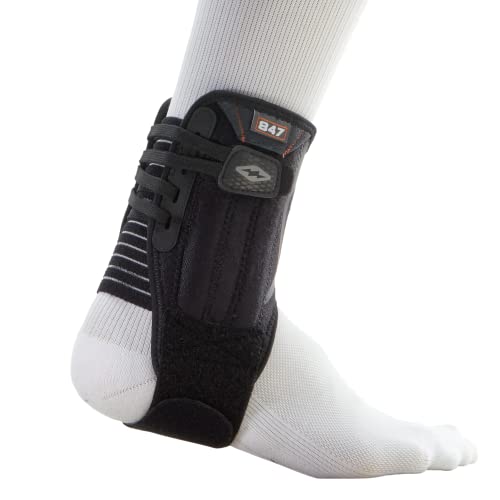
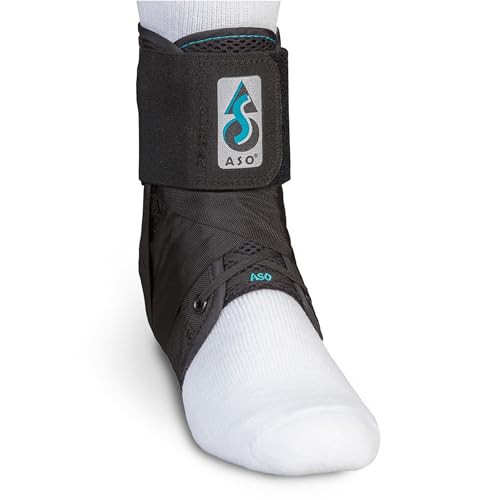
The type to buy is a lace-up brace with stabilizing straps — an athletic trainer at Children's Hospital Colorado names the ASO lace-up as the gold standard and describes it as adjustable for injury — which makes the Med Spec ASO Ankle Stabilizer in XS the pick here. The budget pick is the BraceUP Kids Ankle Support, the cheapest real adjustable support on this site. The Shock Doctor Ankle Stabilizer in Small is the same lace-up construction from a sports brand for less. Prices come from the live price layer with an as-of date under each button.
This page is a shopping page, not medical advice, and we are not qualified to give any. Every clinical statement below is quoted from a published children's hospital sports-medicine article and attributed to it. A new ankle injury, or one that keeps coming back, is a conversation with a pediatrician, sports medicine doctor or physical therapist — not a purchase. One disclosure about that source: it is written around basketball rather than soccer, and it does not discuss wearing a brace inside a cleat.
Start with the thing most roundups in this category skip: not every young player needs one. The cited guidance is blunt about it — not all athletes need an ankle brace, but those that do usually need external ankle support for a new or a recurring injury. The same article adds that braces alone do not prevent ankle injuries.
That is the honest frame for this whole page. If your player has never turned an ankle, the money is better spent on cleats that fit. If they have turned one, or keep turning the same one, this is a cheap and well-supported thing to buy — the same article calls braces a proven, low-risk way to prevent recurrent sprains.
The three types, and what the guidance says about each
The middle column is the article's own wording where it has one, and says so where it does not. Nothing in this table is our own testing — this site does not lab-test and publishes no scores.
Type
What it does
What the cited guidance says
Pick
Lace-up brace with straps
Laces plus straps around the heel and over the foot — restricts motion most
The type the article's athletic trainer suggests, called the gold standard and adjustable for injury
Med Spec ASO (XS), or Shock Doctor Stabilizer (Small)
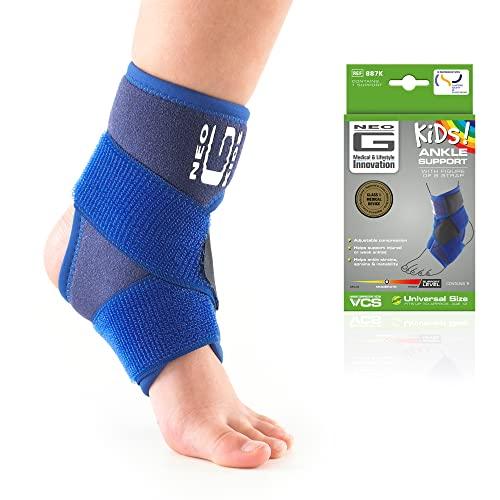
Adjustable strap support
Compression plus straps, no laces — restricts motion moderately
Not named in the article, which says only that there are many types of brace on the market
Neo-G Kids, or BraceUP Kids
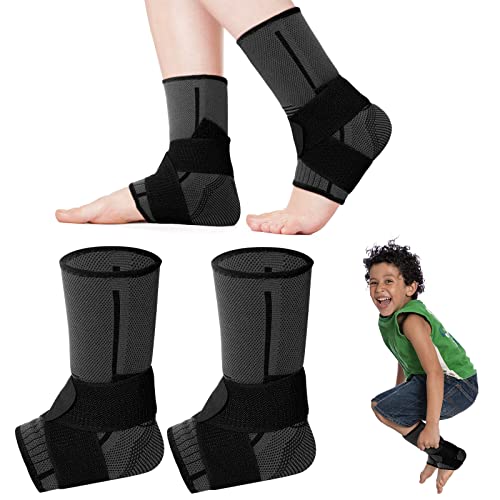
Compression sleeve
Elastic sleeve, no straps or laces — restricts no motion
"Does not actively support the ankle", and "ankle sleeves shouldn't be used instead of braces during athletic activity"
Tarpop Kids sleeves — for warmth and feel only
Scroll the table sideways on a narrow screen.
The reason the type matters more than the brand is in that bottom row. A compression sleeve is the most comfortable thing in this category, it is the cheapest, it is the only one that disappears inside a cleat, and on the cited guidance it does not do the job at all during play. It is a genuinely useful product for warmth and for how an ankle feels on a cold morning. It is not support.
How we sorted these
Type before brand. The picks are ordered by how much motion each one restricts, because that is the variable the published guidance actually discusses.
Child sizing where it exists. Most of this category is adult sports or medical-supply kit with a small size at the bottom of the range. The two products built on children's sizing are called out as such, and where a pick is an adult Small we say so.
Fits in a cleat, or we say it does not. A lace-up brace is bulky and a cleat has very little internal volume — that is a structural fact about the shoe, not a measurement we took, and it changes what you should buy.
Availability verified before featuring. All five were confirmed through a live catalog check on 2026-11-27 with a buyable offer and an in-stock message.
No sprain grades, no treatment claims. We do not match a product to an injury severity. No product here is described as treating anything, because that is not a judgment a gear site gets to make.
A named budget pick, because the same guidance says to replace a brace every sports season — which makes price a recurring cost rather than a one-off.
Quick picks
Tap any row to jump to the full write-up. The price in each button is the one Amazon reported on the date stamped under it — tap through for today’s number, which is the only one that can be relied on.
#
Product
Best for
Surface
Fit notes
Price
1
Med Spec ASO Ankle Stabilizer Lace-Up Brace (XS)The construction clinicians point to, at a price that is still well under a pair of cleats — and the bulkiest thing here, so plan the cleat around it.
U11–U12, U13+ travel & club
Lace-up brace with figure-8 stabilizing straps
Size by the ankle, not by age, and re-check after any swelling has gone down — the cited hospital guidance notes swelling changes the size needed and says to evaluate whether a different size suits better once healed.
Product photos come from each item’s current Amazon listing.
The picks in full
1. Med Spec
Med Spec ASO Ankle Stabilizer Lace-Up Brace (XS)
The construction clinicians point to, at a price that is still well under a pair of cleats — and the bulkiest thing here, so plan the cleat around it.
Best for
A U11+ player coming back from a sprain, or one who keeps rolling it
Levels
U11–U12 · U13+ travel & club
Type / surface
Lace-up brace with figure-8 stabilizing straps
How it fits
Size by the ankle, not by age, and re-check after any swelling has gone down — the cited hospital guidance notes swelling changes the size needed and says to evaluate whether a different size suits better once healed. The brace should be firm enough to restrict motion but never tight enough to cut off circulation or cause cramps.
What we like
The lace-up-plus-straps construction is the type a children's hospital sports-medicine article calls the gold standard and describes as adjustable for injury
Can be re-tightened mid-game, which the same article contrasts directly with taping
Bilateral, so a household with two players needing one ankle each buys one size rather than two sides
Where it falls short
The bulkiest option here by a clear margin, and a cleat has very little internal volume to give away — expect to lace the cleat looser, or to need a roomier pair
Sized for a general sports range rather than built for children, so the XS is the only size most youth players can use
Manufacturer’s published specs
Lace-up closure with stabilizing straps, which is the construction a children's hospital athletic trainer names as the type to buy (listing; type guidance from the cited article)
Listed as bilateral — the same brace fits either ankle (listing)
Sold for sprains, instability and injury recovery, in a size run that starts at XS (listing)
XS is the smallest size in the range and the one that reaches a younger foot
These are the manufacturer’s own claims, not measurements we took.
Shock Doctor Ankle Stabilizer with Flexible Support Stays (Small)
The sensible middle of this category: the construction clinicians recommend, from a sports brand, at a price that does not feel like a medical purchase.
Best for
A U10+ player who wants real support from a mainstream sports brand
Levels
U9–U10 · U11–U12 · U13+ travel & club
Type / surface
Lace-up brace with flexible support stays
How it fits
Small covers most U10 to U13 ankles but is an adult-range size rather than a children's one; measure rather than assume. Firm but never circulation-restricting is the standard the cited guidance sets.
What we like
Lace-up construction, which is the type the cited hospital article points to, at a lower price than the medical-supply equivalent
Flexible stays give side-to-side resistance without the rigidity of a hard-shell brace, which is what makes it wearable for a full game
Widely stocked, so replacing one mid-season is easy — and the same article advises replacing a brace every sports season
Where it falls short
Small is the smallest size offered, so there is nothing here for a genuinely young child — the kids-specific supports are the option below about U9
Still bulky inside a cleat, though less so than the full lace-and-strap braces
Manufacturer’s published specs
Lace-up brace with flexible support stays through the sides (listing)
Sold in a size run from Small through X-Large; Small is the youth-relevant size (listing)
From a brand whose range is built around sports protective equipment rather than medical supply (listing)
These are the manufacturer’s own claims, not measurements we took.
The pick when the player is genuinely a child: a support built on children's sizing, which most of this category is not.
Best for
A U7-U12 player who needs a child-sized support rather than a small adult one
Levels
U7–U8 rec · U9–U10 · U11–U12
Type / surface
Adjustable compression support, children's sizing
How it fits
Child-specific sizing, so start here rather than with an adult Small for a player under about U10. Adjust so it is firm without cutting off circulation, and re-check the setting once any swelling has settled.
What we like
Actually made for a child's ankle, which is rare in this category and is the main reason it is here
Adjustable, so the same support works through a swelling stage and after it
Low enough profile to have a realistic chance of fitting inside a cleat without changing the shoe
Where it falls short
A compression-and-strap support rather than a lace-up brace, so it restricts motion less than the two braces above — the cited hospital guidance is explicit that the lace-up type is the one it points to
One-size-within-range sizing means a very small or a nearly adult ankle will be at the edges of it
Manufacturer’s published specs
Built and sold as a children's ankle brace rather than as the smallest size of an adult range (listing)
Adjustable compression closure (listing)
Listed as a Class 1 medical device (listing)
Sold as one size within the children's range (listing)
These are the manufacturer’s own claims, not measurements we took.
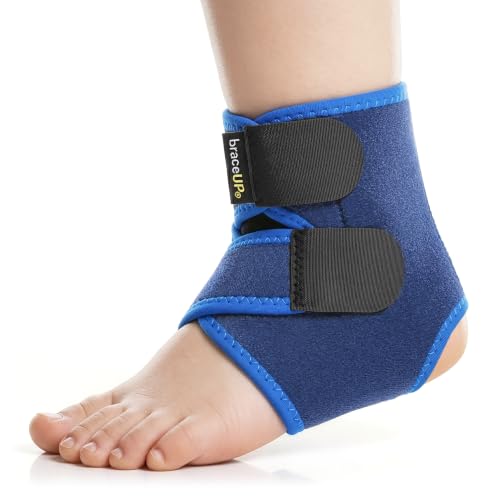
BraceUP Kids Ankle Support with Adjustable Straps (Small)
The budget pick: the cheapest thing here that is still an adjustable support, and the right first purchase before committing to a lace-up brace.
Best for
A first support, or the spare that lives in the soccer bag
Levels
U7–U8 rec · U9–U10 · U11–U12
Type / surface
Adjustable-strap support, open heel, children's sizing
How it fits
Sized for children in XS and S; go by the measurement on the listing rather than by age. The open heel means it sits lower in a cleat than a lace-up brace, which is its main practical advantage.
What we like
The lowest-cost route to a real adjustable support, which matters because the cited guidance says to replace a brace every sports season
An open heel keeps bulk out of the back of the shoe, which is the part of a cleat with the least room
Child sizing in two sizes, so a younger sibling is covered too
Where it falls short
Straps and compression only — no lacing and no stays, so it restricts motion least of the three supports here, and the cited hospital article points to the lace-up type
At this price the straps are the first thing to lose their hold, which is also the thing the whole support depends on
Manufacturer’s published specs
Listed as a youth ankle brace in children's sizing, with XS and S options (listing)
Adjustable straps over an open-heel design (listing)
Listed explicitly for soccer and basketball in sports shoes (listing)
The cheapest ankle support in this registry with a live price
These are the manufacturer’s own claims, not measurements we took.
Honest about what it is: a thin warmth-and-feel sleeve that fits any cleat, and explicitly not a substitute for a brace during play.
Best for
Warmth and feel on a cold field — NOT support during play
Levels
U7–U8 rec · U9–U10 · U11–U12 · U13+ travel & club
Type / surface
Elastic compression sleeve, sold as a pair
How it fits
Children's sizing, sold in pairs. Fits inside a cleat without changing the shoe, which is its only real advantage over the braces above — and is not a reason to choose it when support is the requirement.
What we like
Thin enough to disappear inside a cleat, which no lace-up brace does
Sold as a pair, so both ankles are covered for less than a single brace costs
The one option here a child will genuinely forget they are wearing, which is why sleeves get worn and braces get left in the bag
Where it falls short
It is not a brace, and the cited children's hospital guidance is explicit about this: a compression sleeve "does not actively support the ankle", and "Ankle sleeves shouldn't be used instead of braces during athletic activity"
So it cannot be the answer for a new or recurring sprain, which is the reason most families are shopping in this category at all
Manufacturer’s published specs
Elastic compression sleeve with no straps, stays or lacing (listing)
Sold as a pair in children's sizing, listed for child sports (listing)
Described as breathable (listing)
These are the manufacturer’s own claims, not measurements we took.
BraceUP Kids Ankle Support with Adjustable Straps (Small)
At this age a genuine recurring sprain is uncommon and the sizing problem is the real one. A child-sized adjustable support at the lowest price here is the sensible starting point.
Built on children's sizing rather than being the smallest size of an adult range, which is the difference between a support that stays put and one that rotates.
Shock Doctor Ankle Stabilizer with Flexible Support Stays (Small)
The age where ankles start getting rolled properly, and the point at which the lace-up construction the guidance points to becomes available in a size that fits.
For an older player with a sprain history: the construction a children's hospital athletic trainer names as the gold standard, re-tightenable at half time.
Parents ask this constantly because taping is what they have seen on television, and the cited guidance comes down on one side clearly. It states that taping is effective for only about 45 minutes after application, and quotes Coonan directly: as much as people push ankle taping, it really is not the best practice, and ankle braces are the way to go because they are significantly more effective.
The practical argument in the same article is the one a parent on a touchline will recognize instantly: if a brace loosens, you can reach down, tighten it up and keep going, and ankle tape does not do that. For youth soccer specifically — where nobody is retaping at half time — that is the whole decision.
It also means the per-season cost of a brace is not as high as it looks against a roll of tape, because the same guidance advises replacing a brace every sports season rather than every week.
The fit standard from the cited guidance: firm enough to protect the ankle, never tight enough to cut off circulation or cause cramps — and re-checked for size once swelling has gone.
Will a brace slow my player down?
On the cited article's account, no. It states that research around braces shows they do not significantly affect speed, jump height or agility tests in young athletes. Worth being precise about what that is: the article makes the claim without naming a study, so we are reporting what it says rather than pointing you at the underlying research.
The same article does raise a different and more interesting caution, which is worth taking seriously because it cuts against the product: relying too heavily on braces instead of balance training can reduce ankle stability over time. In other words the brace is the short-term control and the balance work is the long-term fix, and buying the first is not a substitute for doing the second.
On that last point the article is explicit that it is important to get guidance from a medical professional before starting exercises if you are recently injured — which is where this page stops and a clinician starts.
Getting a brace into a soccer cleat
This is the soccer-specific problem and the cited guidance does not address it, so treat what follows as our reading of the shoe rather than clinical advice. A cleat is built with almost no internal volume on purpose — the foot sits close to the plate because that is what makes a boot feel connected to the ball. A lace-up brace with straps is the bulkiest thing in this category, and it has to go into that space.
Three consequences follow, and they are all about the shoe rather than the brace. The first is that the cleat laces will need to run looser, or the eyelets skipped at the bottom, which the lacing guide covers. The second is that a brace with an OPEN HEEL sits lower in the back of the shoe than a closed one, which is the part of a cleat with the least room — it is the main practical reason to choose a strap support over a lace-up when the cleat is already snug. The third is that if a child needs a lace-up brace for a whole season, the next pair of cleats should be bought with it on.
A brace is not an ankle guard, and a collar is neither
Three products get confused here and they do three different jobs. An ankle brace restricts how far the joint can move, which is what matters after a sprain. An ankle shin guard — a shell with wings down either side of the ankle — protects the joint from being KICKED, which is a different risk entirely and the one Law 4 is concerned with.
And a collared cleat does neither reliably. Nike makes a real claim for its Dynamic Fit collar providing ankle support, but published discussion of collared cleats is clear that the effect is modest: the collar's dependable contribution is a locked-in feel rather than stability.
Generally yes, and the relevant rule is a general one rather than a brace rule. Law 4 requires that a player must not use equipment that is dangerous, and it makes the player responsible for the suitability of what they wear. There is no clause banning an ankle brace.
What that does mean in practice is that anything with a hard or sharp component is at a referee's discretion, and that a brace worn outside the sock sits in the same conversation as any other exposed equipment. The softer strap supports and sleeves here raise the question least; a brace with rigid stays is the one to have the referee look at before kickoff rather than at the first stoppage.
What is the best ankle brace for a kid playing soccer?+
A lace-up brace with stabilizing straps, which makes the Med Spec ASO Ankle Stabilizer in XS our pick. An athletic trainer quoted in a Children's Hospital Colorado article suggests an ASO ankle brace that laces up with velcro straps around the heel and over the top of the foot, calls that type the gold standard and describes it as adjustable for injury. The Shock Doctor Ankle Stabilizer in Small is the same construction from a sports brand for less.
Does my child need an ankle brace for soccer?+
Probably not unless there is an injury. The cited children's hospital guidance states that not all athletes need an ankle brace, but those that do usually need external ankle support for a new or a recurring injury — and that braces alone do not prevent ankle injuries. If your player has never turned an ankle, cleats that fit are the better purchase. A new or recurring sprain is a clinician's call, not a shopping decision.
Is an ankle brace better than taping for soccer?+
The cited guidance says yes, clearly. It states that taping is effective for only about 45 minutes after application, and quotes its athletic trainer saying that as much as people push ankle taping it really is not the best practice, and that ankle braces are the way to go because they are significantly more effective. The practical point for youth soccer: a brace that loosens can be reached down and tightened mid-game, and tape cannot.
Will an ankle brace slow my child down?+
On the cited article's account, no — it states that research around braces shows they do not significantly affect speed, jump height or agility tests in young athletes. We are reporting its claim rather than the underlying study, because the article names none. The same article raises a different caution worth more attention: relying too heavily on braces instead of balance training can reduce ankle stability over time.
Is a compression sleeve as good as an ankle brace?+
No, and the cited guidance is explicit: a compression sleeve does not actively support the ankle, and ankle sleeves should not be used instead of braces during athletic activity. A sleeve is the most comfortable and cheapest thing in this category and the only one that disappears inside a cleat, which is why it gets worn — but for a sprain it is not support. We list one on this page labeled for exactly what it is.
Will an ankle brace fit inside soccer cleats?+
A lace-up brace is bulky and a cleat has very little internal volume, so expect to lace the cleat looser, skip the lower eyelets, or buy the next pair with the brace on. An open-heel strap support sits lower in the back of the shoe, which is the tightest part of a cleat, and is the easier option when the boot is already snug. Note that the cited hospital article does not cover this — that is our reading of the shoe.
Are ankle braces allowed in youth soccer matches?+
Generally yes. Law 4 has no clause banning an ankle brace; it requires that a player must not use equipment that is dangerous and makes the player responsible for the suitability of what they wear. In practice anything with a hard or rigid component is at the referee's discretion, so a braced player is better off having it looked at before kickoff than at the first stoppage.
How often should a youth ankle brace be replaced?+
The cited guidance advises replacing a brace every sports season, and washing one that is worn daily several times a week. It also notes that swelling changes the size needed, so once an injury has healed it is worth evaluating whether a different size suits better for play. That recurring cost is the main reason this page names a budget pick.
Sources
Children's Hospital Colorado — ankle braces in sports (Dennis Coonan, athletic trainer; 10/29/2025) — A children's hospital sports-medicine article, written around basketball rather than soccer, and the source for every clinical statement on this site's ankle-brace page: that "not all athletes need an ankle brace" but "those that do usually need external ankle support for a new or a reoccurring injury", and that braces "alone don't prevent ankle injuries"; that taping "is effective for only about 45 minutes after application" while Coonan states "Ankle braces are the way to go. They are significantly more effective" and that a loosened brace can be tightened mid-game where tape cannot; that Coonan "suggests an ASO ankle brace that laces up with velcro straps that go around the heel and over top of the foot", calling the lace-up type "the gold standard" and "adjustable for injury"; that a compression sleeve "does not actively support the ankle" and that "Ankle sleeves shouldn't be used instead of braces during athletic activity"; that "research around braces shows that they do not significantly affect speed, jump height or agility tests in young athletes" (the article cites no study) and that braces are "a proven, low-risk way to prevent recurrent sprains"; that "relying too heavily on braces instead of balance training" can reduce ankle stability over time; that a brace "should be comfortable, not cutting off circulation or causing cramps, but also restrictive enough to protect the ankle", that swelling changes the size needed so size should be re-evaluated after healing, that a daily-worn brace should be washed several times a week and replaced every sports season; and that it is "important to get guidance from a medical professional before starting an exercises if you're recently injured". The article does NOT address wearing a brace inside a cleat and makes no soccer-specific claim, so neither is attributed to it.
Coaching American Soccer — Law 4, The Players' Equipment — The Law 4 requirements quoted on this site: footwear is compulsory but cleats are not specified; shinguards must be of suitable material, appropriate size and covered by the socks, with the player responsible for suitability; a player must not use equipment that is dangerous; and the referee-level guidance that worn, pointed or exposed-shaft studs and shoes with sharp metal or pointed spikes are not permitted.
IFAB Laws of the Game — Law 4, The Players' Equipment — The Law text quoted on this site: undershorts and tights must be the same color as the main color of the shorts or the lowest part of the shorts, and players of the same team must wear the same color; shinguards must be of suitable material and appropriate size, covered by the socks, with the player responsible for their suitability; non-dangerous protective equipment of soft, lightweight padded material is permitted; and a player must not use equipment or wear anything that is dangerous, which must be removed rather than taped or covered. Law 4.3 is also the source for the kit-color rules quoted here: the two teams must wear colors that distinguish them from each other and the match officials, and each goalkeeper must wear colors that are distinguishable from the other players and the match officials. Law 4.4 names gloves, headgear, facemasks and knee and arm protectors of soft, lightweight padded material as permitted non-dangerous protective equipment, and separately permits goalkeepers caps and tracksuit bottoms.
Soccer Cleats 101 — what the Nike Dynamic Fit collar actually does — The independent read on knitted mid- and high-cut collars: they are built to create an 'as one' connection between boot and foot, not to provide structural ankle support in the way a high-top basketball shoe does.