Cleats
Soccer cleats vs soccer shoes
One has studs and one does not, and the surface decides which — not the budget and not the level.
By Ryder M. · Published October 10, 2026
Heads up: we earn a commission if you buy through our links, at no extra cost to you. It never changes which product we recommend — here’s how that works.
The short answer
Soccer cleats have studs and are for grass and artificial grass. Soccer shoes — the flat-soled kind, sold as indoor, futsal or turf trainers — have no studs and are for hard courts, gym floors and short-pile turf. Buy the pair for the surface the games are on first. Most US youth players eventually own both, because games are outdoors and winter training is not.
The confusion here is mostly a naming problem. Brands call almost everything a soccer shoe, so a parent searching for the difference gets a category page rather than an answer. The useful distinction is simple and physical: is there anything sticking out of the sole, and if so, what shape.
The actual difference
| Soccer cleats | Flat-soled soccer shoes | |
|---|---|---|
| Sole | Molded or replaceable studs | Flat rubber, or short rubber nubs |
| Surfaces | Natural grass, artificial grass | Gym floors, hard courts, short-pile turf |
| Sold as | FG, MG, AG, SG | IN or IC (indoor), TF or TT (turf) |
| Grip mechanism | Studs penetrate the surface | Rubber grips the surface |
| Legal for outdoor games | Yes | Not safely on wet grass |
| Legal for futsal | No | Yes — the Laws require them |
Law 4 is worth knowing on this, because it is less prescriptive than most parents expect: footwear is compulsory but the Law does not specify cleats, and what it does forbid is dangerous equipment — worn, pointed or exposed-shaft studs, and shoes with sharp metal or pointed spikes. So a kid in flat-soled shoes on a dry grass field is not breaking a rule; they are just going to slip.
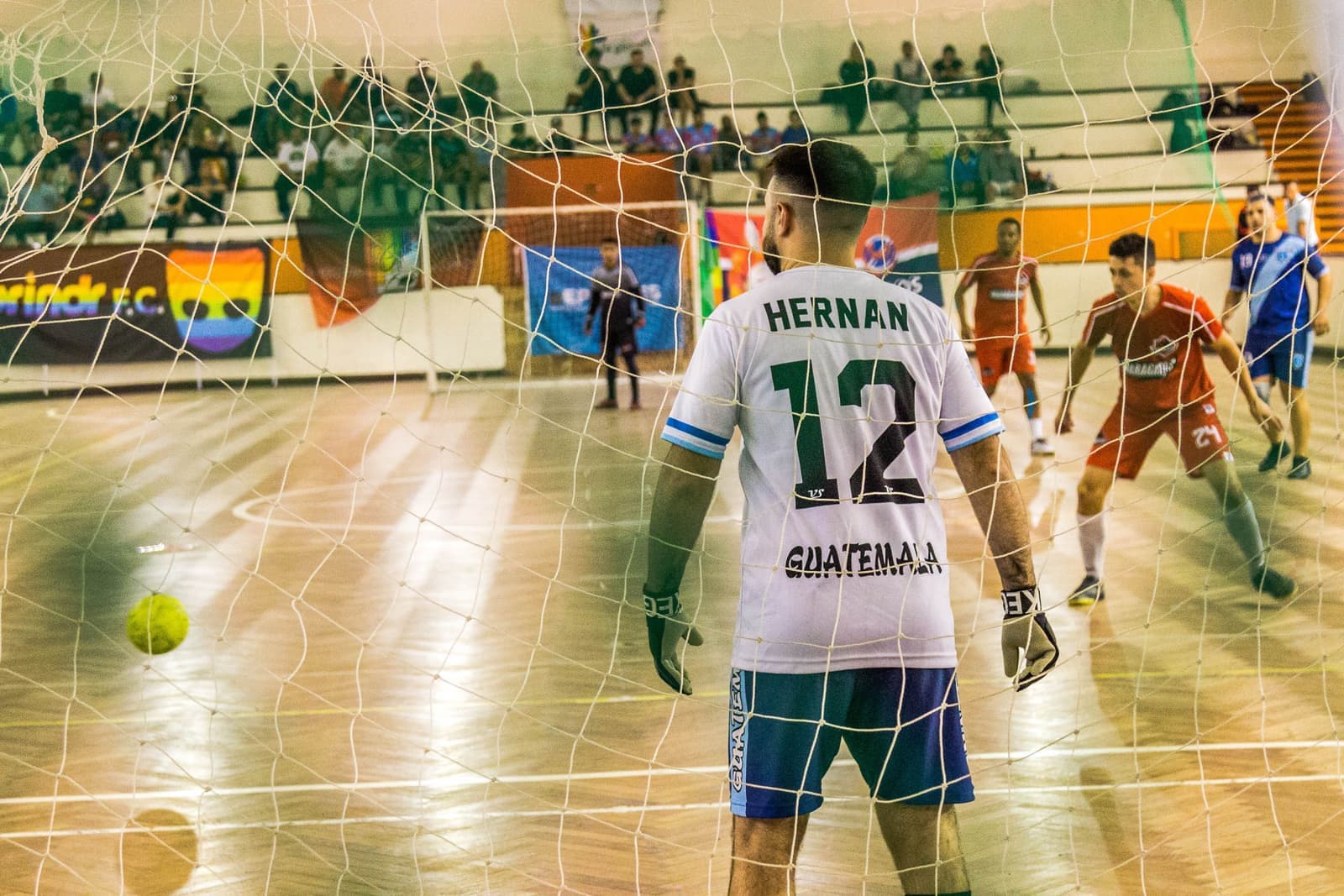
Futsal is the exception where the rule runs the other way. Futsal's own Law 4 requires canvas or soft leather training or gymnastic shoes with soles of rubber or a similar material — which means cleats are not legal futsal footwear at all.
Which one to buy first
- Look at where the games are. Outdoor rec and club soccer in the US is overwhelmingly on grass or artificial grass, which means studs.
- Then look at where training is. If it is the same surface, one pair is genuinely enough for a first season.
- Add the second pair when a second surface appears — an indoor winter league, a futsal program, or a club that trains on short-pile turf.
- Never substitute one for the other on wet grass. A flat sole on wet natural grass does not hold at all, and that is an injury conversation rather than a performance one.
The common mistake is the reverse order: buying the indoor shoes because they are cheaper and look like normal sneakers, then discovering in week two that the field is grass. Buy for games first.
One of each, for a mixed schedule
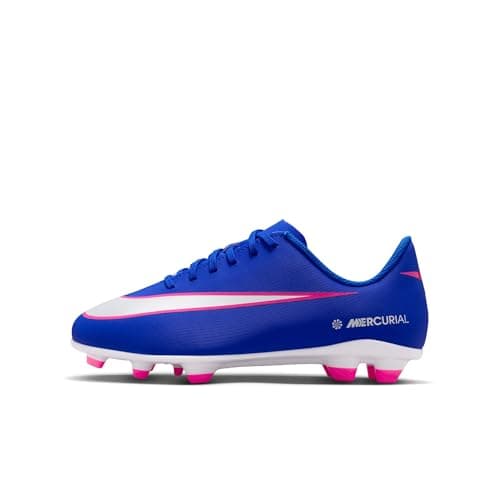
Nike
Nike Jr. Mercurial Vapor 16 Club MG
The safest default cleat for a rec player between U7 and U12, as long as the foot is average width or narrower.
$60.88View on Amazon#ad — we may earn a commission · price as of October 16, 2026
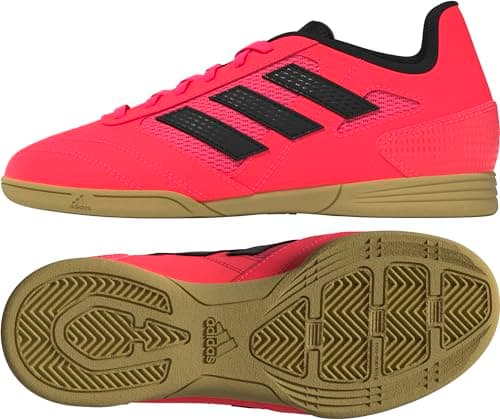
adidas
adidas Super Sala 2 Indoor
The default indoor shoe for a kid in a winter futsal league; add an insole if sessions run long.
$36.25View on Amazon#ad — we may earn a commission · price as of October 16, 2026
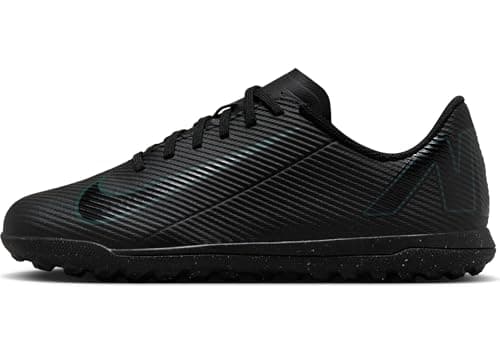
Nike
Nike Jr. Mercurial Vapor 16 Club Turf
The right second pair once a kid is training on artificial turf every week, and a bad only-pair if games are on grass.
$48.14View on Amazon#ad — we may earn a commission · price as of October 16, 2026
Product photos come from each item’s current Amazon listing.
Turf shoes are the confusing middle
Turf shoes sit between the two and cause most of the remaining confusion. They have a flat-ish sole covered in many small rubber nubs rather than studs, and adidas describes the construction as built for the short, dense artificial surfaces that older turf fields use. They grip short-pile turf and hard ground well, and they are not studs — which means they are not the answer for a modern full-size artificial grass field, where an AG plate is.
- Indoor / futsal shoes (IN, IC): completely flat gum rubber. Gym floors and hard courts only.
- Turf shoes (TF, TT): many small rubber nubs. Short-pile turf, hard dry ground, winter training.
- Artificial grass cleats (AG): real studs, shorter and more numerous than FG. Modern long-pile carpet.
- Firm ground (FG) and multi-ground (MG): real studs. Natural grass, and in MG's case grass plus artificial grass.
Three of this site's pages take those apart in more detail: firm ground vs turf vs artificial grass for the plates, futsal shoes vs indoor soccer shoes for the flat-soled pair, and best youth turf soccer shoes for the turf picks themselves.
What each one does to the foot
Two differences that matter for a growing foot. A studded cleat concentrates load on a small number of points, which is why stud pattern and plate stiffness show up in heel pain conversations. A flat-soled shoe spreads it, which makes it more comfortable to stand in and less effective at stopping a slide.
The second is cushioning. Indoor and futsal shoes are built for hard floors and generally have more underfoot than a firm-ground cleat, which is built to transmit feel. That is part of why a kid will happily wear indoor shoes all day and complain about cleats after an hour — and it is not a reason to send them to a grass game in the comfortable pair.
Where a specific foot issue is in play, aftermarket insoles are a genuine option in both categories and a podiatry-informed one rather than a brand claim. Best soccer cleats for Sever's disease covers the heel-pain case in detail.
If you can only buy one pair
Buy a multi-ground cleat. An MG or FG/MG plate is rated for natural grass and artificial grass, which covers the overwhelming majority of US youth games and most training, and it is the only option on this page that does not need a second pair behind it for a standard rec season.
The exception is a player whose entire season is indoors — a futsal program or a winter indoor league — in which case the flat-soled shoe is the one pair and cleats are the thing you do not need yet. Best indoor soccer shoes for kids has those picks, and best soccer cleats for turf and grass covers the one-pair-for-everything question properly.
Whichever you buy, it needs to fit the way a cleat fits rather than the way a sneaker does — about half an inch at the toe, measured on both feet standing with match socks on. How should kids' soccer cleats fit and do soccer cleats run big or small cover the sizing, which behaves differently from street shoes in both categories.
Common questions
What is the difference between soccer cleats and soccer shoes?
Cleats have studs and grip by penetrating a soft surface, so they are for natural grass and artificial grass. Flat-soled soccer shoes — sold as indoor, futsal or turf — grip by rubber contact, so they are for gym floors, hard courts and short-pile turf. They are two grip mechanisms rather than two price tiers.
Can you wear soccer shoes instead of cleats?
Not on wet grass. A flat sole does not hold on a soft surface, which is a slipping and injury problem rather than a performance one. Law 4 does not actually require cleats — footwear is compulsory but the type is not specified — so it is not a rules issue, it is a traction issue.
Do kids need both cleats and indoor soccer shoes?
Only when there are two surfaces. Outdoor games on grass need cleats; an indoor winter league, a futsal program or a club that trains on hard courts needs flat-soled shoes. For a standard rec season on one surface, one pair is genuinely enough — buy for where the games are.
Are turf shoes the same as soccer shoes?
They are a third category. Turf shoes have many small rubber nubs rather than a flat sole or real studs, and they are built for short, dense artificial surfaces and hard dry ground. They are not the right shoe for a modern long-pile artificial grass field, where an AG plate with real studs is.
Can you wear cleats for futsal?
No. Futsal's own Law 4 requires canvas or soft leather training or gymnastic shoes with soles of rubber or a similar material, which rules cleats out of the format entirely. It is one of the few places in soccer where the footwear requirement is explicit about what you must wear rather than what you must not.
If I buy one pair, which should it be?
A multi-ground cleat. An MG or FG/MG plate is rated for natural grass and artificial grass, which covers most US youth games and most training, so it does not need a second pair behind it. The exception is a player whose whole season is indoors, where the flat-soled shoe is the one pair.
Sources
- Coaching American Soccer — Law 4, The Players' Equipment — The Law 4 requirements quoted on this site: footwear is compulsory but cleats are not specified; shinguards must be of suitable material, appropriate size and covered by the socks, with the player responsible for suitability; a player must not use equipment that is dangerous; and the referee-level guidance that worn, pointed or exposed-shaft studs and shoes with sharp metal or pointed spikes are not permitted.
- The FA — Futsal Laws of the Game, Law 4: The Players' Equipment — The futsal equipment requirements quoted on this site: shinguards are compulsory, must be covered entirely by the stockings, must be made of rubber, plastic or a similar approved material, and must provide a reasonable degree of protection. Also the futsal footwear requirement — canvas or soft leather training or gymnastic shoes with soles of rubber or a similar material — which is why cleats are not legal futsal footwear.
- UA Playbooks (underarmour.com) — types of cleats explained: football, soccer, baseball and more — The source for the toe-stud distinction — soccer cleats have no stud at the tip of the toe, baseball and softball cleats and lacrosse cleats do — and for the statement that soccer cleats are not made with metal spikes.
- adidas — kids' turf soccer shoes — Current adidas youth turf models and adidas's description of turf outsole construction.
- Michigan Foot Doctors — insoles for soccer cleats (Dr. Tom Biernacki, DPM) — A board-certified podiatrist's guidance on insoles in cleats: high arches need cushioned support against the lateral roll that causes sprains in supinators, thick orthotics lift the heel out of the cleat's heel cup, and the factory sockliner must come out first.
- Nike — kids' soccer cleats and shoes — Verified that each Nike model named on this page is currently sold, and the source for Nike's own published upper, plate and surface descriptions.
Read next
- Firm ground vs turf vs artificial grass cleatsThe FG, AG, TF and MG decision table, whether one pair can cover a mixed schedule, and the cost of guessing wrong.
- Futsal shoes vs indoor soccer shoesWhat separates a futsal shoe from an indoor soccer shoe, why the surface decides rather than the label, and what the futsal Laws actually require on the foot.
- Best youth turf soccer shoesTurf shoe picks by age and width, and why the turf outsole does more for comfort than any upper.
- Best indoor soccer shoes for kidsNon-marking indoor picks from U7 up, why turf shoes will not do, and what a futsal season needs.
- Best soccer cleats for turf and grassWhy a multi-ground plate is the one-pair answer for a grass-and-turf schedule, the junior MG models that exist, and the surface it genuinely cannot handle.
- How should kids' soccer cleats fit?The thumb's-width rule and four hands-on fit checks — because asking a kid whether shoes fit does not work.