Heads up: we earn a commission if you buy through our links, at no extra cost to you. It never changes which product we recommend — here’s how that works.
The short answer
For most kids the pick is the KidSole Cosmic Comfort — a slim, genuinely child-sized insole with reinforced arch support, which is the combination that fits inside a cleat without pushing the foot out of it. The budget pick is the Furello 4D Cloud-Soft, a trim-to-fit youth insole for under ten dollars. If the complaint is heel pain rather than arch ache, buy the BloomLab Kids Gel Heel Cups instead, because a heel cup costs the boot far less volume than a full insole. Prices come from the live price layer with an as-of date under each button.
Before anything else: take the cleat's own sockliner out. A board-certified podiatrist writing specifically about insoles in cleats makes this the first step, and skipping it is why most aftermarket insoles make a cleat feel worse rather than better.
A soccer cleat is built with almost no internal volume on purpose. The foot sits close to the plate because that is what makes a boot feel connected to the ball, and the upper is cut to hold it there. Drop a running insole into that and you have not added cushioning — you have made the boot a half-size too small and lifted the heel out of its cup.
Which is why this page is organized by how much volume each option takes, rather than by how much cushioning each one claims. That ordering is the useful information, and it is the opposite of how this category is usually sold.
Pick by the complaint, not by the cushioning
Five complaints, five answers. Every row reflects the maker's published description plus the fitting rules from a podiatrist's published guidance — not our own testing. This site does not lab-test and publishes no scores.
If the complaint is
Buy
Because
Arches ache after a tournament
KidSole Cosmic Comfort
Slim profile with a reinforced arch, built on children's sizing rather than cut down from an adult last
Heel pain
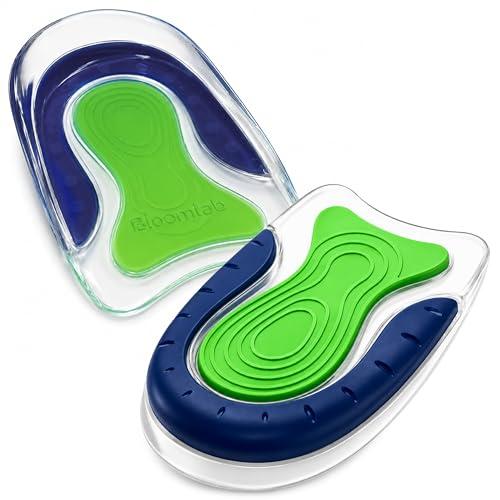
BloomLab Kids Gel Heel Cups
Heel-only, so the forefoot of the cleat keeps all of its volume
A high arch and a rolling foot
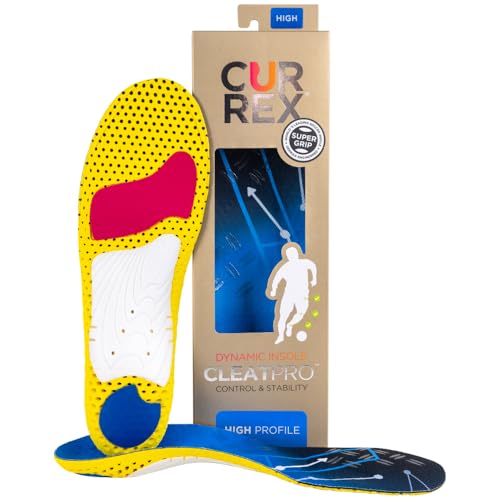
CURREX CLEATPRO (High Arch)
The only option here sold by arch height, and cleat-specific rather than a running insole
The boot feels dead, nothing hurts
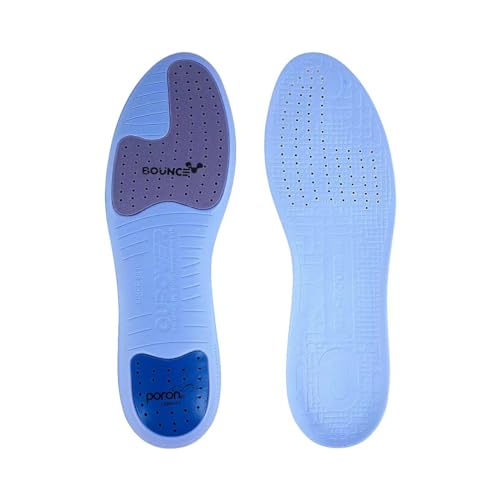
OUPOWER Cleat Insole Gen3
Soccer-shaped, and sold in two thicknesses so the volume it takes is a choice
A hand-me-down pair feels flat
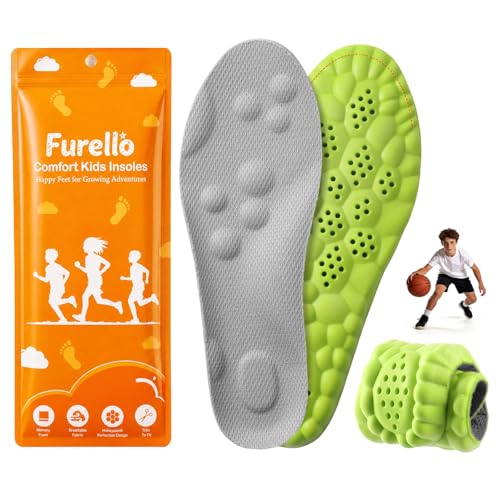
Furello 4D Cloud-Soft
The cheapest way to make a worn pair comfortable again, and trim-to-fit
Scroll the table sideways on a narrow screen.
How we sorted these
Thickness first, cushioning second. The failure mode in this category is lost volume, so a thin insole that fits beats a plush one that does not.
Child sizing where it exists. Most insoles sold for cleats are adult products with a small size at the bottom of the range. The ones built on children's lasts are ranked above them, and where a pick is adult-sized we say so.
A heel-only option, named as such. For heel pain specifically, a gel cup is the better buy than any full insole, and it is cheaper.
Replaceable cost. A growing foot will leave any insole behind within a season or two, so price matters more here than in almost any other category on this site.
No medical claims. Nothing here is prescribed, nothing here treats a condition, and the one orthotic-style product we found in the search was left off for exactly that reason.
Quick picks
Tap any row to jump to the full write-up. The price in each button is the one Amazon reported on the date stamped under it — tap through for today’s number, which is the only one that can be relied on.
BloomLab Kids Gel Heel Cups for CleatsThe most useful thing in this category for a child with sore heels: targeted cushioning that does not cost the cleat the volume a full insole takes.
U9–U10, U11–U12, U13+ travel & club
Heel-only gel cup
Leave the factory sockliner in and sit the cup on top of it, then re-check the heel lock before the first session.
CURREX CLEATPRO Insoles (High Arch, S)The right insole for an older player with a genuine high arch and a recurring roll — and the wrong one for a nine-year-old, where the money buys nothing the cleat does not already do.
Product photos come from each item’s current Amazon listing.
The picks in full
1. KidSole
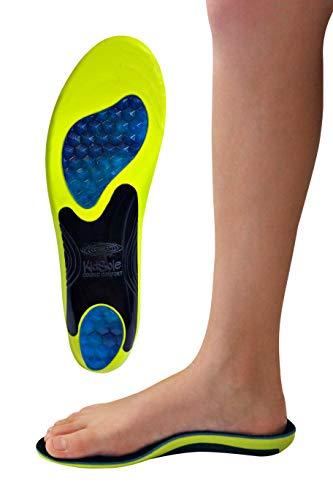
KidSole Cosmic Comfort Reinforced Arch Support Insole
The sensible middle of this category: a child-sized insole with real arch support, at a price that survives a growth spurt.
Best for
A U9-U12 player whose arches ache after a tournament weekend
Levels
U9–U10 · U11–U12
Type / surface
Children's insole, slim profile
How it fits
Check the listed centimeter length against the child's current size rather than the US size on the box — this category is sized inconsistently. Pull the cleat's own sockliner before fitting.
What we like
Actually made for a child's foot rather than cut down from an adult last, which is rare in this category
Slim profile, so it has a realistic chance of fitting inside a cleat once the sockliner is out
A reinforced arch with a soft top is the combination parents describe wanting: support without a plank underfoot
Where it falls short
One arch profile for every foot, so a genuinely high arch is better served by an arch-height-specific insole
A 24 cm plate covers a narrow size band, so siblings a size or two apart will each need their own pair
Manufacturer’s published specs
Built on children's sizing — the listed size spans US kids' 3 to 6 at 24 cm (listing)
Described as a slim profile with reinforced arch support and a memory-foam top layer (listing)
Trimmed to the shoe rather than sold shoe-specific (listing)
These are the manufacturer’s own claims, not measurements we took.
The most useful thing in this category for a child with sore heels: targeted cushioning that does not cost the cleat the volume a full insole takes.
Best for
A growing player with heel pain who must not lose cleat volume, U9+
Levels
U9–U10 · U11–U12 · U13+ travel & club
Type / surface
Heel-only gel cup
How it fits
Leave the factory sockliner in and sit the cup on top of it, then re-check the heel lock before the first session. If the heel now slips, the cup is too thick for that boot.
What we like
Takes up volume only under the heel, which is the single biggest advantage over a full insole in a tight cleat
Puts the cushioning exactly where repetitive heel impact happens, which is how most youth heel pain presents
Moves between cleats, trainers and school shoes, so one pair covers the whole week
Where it falls short
No arch support at all — this solves heel impact and nothing else
A heel lift of any kind changes how the heel sits in the cleat's heel cup, so the lock has to be re-checked after fitting
Manufacturer’s published specs
A heel cup rather than a full-length insole, so the forefoot of the cleat is untouched (listing)
Described as shock-absorbing gel with a non-slip textured base and a low-profile fit (listing)
Listed for cleats, sneakers and school shoes, one pair per pack (listing)
These are the manufacturer’s own claims, not measurements we took.
The pick for a player who wants a cleat insole rather than an orthotic: soccer-shaped, thickness-matched to the boot, and cheap to replace.
Best for
A U11+ player who wants a soccer-specific insole and nothing medical
Levels
U11–U12 · U13+ travel & club
Type / surface
Soccer-cleat insole, two thickness options
How it fits
Start with the standard thickness. If the cleat already felt snug, the extra thickness will make it too snug — insoles add volume and cleats do not have any to spare.
What we like
A thickness choice is the most useful option in this whole category, because the thing that goes wrong with insoles in cleats is lost volume
Soccer-specific shape, so the forefoot is not padded where a cleat needs the foot close to the plate
Cheap enough to replace when a child changes size, which is the real constraint on youth insoles
Where it falls short
No arch-height options, so a high-arch foot is better off elsewhere
A small brand with a thin published spec: thickness and size are stated, materials are not described in detail
Manufacturer’s published specs
Sold specifically as a soccer and football cleat insert rather than as a general athletic insole (listing)
Offered in a standard and an extra thickness, so the volume it takes up is a choice (listing)
Size run reaches down into small sizes — the verified listing is US 4.5-5 (listing)
These are the manufacturer’s own claims, not measurements we took.
The right insole for an older player with a genuine high arch and a recurring roll — and the wrong one for a nine-year-old, where the money buys nothing the cleat does not already do.
Best for
An older player with high arches who keeps rolling the foot, U12+
Levels
U11–U12 · U13+ travel & club
Type / surface
Cleat-specific insole, arch-height specific
How it fits
Buy by arch height, not by feel. The factory sockliner must come out before this goes in, or the cleat loses the volume the insole needs. The S size is the smallest offered and stops short of true youth sizing, so measure before ordering.
What we like
Arch-height-specific, which is the one variable a podiatrist writing about cleat insoles treats as decisive
Thin by design, so it is far less likely to lift the heel out of a cleat's heel cup than a bulky orthotic
Cleat-specific rather than a running insole repurposed, which matters because a cleat has almost no internal volume to give away
Where it falls short
The most expensive insole here by a wide margin, and on a foot that will change size within a season that is a hard sum to justify below about U12
Sized for adult feet at the bottom of the range, so it only works for the oldest junior sizes — there is no genuine youth size run
Manufacturer’s published specs
Sold by arch height rather than as one universal shape — low, medium and high (listing)
Described as a thin profile built specifically for cleats rather than for sneakers (listing)
Listed for soccer, football, baseball and softball cleats (listing)
The S size is the smallest in the range and the only one that reaches big-kid sizing
These are the manufacturer’s own claims, not measurements we took.
Furello 4D Cloud-Soft Comfort Insoles for Kids and Youth
The budget pick, and the honest one: for under ten dollars it makes an older pair comfortable again, and it is not pretending to be an orthotic.
Best for
A cheap comfort upgrade in a hand-me-down pair, U7 upward
Levels
U7–U8 rec · U9–U10 · U11–U12
Type / surface
Trim-to-fit youth insole
How it fits
Trim using the cleat's own sockliner as the template, and take the sockliner out before fitting. If the cleat was already a close fit, this is the insole most likely to make it too tight.
What we like
The cheapest way to make a worn or inherited pair feel new again, which is the commonest real use for a youth insole
Trim-to-fit, so it is not wasted the moment the child moves up a size
Memory foam is forgiving on a foot that has not settled into a shape yet
Where it falls short
A general kids' insole, not a cleat insole — full-length memory foam takes up more volume than a cleat usually has to give
Memory foam compresses with use, so the cushioning it is bought for fades over a season
Manufacturer’s published specs
Trim-to-fit, so one pair covers a range of shoe lengths (listing)
Described as breathable memory foam with arch support and shock absorption, designed for growing feet (listing)
Verified listing is US youth 5Y-6Y (listing)
These are the manufacturer’s own claims, not measurements we took.
Furello 4D Cloud-Soft Comfort Insoles for Kids and Youth
At this age the honest use for an insole is reviving a worn or inherited pair, and spending more than ten dollars on a foot that will change size by spring buys nothing.
Once the foot has stopped changing size every season, an arch-height-specific cleat insole is defensible — and it is the only option here with a genuine high-arch version.
A podiatrist's published guidance on insoles in soccer cleats gives three facts that matter more than any product choice, and all three are about volume. First, the factory sockliner comes out before the new insole goes in — the cleat was built around one layer, not two. Second, a thick orthotic lifts the heel out of the cleat's heel cup, which is worse than no insole at all because it breaks the heel lock the boot's whole fit depends on. Third, a high arch needs cushioned support against the lateral roll that causes sprains in supinators, which is a different brief from flat-footed support and is why arch-height-specific products exist.
Put those together and the practical sequence is: pull the sockliner, fit the new insole, lace the boot, and check the heel. If the heel now lifts when the child rises onto their toes, the insole is too thick for that boot, and no amount of comfort underfoot compensates.
The check that settles this page: fit the insole, lace the boot, then have the child rise onto their toes. A heel that lifts means the insole is too thick.
Heel pain is a different purchase
The commonest reason a youth player wants an insole is heel pain, and for that the right product is not an insole. OrthoInfo, the American Academy of Orthopaedic Surgeons' patient resource, describes calcaneal apophysitis — Sever's disease — as a growth-plate condition of the heel that affects children in a specific age range, and its position is that rest, over-the-counter medication and a change of footwear resolve most cases. A children's hospital resource adds the role of growth spurts and repetitive heel stress.
Against that, a gel heel cup is a targeted and cheap intervention: it cushions exactly where the repetitive stress lands, and because it sits only under the heel it costs the cleat almost none of the forefoot volume a full insole takes. That is the reason it is called out separately on this page rather than ranked against the full-length insoles.
What a heel cup is not is a diagnosis. Persistent heel pain in a growing child is a conversation with a clinician, not a shopping decision. Best soccer cleats for Sever's disease sets out what the published guidance actually says and which boots suit a heel that hurts.
When the answer is a different cleat
An insole is a cheap way to change how a boot feels, and sometimes it is the wrong lever entirely. If the cleat is the wrong width, no insole fixes that — an insole makes a narrow boot narrower. If the upper is thin and the plate is sharp because it is a top-tier speed boot on a nine-year-old, the cushioning problem is the boot.
Yes, but the cleat's own sockliner has to come out first — a board-certified podiatrist writing about insoles in cleats makes that the first step. A cleat is built with very little internal volume, so adding a second layer without removing the first makes the boot effectively a half-size smaller and lifts the heel out of its cup.
What are the best insoles for kids' soccer cleats?+
For most children the KidSole Cosmic Comfort: a slim, genuinely child-sized insole with a reinforced arch, which is the combination that fits inside a junior cleat. For heel pain specifically, the BloomLab Kids Gel Heel Cups are the better buy because a heel cup takes almost no forefoot volume. For an older player with a confirmed high arch, the CURREX CLEATPRO is the only option here sold by arch height.
Will an insole make my child's cleats too tight?+
It can, and that is the main risk in this category. A full-length memory-foam insole takes up more volume than most cleats have to spare, even with the sockliner removed. The check is simple: fit the insole, lace the boot, and have the child rise onto their toes. If the heel lifts, the insole is too thick for that boot.
Do insoles help with heel pain in soccer?+
A gel heel cup is a reasonable, cheap intervention for repetitive heel impact, and it costs the cleat less volume than a full insole. But OrthoInfo, the American Academy of Orthopaedic Surgeons' patient resource, describes heel pain in growing children as a growth-plate condition whose management is rest, over-the-counter medication and a change of footwear. Persistent heel pain is a clinician's call, not a shopping decision.
Are expensive cleat insoles worth it for kids?+
Below about U12, usually not. The expensive options here are sized for adult feet at the bottom of their range and cost more than many junior cleats, on a foot that will be a different size by spring. The honest use for an insole at that age is reviving a worn or inherited pair, which a ten-dollar trim-to-fit insole does. Arch-height-specific insoles start making sense once a player has stopped changing size every season.
Should I buy an insole or a different cleat?+
Often a different cleat. An insole cannot fix a width problem — it makes a narrow boot narrower — and if the boot feels harsh because it is a thin-upper speed boot on a young player, the cushioning problem is the boot. Read the cushioned-cleat roundup first; an insole is the right lever when the boot otherwise fits and only the underfoot feel is wrong.
Sources
Michigan Foot Doctors — insoles for soccer cleats (Dr. Tom Biernacki, DPM) — A board-certified podiatrist's guidance on insoles in cleats: high arches need cushioned support against the lateral roll that causes sprains in supinators, thick orthotics lift the heel out of the cleat's heel cup, and the factory sockliner must come out first.
Under Armour — how to buy soccer cleats for kids — A manufacturer's own buying guide, and the source for the statement that kids' soccer cleats are unisex and sized to normal shoe size, plus its guidance on leaving about half an inch at the toe and fitting with match socks on.