Heads up: we earn a commission if you buy through our links, at no extra cost to you. It never changes which product we recommend — here’s how that works.
The short answer
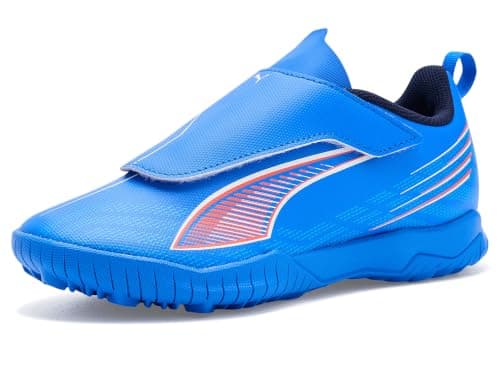
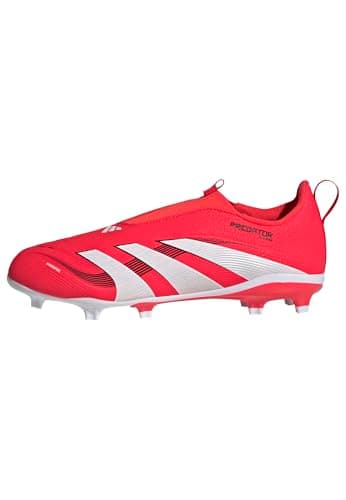
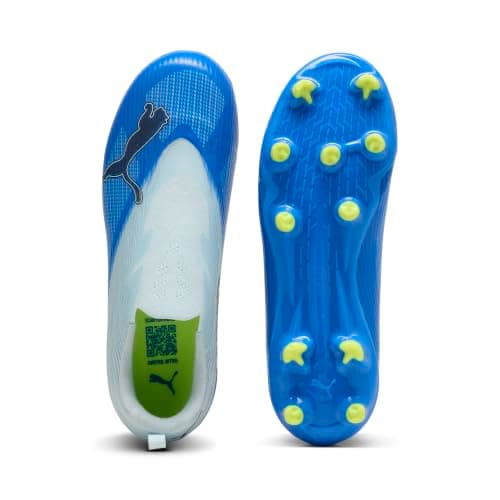
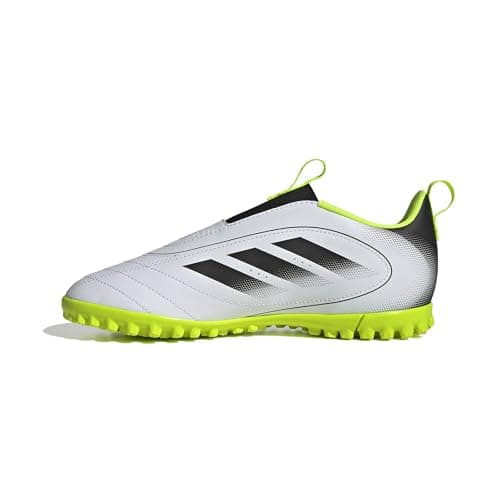
For a younger boy in little-kid sizes, the adidas Goletto IX Laceless Turf is the pick — the cheapest true laceless shoe from a major brand. For a big-kid size, the adidas Predator League Laceless on firm ground and the PUMA Ultra 7 Match LL on mixed grass and artificial grass are the two that exist. If the foot is narrow, buy the PUMA Ultra 6 Play hook-and-loop instead: a laceless cleat cannot be tightened.
Google's own completions for this search finish with a size — size 5, size 7 — and that is the useful signal in it. A parent shopping laceless cleats for a six-year-old and a parent shopping them for a thirteen-year-old are not looking at the same shelf, because the laceless range genuinely splits in two at the point where little-kid sizing ends and big-kid sizing begins.
What it does not split on is gender. Under Armour's own kids' buying guide says it outright: youth soccer cleats are unisex and sized to normal shoe size. There is no boys' junior last and no girls' junior last, which is why this page sorts the category by size run and closure rather than by colorway. The same point from the other direction is covered in girls' laceless soccer cleats, which goes deeper on width.
What exists at each end of the size run
Four laceless or lace-free models, and they do not overlap much:
Surfaces and closures come from each manufacturer's own listing. The age bands are this site's reading of the size runs those listings publish, not a manufacturer claim.
Model
Closure
Surface
Age band it suits
Adjustable?
adidas Goletto IX Laceless
True laceless
Turf
U6-U9
No
PUMA Ultra 6 Play Hook and Loop
Strap
Turf
U6-U8
Yes
adidas Predator League Laceless
True laceless
Firm ground
U11+
No
PUMA Ultra 7 Match LL
True laceless
FG/AG
U11+
No
Scroll the table sideways on a narrow screen.
The gap in the middle of that table is real and worth naming. Between roughly U9 and U11 there is almost nothing: the entry-level laceless shoe is a turf shoe aimed at the pre-lace-tying age, and the performance laceless cleats are firm-ground shoes aimed at players old enough to care about a striking surface. A nine-year-old who wants laceless cleats for a grass league is the one case where the honest answer is a laced pair.
Start here
Pick by your kid’s level
The right answer changes with the level, not just the shoe size. Find your kid’s bracket and start there.
The strap is the whole reason: a five-year-old can fasten it alone, and unlike a true laceless shoe it can be snugged down on a slim foot. The trade-off is that hook-and-loop clogs with turf pellets and loses grip over a season.
The cheapest laceless option from a major brand, and the one that removes the most common cause of a seven-year-old needing an adult on the field mid-game. Fits a slightly generous standard width, so it suits average and wider feet.
adidas Predator League Laceless Firm Ground (Kids)
The cleanest striking surface of anything here — nothing across the instep at all — on a firm-ground plate. At this age the laces are a side benefit and the strike zone is the point.
The only junior laceless shoe here with a dual-surface plate, which matters once training moves to artificial grass and games stay on natural grass. PUMA junior sizing runs slightly short, so this is one to try on.
Tap any row to jump to the full write-up. The price in each button is the one Amazon reported on the date stamped under it — tap through for today’s number, which is the only one that can be relied on.
#
Product
Best for
Surface
Fit notes
Price
1
adidas Goletto IX Laceless TurfA genuinely useful answer for the pre-lace-tying age, provided the foot is average width or wider.
PUMA Ultra 7 Match LL FG/AG JuniorA good dual-surface option for an older player with an average-to-wide foot, and the wrong purchase for a narrow one.
U11–U12, U13+ travel & club
FG/AG
Fits a generous average width with no way to snug it down, and runs slightly short like the rest of the PUMA junior range.
Product photos come from each item’s current Amazon listing.
Why a narrow foot should skip laceless entirely
This is the one thing worth getting right, and it is the opposite of intuitive. A laceless cleat is held on by the shape of its upper, which means it has to be cut generously enough that most feet can get into it. Every model above fits a generous average width. On an average or broad foot that is comfortable. On a slim foot it means the foot moves inside the shoe, and a foot that moves inside a shoe blisters.
The American Academy of Dermatology's guidance on blisters makes the mechanism plain: blisters come from chafing, and the fix is to stop the chafing — shoes that fit properly, neither too tight nor too loose, with moisture-wicking rather than cotton socks. A cleat you cannot tighten is a cleat you cannot stop from chafing. Best youth soccer cleats for narrow feet is the right page for a slim-footed player, and the hook-and-loop PUMA above is the only lace-free shoe here that genuinely works on one.
1. adidas
adidas Goletto IX Laceless Turf
A genuinely useful answer for the pre-lace-tying age, provided the foot is average width or wider.
Best for
A U6–U9 who cannot tie laces yet
Levels
U6 — first kicks · U7–U8 rec · U9–U10
Type / surface
TF
How it fits
Fits like a slightly generous standard width. If your kid has narrow feet, laceless is the wrong category — go laced.
What we like
Removes the single most common cause of a six-year-old needing an adult on the field mid-game
Nothing to come undone, so nothing to trip over
Cheapest laceless option from a major brand
Where it falls short
No laces means no adjustment: the fit you get out of the box is the fit forever, so a narrow foot will swim in it
Harder to get on over a thick soccer sock than a laced pair
Manufacturer’s published specs
Laceless construction on adidas's entry-level junior boot
Turf outsole
Kids' sizing
These are the manufacturer’s own claims, not measurements we took.
A good dual-surface option for an older player with an average-to-wide foot, and the wrong purchase for a narrow one.
Best for
A U11+ player on mixed grass and artificial grass who wants no laces
Levels
U11–U12 · U13+ travel & club
Type / surface
FG/AG
How it fits
Fits a generous average width with no way to snug it down, and runs slightly short like the rest of the PUMA junior range. Not the pick for a slim foot.
What we like
A dual-surface plate and a clean striking surface in one junior shoe, which is an unusual combination at this price
Lighter than most junior cleats carrying a comparable plate
No laces to come undone mid-match, and no lace pressure across the instep
Where it falls short
Laceless means no adjustment at all, so a narrow foot slides inside it and a growth spurt cannot be accommodated
PUMA junior sizing is the least consistent of the big three — a model to try on rather than guess
Manufacturer’s published specs
Laceless construction — the LL in the model name (PUMA)
FG/AG outsole PUMA rates for firm natural grass and artificial grass
Lightweight synthetic upper, junior sizing
These are the manufacturer’s own claims, not measurements we took.
A laced cleat has a season of adjustment built into it. You can run the laces loose in September and tight in March, or the other way round, and the shoe tracks the foot. A laceless cleat has none of that. The fit you buy is the fit you keep until the shoe is replaced, and on a foot that gains two sizes in a year that is a shorter window than parents expect.
Two practical consequences. First, do not size up in a laceless cleat to buy time — there is nothing to take up the slack, so a half size of growing room is a half size of heel slip. Second, if your kid is mid-spurt, this is the wrong moment for the category: buy laced, and revisit laceless when the growth slows. How should kids' soccer cleats fit sets out the thumb's-width rule that applies either way, and do soccer cleats run big or small covers the brand-by-brand length behavior.
Surface comes before closure
The size-run table above is also a surface table, and that is not a coincidence — it is the real constraint. The little-kid laceless options are turf shoes. The big-kid ones are firm-ground or FG/AG. If your kid's league plays Saturday games on natural grass and the only laceless option in their size has a turf outsole, the outsole decides, not the closure.
That is also the argument against buying a performance laceless cleat for a turf-heavy club schedule. A firm-ground plate on artificial turf puts the whole load through a handful of long studs on an unforgiving surface. Firm ground vs turf vs artificial grass cleats explains which plate belongs on which field, and MG vs FG soccer cleats covers the multi-ground option that splits the difference — though no junior laceless shoe currently uses an MG plate.
When laceless is genuinely the right call
Two cases, and they sit at opposite ends of the age range.
A kid who cannot tie laces. This is the strong case. A pre-lace-tying player in a laced cleat spends the season either tripping over undone laces or waiting for an adult, and the Goletto IX Laceless removes the whole problem for the price of an entry-level shoe.
An older player who strikes the ball a lot. Nothing across the instep means a continuous, uninterrupted striking surface, which is the entire design argument for the Predator League Laceless. At that age it is a performance choice, not a convenience one.
One last note on the rules, because it comes up: nothing in Law 4 says anything about how a shoe fastens. Footwear is compulsory and cleats are not specified, so a laceless cleat, a hook-and-loop shoe and a laced pair are all equally legal. The only equipment the laws are fussy about is the shin guard, which has to be of suitable material and size and covered by the socks.
Common questions
What are the best laceless soccer cleats for boys?+
It depends on the size, not the gender. In little-kid sizes the adidas Goletto IX Laceless Turf is the pick and the cheapest laceless shoe from a major brand. In big-kid sizes the adidas Predator League Laceless is the firm-ground option and the PUMA Ultra 7 Match LL is the FG/AG one. Youth cleats are unisex, so there is no separate boys' range to shop.
Are there laceless soccer cleats in size 5?+
Yes — a youth size 5 is a big-kid size, which is where the performance laceless cleats live. The adidas Predator League Laceless and the PUMA Ultra 7 Match LL are both sold in junior sizing that covers it. What is harder to find is laceless in the middle of the range, roughly the sizes a nine or ten-year-old wears, because the entry-level laceless shoes are aimed younger and the performance ones aimed older.
Do laceless cleats fall off?+
Not if the width is right. They are held on by the shape and tension of the upper rather than by a fastening, which works on an average or wider foot and does not work on a slim one — a narrow foot slides inside a shoe that cannot be tightened. That is a blister problem rather than a shoe-coming-off problem, but it is the reason to buy a hook-and-loop pair instead if your kid has narrow feet.
Should I size up in laceless cleats to get another season?+
No. A laced cleat lets you take up slack as the foot grows; a laceless one has no adjustment at all, so half a size of growing room is half a size of heel slip from the first game. Buy the measured size, and if your kid is in the middle of a growth spurt buy laced instead and come back to laceless later.
Are laceless cleats allowed in youth soccer?+
Yes. Law 4 makes footwear compulsory but does not specify cleats, studs or fastenings, so laceless, hook-and-loop and laced shoes are all equally legal. The equipment the laws actually regulate is the shin guard, which must be of suitable material and size and covered entirely by the sock.
Is hook-and-loop better than laceless for a young kid?+
For a narrow foot, yes, and for most five to seven-year-olds it is the safer buy. The strap gives you the adjustability a true laceless shoe does not have while still letting the kid fasten it alone. The trade-off is durability: hook-and-loop clogs with grass and turf pellets and loses grip over a season, where a laceless upper has nothing to wear out.
Sources
adidas — kids' soccer — Verified current availability of the adidas models named here, plus adidas's published material and construction claims.
Unisport — your guide to PUMA boots — The source for PUMA's three silos as the retailer describes them: Future "designed for creative playmakers who rely on agility and freedom of movement" with "an adaptive fit that wraps comfortably around the foot"; Ultra built for players who put speed and acceleration first, with a "lightweight construction and a streamlined shape"; King "well suited for players who value a soft, comfortable touch and long-lasting durability over lightweight speed". The guide itself publishes no width or volume figures for any silo.
Soccer Wearhouse — artificial ground (AG) soccer cleats — Verified that junior FG/AG models are genuinely stocked rather than adult-only, including the PUMA Ultra 7 Match LL FG/AG Junior and Ultra Nitro 7 LL FG/AG Junior, and the prices they are currently listed at.
Under Armour — how to buy soccer cleats for kids — A manufacturer's own buying guide, and the source for the statement that kids' soccer cleats are unisex and sized to normal shoe size, plus its guidance on leaving about half an inch at the toe and fitting with match socks on.
Coaching American Soccer — Law 4, The Players' Equipment — The Law 4 requirements quoted on this site: footwear is compulsory but cleats are not specified; shinguards must be of suitable material, appropriate size and covered by the socks, with the player responsible for suitability; a player must not use equipment that is dangerous; and the referee-level guidance that worn, pointed or exposed-shaft studs and shoes with sharp metal or pointed spikes are not permitted.
American Academy of Dermatology — how to prevent and treat blisters — Board-certified dermatologists' published guidance, and the source for the blister-prevention facts on this site: blisters are caused by chafing and are prevented by preventing chafing; to prevent blisters on the feet, wear nylon or moisture-wicking socks, and if one pair does not help, try two pairs; shoes should fit properly and be neither too tight nor too loose; avoid cotton in activewear because cotton soaks up sweat and moisture, which leads to friction and chafing; adhesive moleskin or soft bandages help at problem areas; stop the activity if there is pain, discomfort or redness; most blisters heal on their own in one to two weeks; and a blister should be left unpopped and loosely covered rather than drained.