Heads up: we earn a commission if you buy through our links, at no extra cost to you. It never changes which product we recommend — here’s how that works.
The short answer
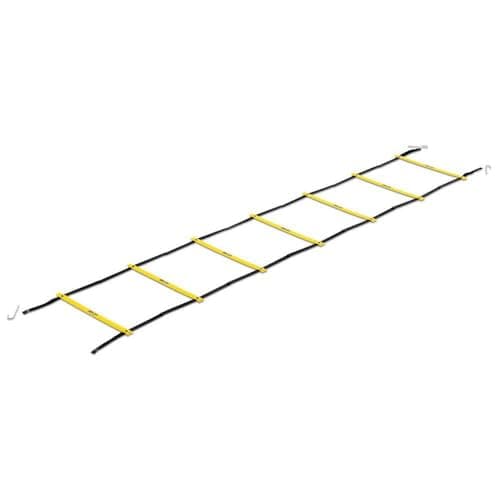
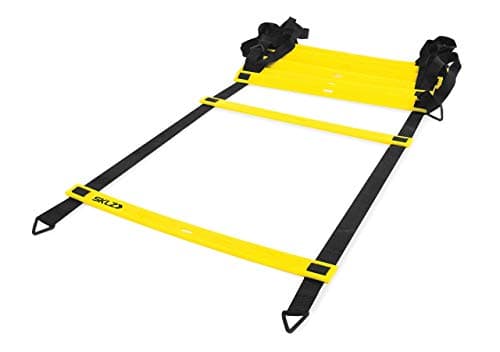
The agility ladder to buy for a young player is the SKLZ Quick Ladder — eleven plastic rungs, 17 inches wide and 15 feet long with a carry bag, which is the right size for a backyard and simple enough that a child can lay it out alone. The budget pick is the Kwik Goal Small Disc Cones 25-pack, and that is not a cop-out: a controlled comparison found ladder training's gains were largely confined to rhythm, step frequency and basic coordination, with relatively limited transfer to reaction time and decision making. Prices come from the live Amazon listing with the date under each button.
Agility ladders are the most-bought and least-understood piece of backyard soccer equipment. They look like training, they are cheap, and a child will use one unsupervised — which are three genuinely good reasons to own one. What they will not do is make a player more agile in the sense that matters on a field, and a page that sells you one without saying so is not being straight with you.
What the research actually found
A controlled comparison published in Frontiers in Physiology compared computerized agility training with rope ladder training and reported that the ladder group's improvements were largely confined to rhythm, step frequency and basic coordination, with relatively limited transfer to reaction time and decision making.
Two caveats we will state rather than bury: the study population was male collegiate basketball players aged 18 to 24, not youth soccer players, and it compared ladder work against a specific alternative rather than against nothing. So it is evidence about the mechanism, not a verdict on whether a nine-year-old should own a ladder.
What it supports is a sensible reading: a ladder trains foot speed and rhythm in a pre-set pattern. Soccer agility is reacting to something that moves. Those are related but not the same, which is why the honest recommendation is a ladder plus something unpredictable rather than a ladder alone.
How we sorted these
Can a child set it up alone? The limiting factor in backyard practice is needing an adult, so a ladder that tangles or needs stakes to lie flat loses.
Published specification over marketing. Where a maker publishes rung counts, widths and lengths, we quote them; where it does not, we say so.
Backyard scale. A 15-foot ladder fits a normal yard. Longer is not better if it has to be laid diagonally across a flowerbed.
Honest alternatives on the same page. Cones and hurdles are included because for most families they are the better buy, and leaving them off would have made the ladder look more necessary than it is.
Quick picks
Tap any row to jump to the full write-up. The price in each button is the one Amazon reported on the date stamped under it — tap through for today’s number, which is the only one that can be relied on.
#
Product
Best for
Surface
Fit notes
Price
1
SKLZ Quick LadderThe sensible ladder for a family: enough length to run real patterns, cheap enough that occasional use is not a waste.
SKLZ Speed and Agility Ladder ProBuy it if you are the parent who ends up running the drills for the whole team. Otherwise the standard Quick Ladder does the same job for far less.
Kwik Goal Small Disc Cones (25-pack)The single most useful thing you can put in a soccer bag, and the one piece of training gear that is genuinely right at every age.
U6, U7–U8 rec, U9–U10, U11–U12, U13+ travel & club
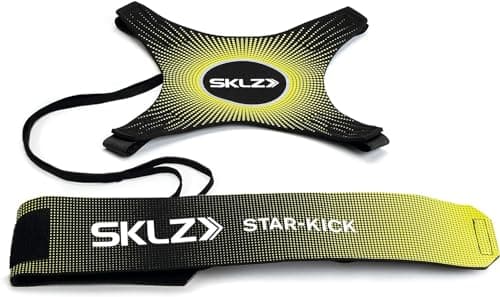
SKLZ Star-Kick Solo Soccer TrainerThe best value in youth soccer training gear, as long as you understand it is a touch and technique tool rather than a shooting one.
Product photos come from each item’s current Amazon listing.
Every figure here is the manufacturer's own published specification. Nothing in this table was measured by us.
Item
Published specification
What it is actually for
SKLZ Quick Ladder
11 plastic rungs, 17 in wide, 15 ft long, carry bag
Rhythm and step frequency; the default backyard ladder
SKLZ Speed and Agility Ladder Pro
Webbing-free accordion fold, 7 rungs at 17.25 in spacing, extensible ends, stakes included
Coach-grade; lies flatter and survives being stood on
QUICKPLAY Adjustable Speed Hurdles
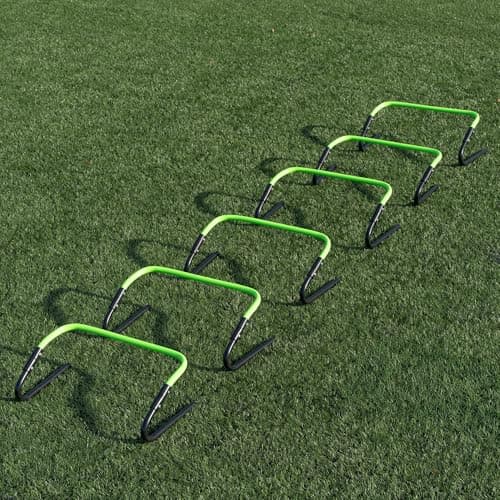
Set of 6, three heights at 6, 9 and 12 in, breakaway polypropylene, stated for ages 5+
Knee lift and bounding — a different quality from ladder work
QUICKPLAY Slotted Collapsible Cones
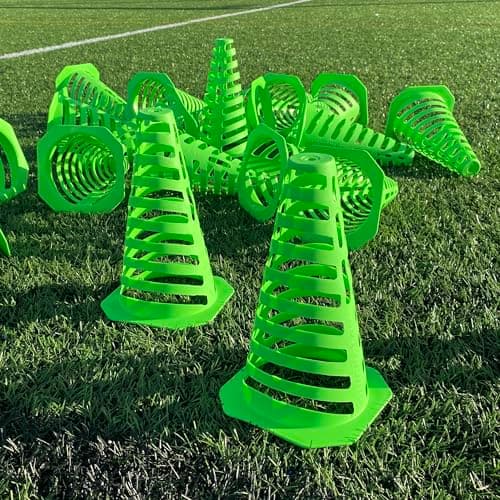
Set of 10, 9 in, rebounding PVC that springs back when stepped on, non-marking indoors, ages 5+
Visible gates for dribbling; tall enough to see at speed
Kwik Goal Small Disc Cones
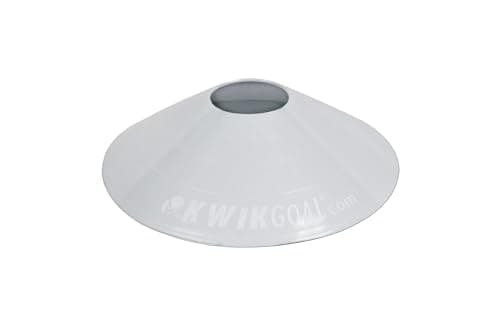
25-pack, 2 in high on a 7.5-in base, six colors
Everything. The most useful $20 in backyard soccer
SKLZ Star-Kick Solo Trainer
Fits size 3, 4 and 5 balls, cord stretches to 18 ft, tethered waistband
Touches without ball chasing — the actual bottleneck
Scroll the table sideways on a narrow screen.
The picks in full
1. SKLZ
SKLZ Quick Ladder
The sensible ladder for a family: enough length to run real patterns, cheap enough that occasional use is not a waste.
Best for
Footwork and coordination work from about U9
Levels
U9–U10 · U11–U12 · U13+ travel & club
Type / surface
Agility ladder
How it fits
Works from roughly U9. That is when kids can run a two-step pattern without watching their feet; below it, a ladder is hopscotch rather than training.
What we like
A full 15 feet of ladder for roughly the price of a decent ball, which is the right amount to spend on a tool a kid will use twice a week at most
Folds flat into its bag, so it stores with the rest of the kit rather than needing a corner of the garage
Rung spacing is fixed, which sounds like a limitation and is actually what keeps a young player honest about stride length
Where it falls short
Webbing tangles. Every webbed ladder does, and the five minutes spent untangling it is five minutes of a short attention span gone
The rungs sit proud of the grass and will be caught by a studded cleat at speed, so it is a sneakers-and-flat-ground tool more than a cleats-on-the-pitch one
Manufacturer’s published specs
11 heavy-duty plastic rungs, 17 inches wide and 15 feet long (SKLZ)
Webbed, foldable design with a carry bag included
SKLZ positions it for acceleration, lateral speed and change of direction
One-year warranty
These are the manufacturer’s own claims, not measurements we took.
Buy it if you are the parent who ends up running the drills for the whole team. Otherwise the standard Quick Ladder does the same job for far less.
Best for
A team, a coach, or a household that trains several times a week
Levels
U11–U12 · U13+ travel & club
Type / surface
Agility ladder
How it fits
No sizing. The value is age-related instead: it earns its price for a coach or an older player training often, not for an occasional backyard session.
What we like
The accordion fold is the real feature — it opens and closes in seconds and cannot tangle, which is worth more than it sounds when you are setting up with eight impatient kids
Ground stakes stop it walking down the garden, the failure mode that makes webbed ladders frustrating on grass
Low-profile edges are a genuine design answer to the one thing that makes ladders risky in cleats
Where it falls short
Several times the price of the standard Quick Ladder, which is hard to justify for one child practicing once a week
Seven rungs is a short run on its own — getting a useful length means buying two and linking them, which compounds the cost
Manufacturer’s published specs
No webbing: rigid hinged sides fold accordion-style (SKLZ)
7 rungs at 17.25-inch spacing
Extensible ends and sides so several ladders link into one longer run
Low-profile edges to reduce the chance of catching a cleat; ground stakes and carry bag included
These are the manufacturer’s own claims, not measurements we took.
QUICKPLAY Slotted Collapsible Training Cones (set of 10)
The right second set of cones, and the one that makes backyard dribbling drills behave like the ones at practice.
Best for
Gates, mini goals and anything a ball has to go around, U7 up
Levels
U6 — first kicks · U7–U8 rec · U9–U10 · U11–U12 · U13+ travel & club
Type / surface
9-inch cones
How it fits
No sizing. The dividing line is the drill rather than the age: flat discs for anything the kids run through, 9-inch cones for anything the ball goes around.
What we like
Tall enough that a ball has to be taken around rather than over, which is the whole reason to own cones rather than flat markers
The collapse-and-rebound construction is the honest difference from a hard plastic cone — a kid lands on one and the cone gives, not the kid
Slot together into a short stack, so a set of ten carries like a single cone
Where it falls short
Ten markers is a thin set on its own; this is a second purchase alongside flat discs, not a replacement for them
Nine inches is still a trip hazard in a sprint drill in a way a flat disc is not, so they belong in dribbling and gate work rather than underfoot
Manufacturer’s published specs
Ten cones, 9 inches tall, in rebounding PVC (QUICKPLAY)
Collapsible body compresses when stepped on and springs back into shape
Slotted and stackable; works with QUICKPLAY agility poles to make hurdles
Non-marking on indoor floors; stated for ages 5 and up; one-year warranty
These are the manufacturer’s own claims, not measurements we took.
Twenty-five flat cones do more jobs than any other piece of equipment on this page. They mark dribbling gates, which is unpredictable in a way a ladder is not. They mark targets, channels and a goal when you have no goal. They are two inches high on a seven-and-a-half-inch base, so stepping on one does nothing. And a child can set out a course without an adult, which is the only variable that reliably predicts whether backyard practice happens.
Paired with a ball and a wall or a rebounder, cones get a player more useful repetitions per ten minutes than a ladder does. Backyard soccer drills for kids is built around exactly that, and best soccer rebounders for kids covers the piece that stops the ball-chasing.
The cheapest item on this page is the one that gets used most. A ladder has one pattern; cones have whatever you draw.
What to do with a ladder once you own one
Short, not long. Thirty seconds of fast feet, then rest. Ladder work is a nervous-system drill, and doing it tired just teaches a child to shuffle.
Add a ball at the end. Run the ladder, then take a touch and hit a target. That is the step that converts a footwork pattern into something soccer-shaped.
Vary the pattern. One-in, two-in, lateral, in-and-out. A single pattern becomes automatic in a week and stops training anything.
Finish with something unpredictable. A rebounder return, a dribble through cones, a parent calling a direction. This is the half the research suggests a ladder is not giving you.
Keep it to ten minutes. A ladder is a warm-up tool, not a session.
And for the player who will practice alone, the single best purchase on this page may be the solo trainer rather than the ladder: a tethered ball that fits sizes 3, 4 and 5 and a cord stretching to 18 feet, whose stated purpose is to maximize touches by minimizing ball chasing. That is the bottleneck in backyard practice, not footwork patterns.
The SKLZ Quick Ladder: eleven plastic rungs, 17 inches wide and 15 feet long with a carry bag, which fits a normal backyard and is simple enough for a child to lay out alone. If you want something coach-grade that lies flatter and takes stakes, the SKLZ Speed and Agility Ladder Pro has a webbing-free accordion fold with seven rungs at 17.25-inch spacing and extensible ends.
Do agility ladders actually work for soccer?+
Partly. A controlled comparison in Frontiers in Physiology found ladder training's improvements were largely confined to rhythm, step frequency and basic coordination, with relatively limited transfer to reaction time and decision making. That study used male collegiate basketball players aged 18 to 24, so it is evidence about the mechanism rather than a verdict on youth soccer — but it supports pairing a ladder with something unpredictable rather than relying on it alone.
What age can kids start using an agility ladder?+
Around eight to nine is when most children can follow and repeat a footwork pattern without an adult standing over them, which is the point at which a ladder becomes useful rather than decorative. Below that, cones and a ball do more: dribbling gates are unpredictable in a way a fixed ladder pattern is not, and a five-year-old can set them out themselves.
Are cones better than an agility ladder?+
For most families, yes. A 25-pack of flat disc cones marks dribbling gates, targets, channels and goals, costs about the same as a basic ladder, and produces more soccer-shaped repetitions per ten minutes. A ladder trains one thing — foot speed in a pre-set pattern — and the published evidence suggests that is also roughly all it transfers to.
How long should a kid use an agility ladder for?+
Ten minutes, in short bursts of about thirty seconds with rest between them. Ladder work is a nervous-system drill: doing it tired teaches a child to shuffle, which is the opposite of the intention. Vary the pattern every session or two, because a single pattern becomes automatic within a week and stops training anything.
What else do you need for backyard soccer training?+
A ball in the right size, something that makes the ball come back, and cones. The genuine bottleneck in backyard practice is retrieval — a child spends more time fetching than touching — so a rebounder or a tethered solo trainer changes the session more than any footwork aid. A goal and a set of cones cover the rest.
Sources
SKLZ — speed and agility range (Quick Ladder and Speed and Agility Ladder Pro) — Current availability and the published specifications for both ladders: the Quick Ladder's 11 plastic rungs at 17 inches wide and 15 feet long with a carry bag, and the Speed and Agility Ladder Pro's webbing-free accordion fold, seven rungs at 17.25-inch spacing, extensible ends, low-profile edges and included stakes.
Frontiers in Physiology (2026) — computerized agility training compared with rope ladder training — A controlled comparison in male collegiate basketball players aged 18-24 reporting that ladder training's improvements were largely confined to rhythm, step frequency and basic coordination, with relatively limited transfer to reaction time and decision making. Used for the honest limits of ladder work; the population is adult basketball players, not youth soccer, and the page says so.
QUICKPLAY — Adjustable Speed Hurdles (set of 6) — The three height settings (6, 9 and 12 inches), the high-impact polypropylene breakaway construction, the included carry bag and the stated age-5-and-up guidance. Also the current stock check.
Kwik Goal — Small Disc Cones (6A10) — Kwik Goal's own listing for the 25-cone pack: 2 inches high on a 7.5-inch base, six colors, sold per color. Used to confirm current availability and every dimension quoted for the disc cones on this page.
QUICKPLAY — Collapsible 9-inch Training Cones (set of 10) — QUICKPLAY's published specification for the 9-inch slotted cones: rebounding PVC that compresses when stepped on and springs back, non-marking indoors, stackable, stated for ages 5 and up, with a one-year warranty. Also the current stock check.
SKLZ — Star-Kick Solo Soccer Trainer — SKLZ's own product page: the neoprene ball glove fits size 3, 4 and 5 balls, the cord stretches to 18 feet, the waistband is tethered, and the stated purpose is to maximize touches by minimizing ball chasing. Also confirms current availability.